
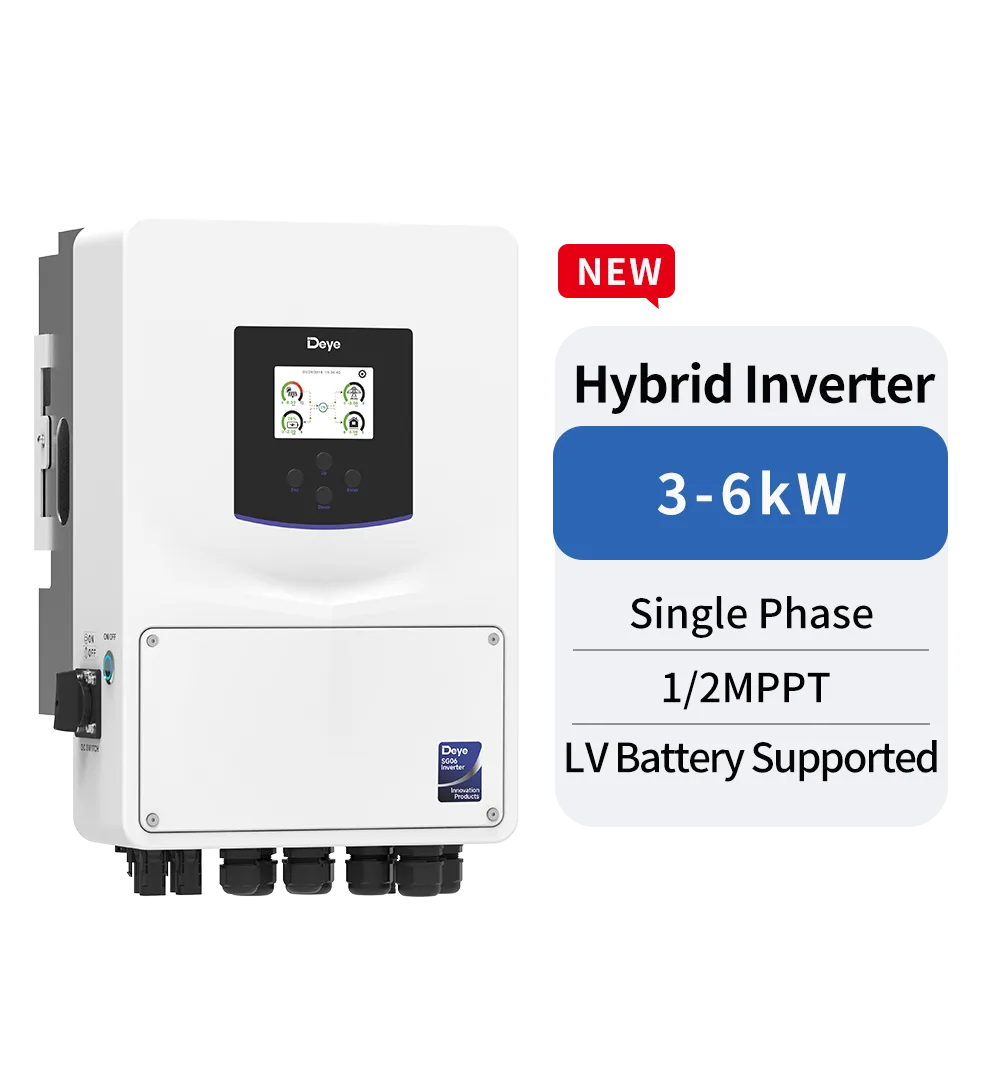
Compare the 34 displayed Deye hybrid inverter pages
Open an exact product page to review its source-derived summary and files. Preserve the full model and suffix, then confirm the current datasheet, battery pairing, grid package, firmware, accessories, availability and order terms.
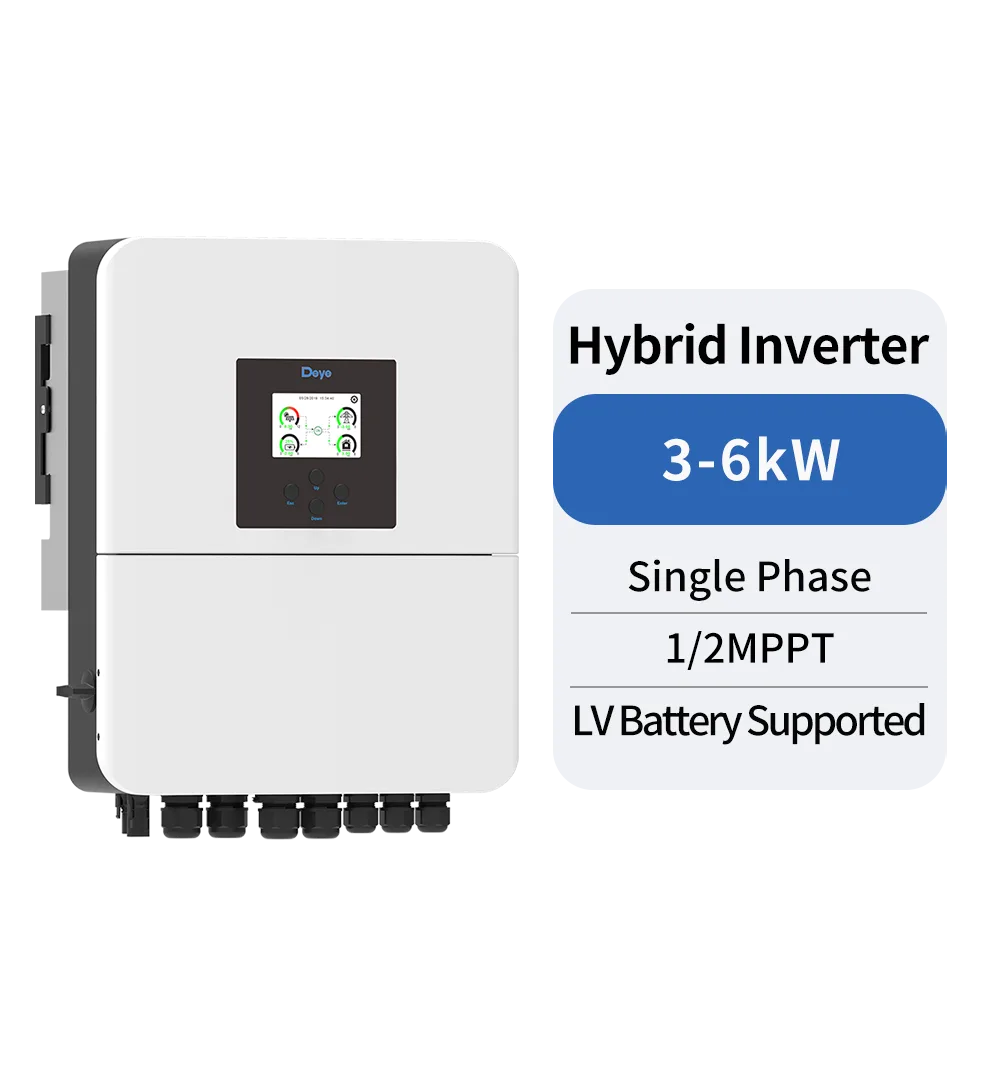
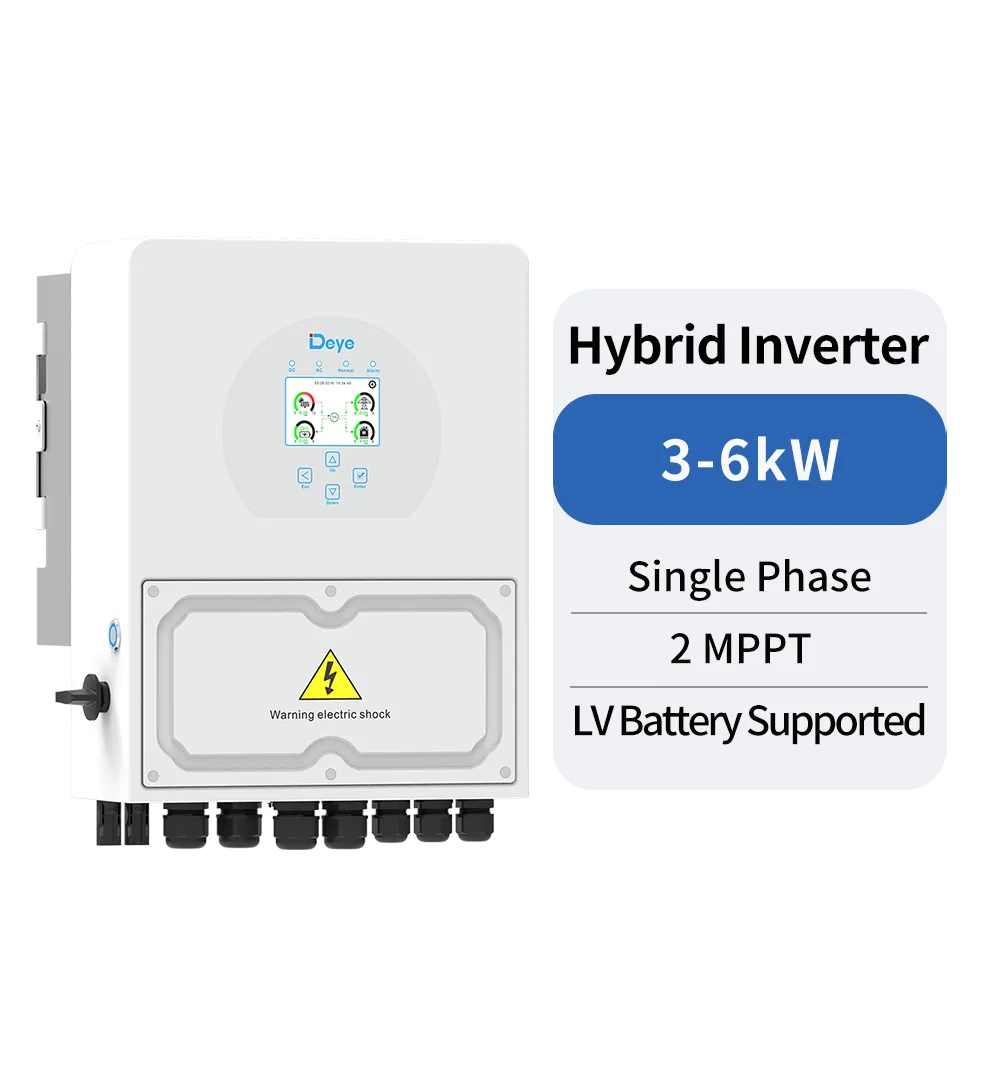
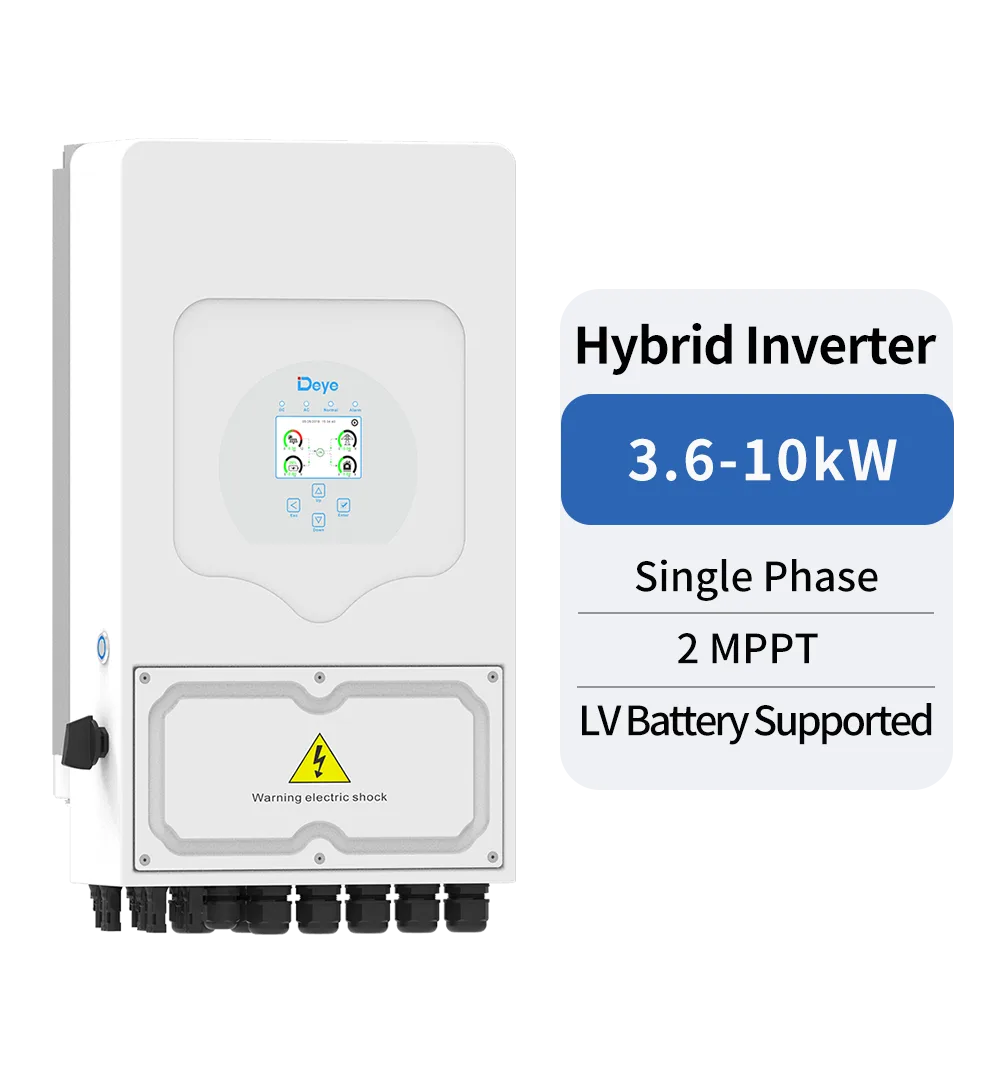
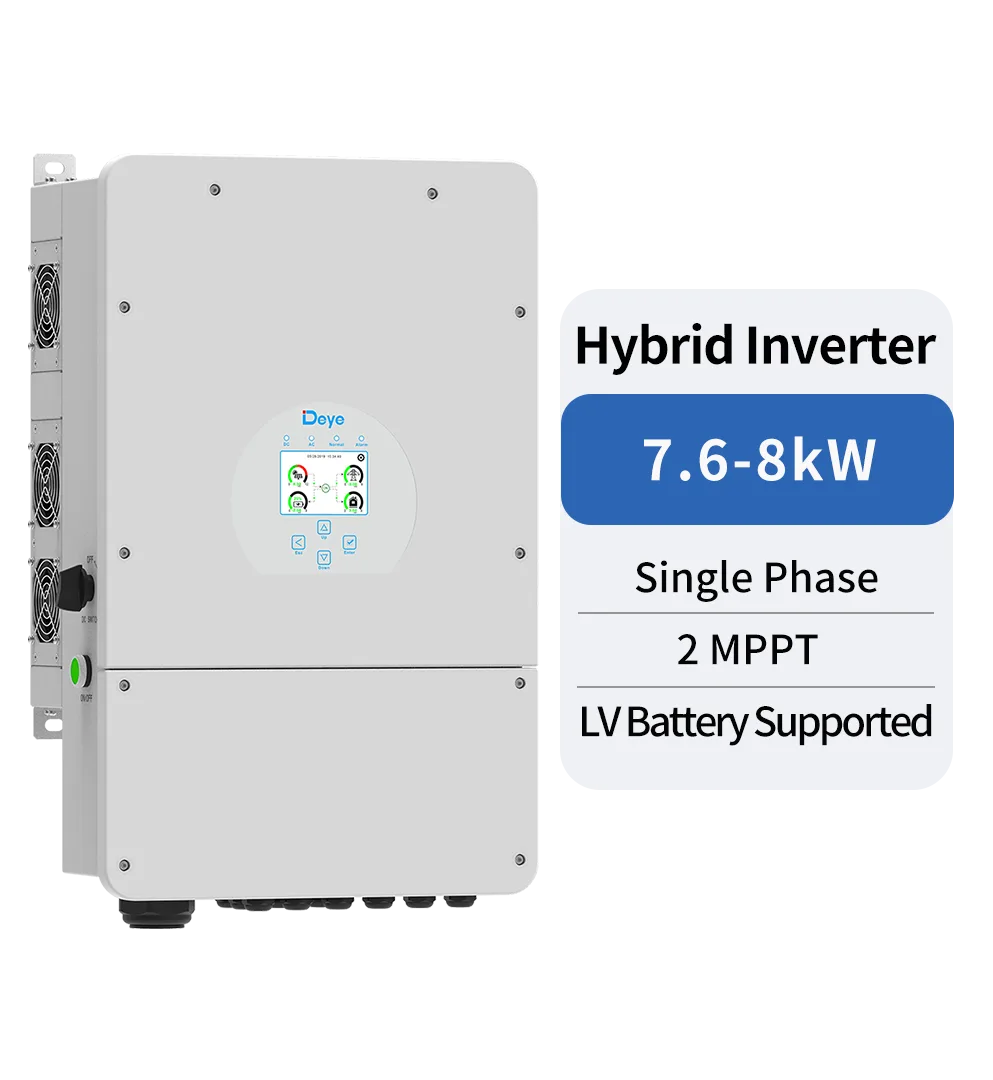
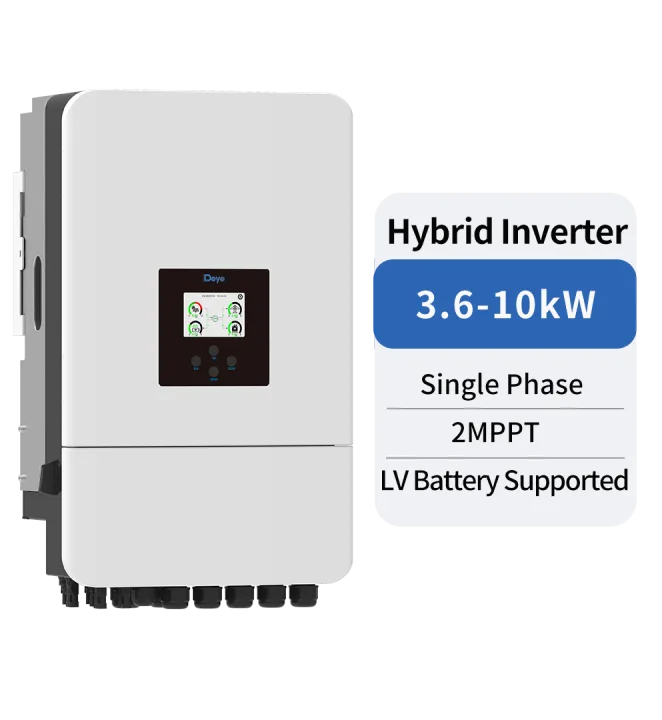
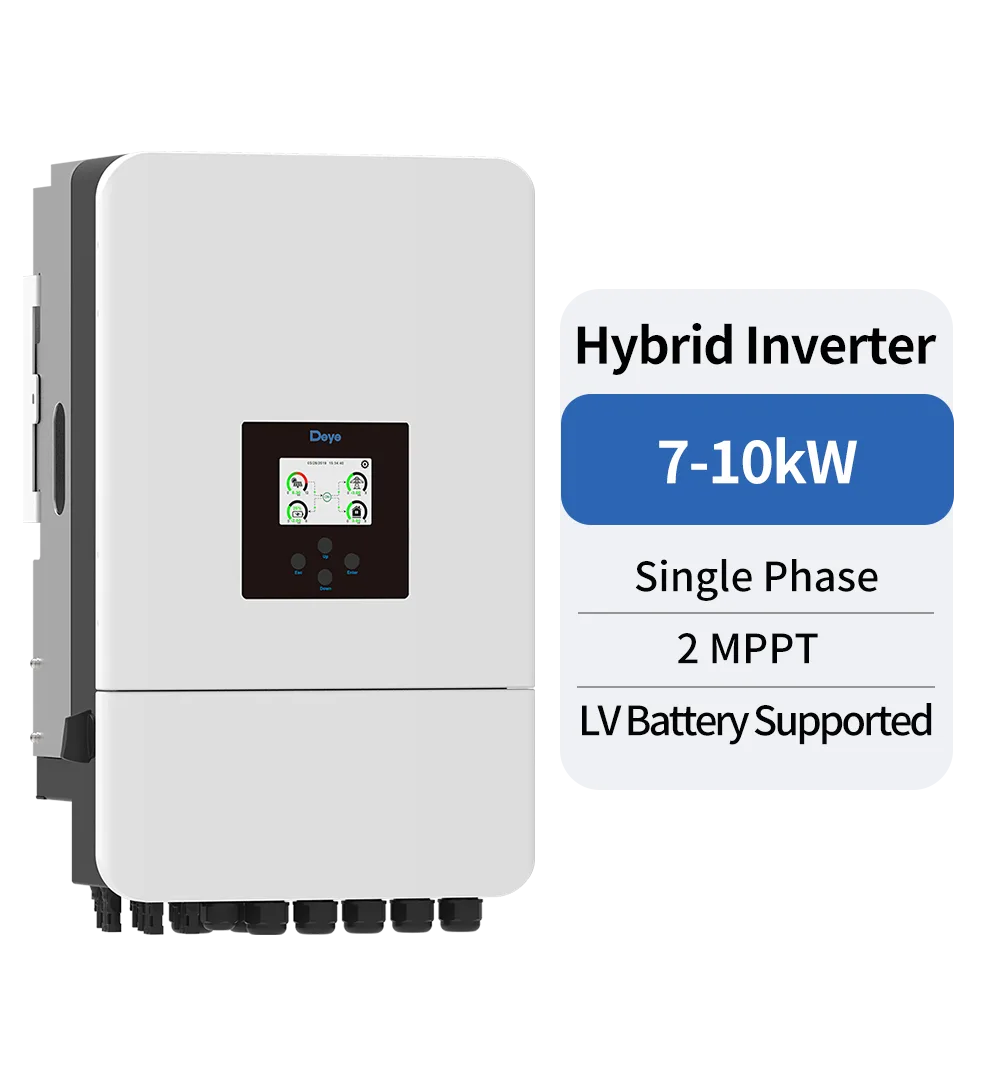
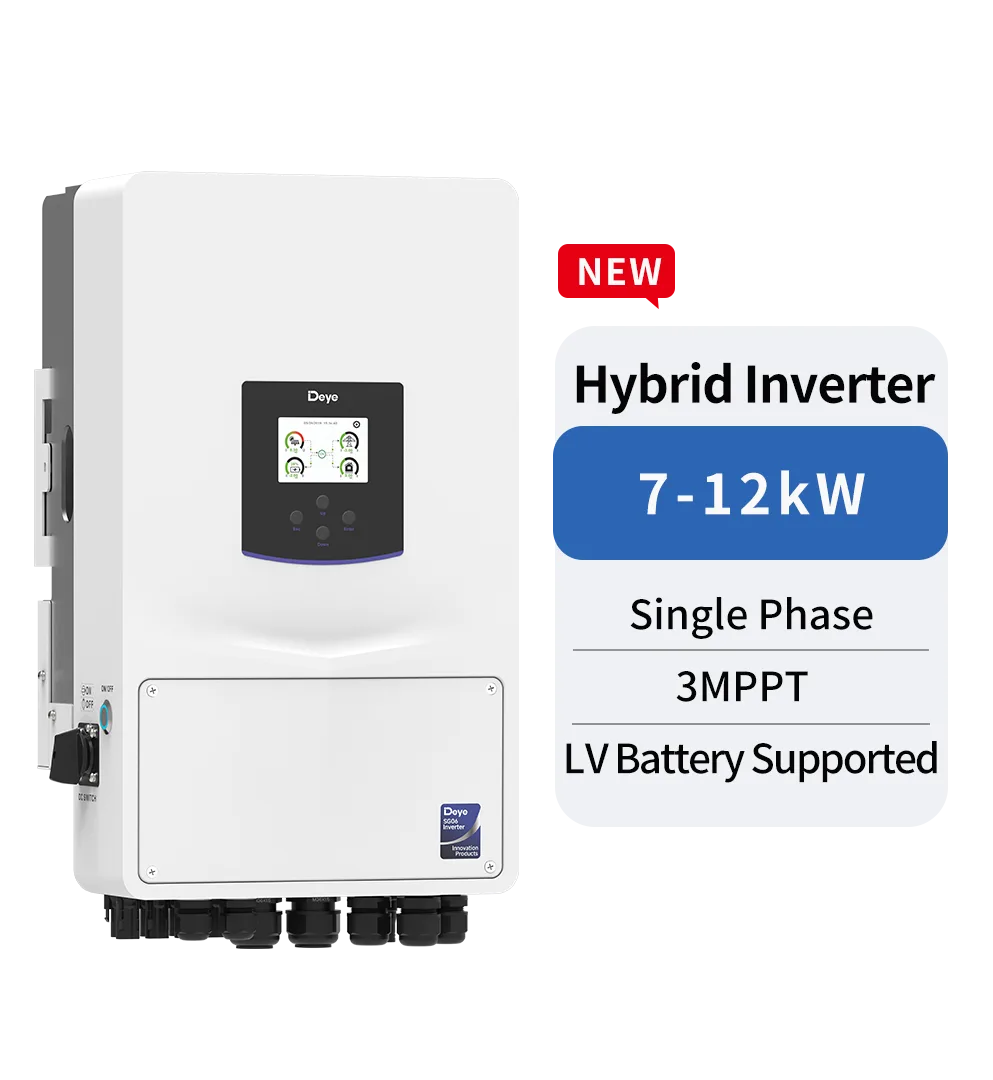
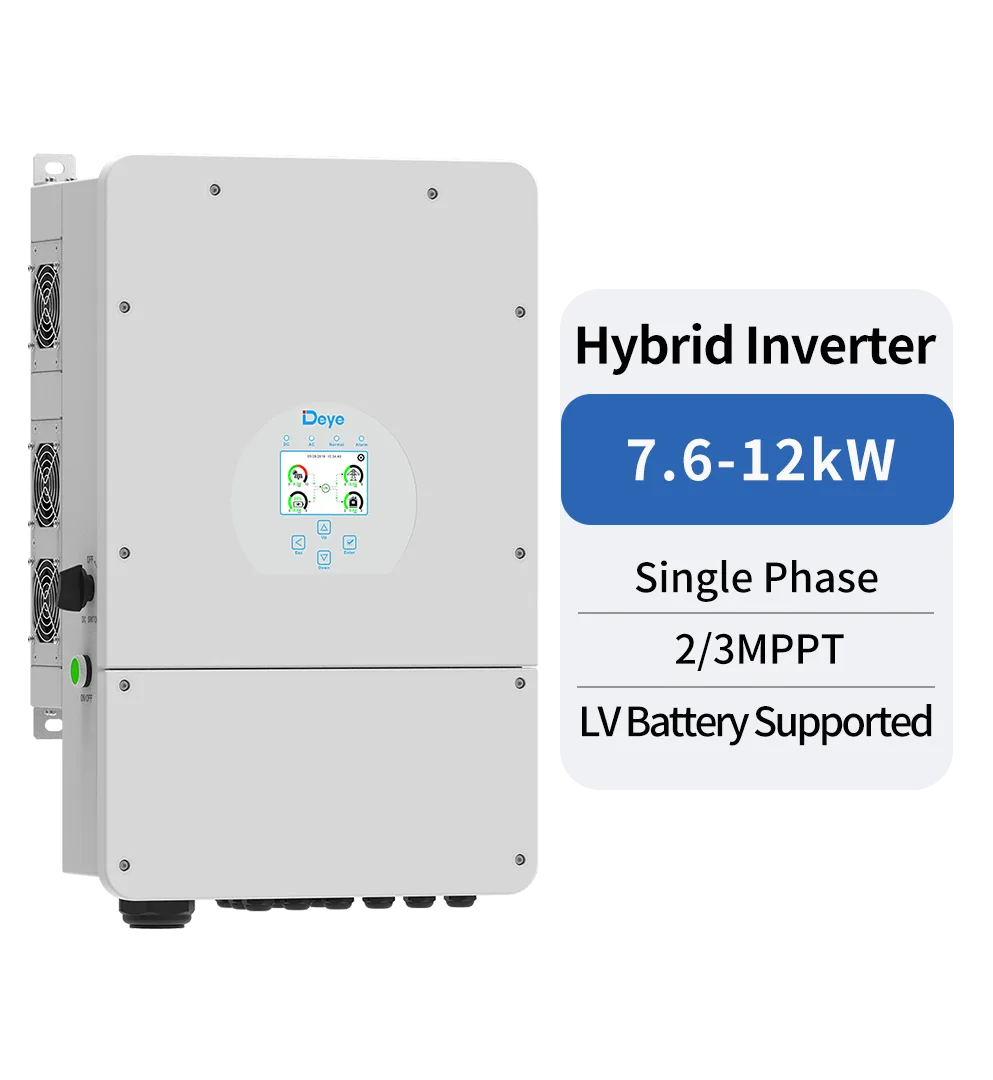
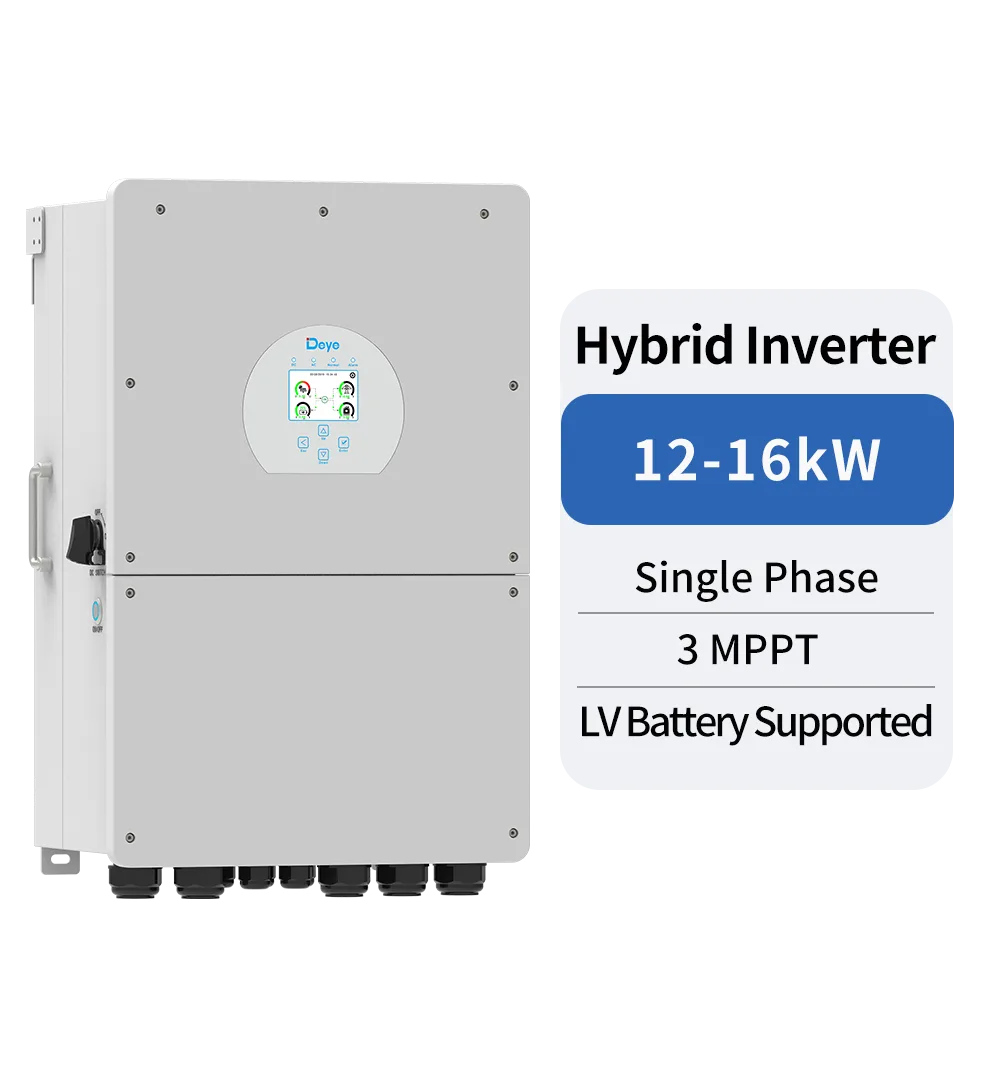
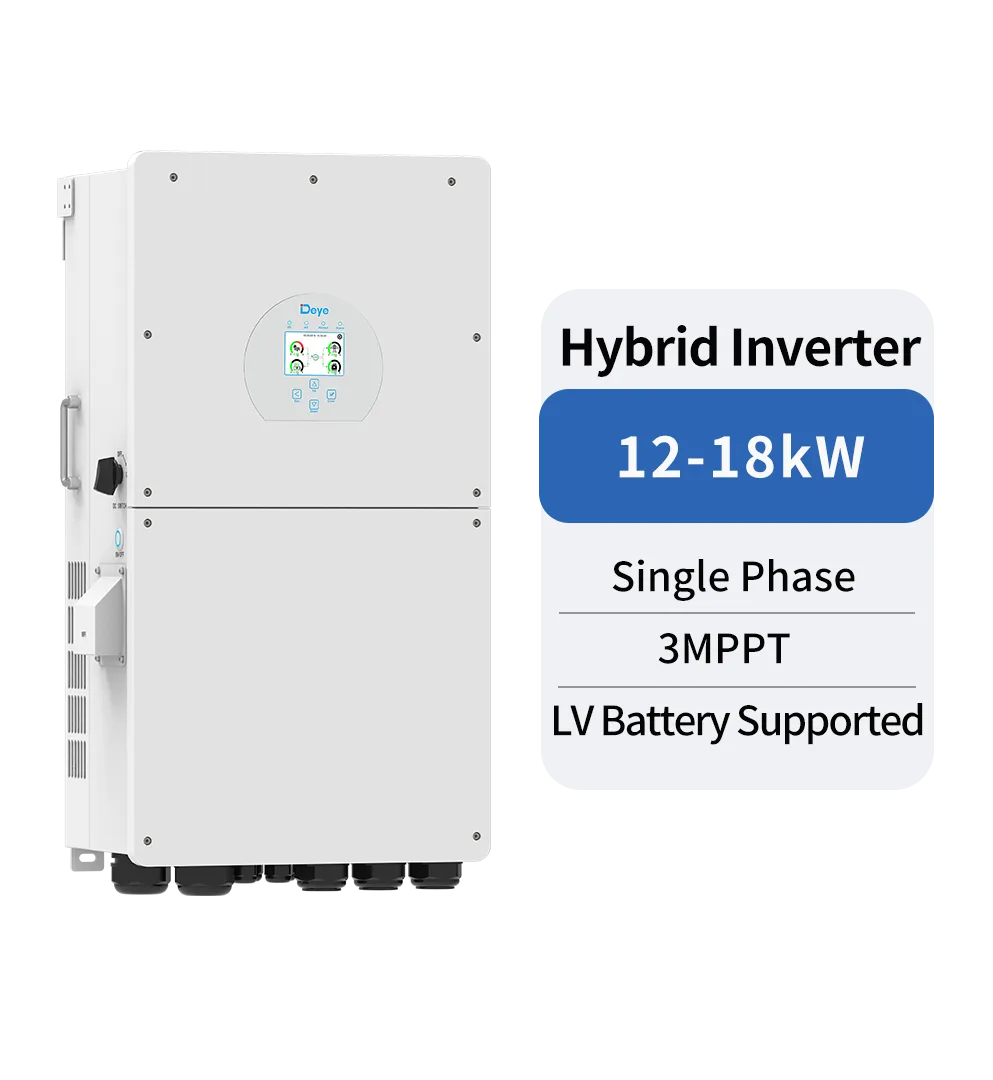
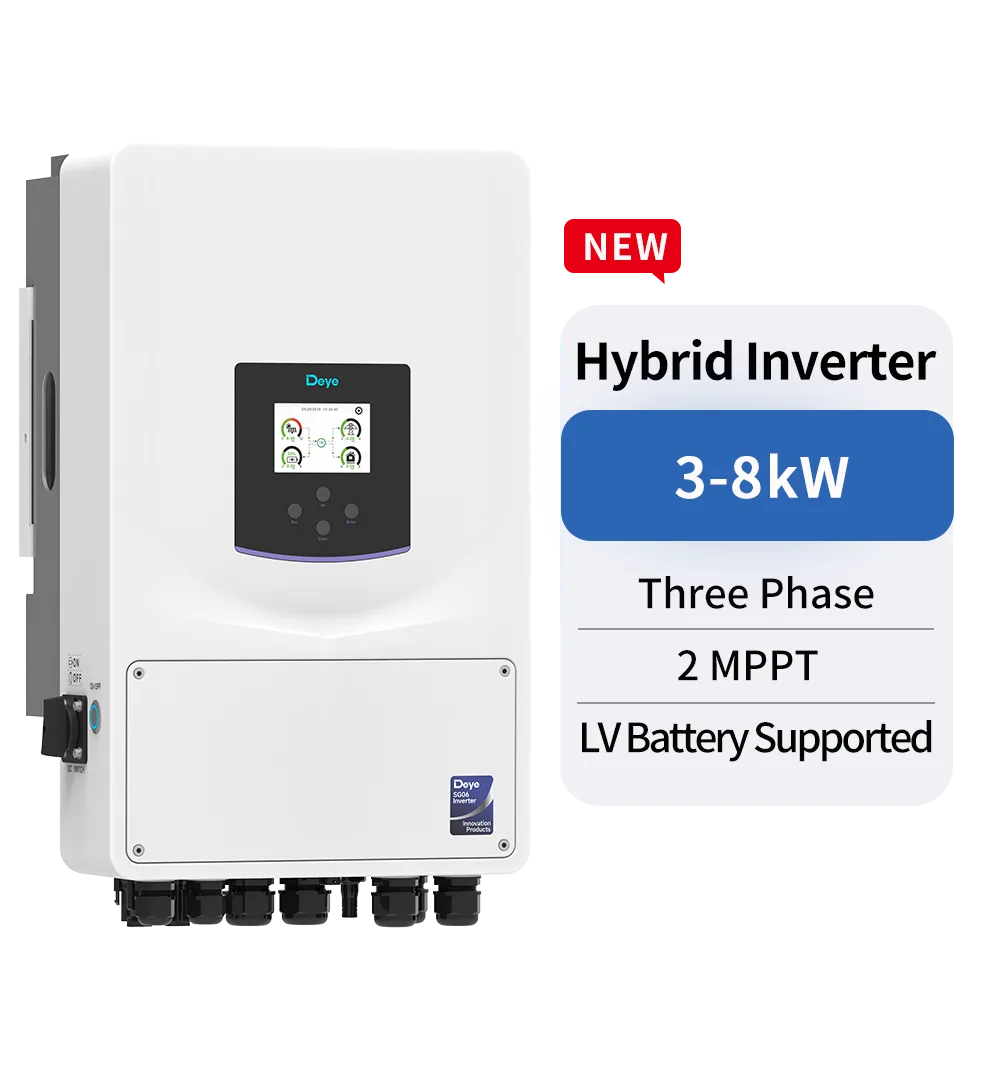
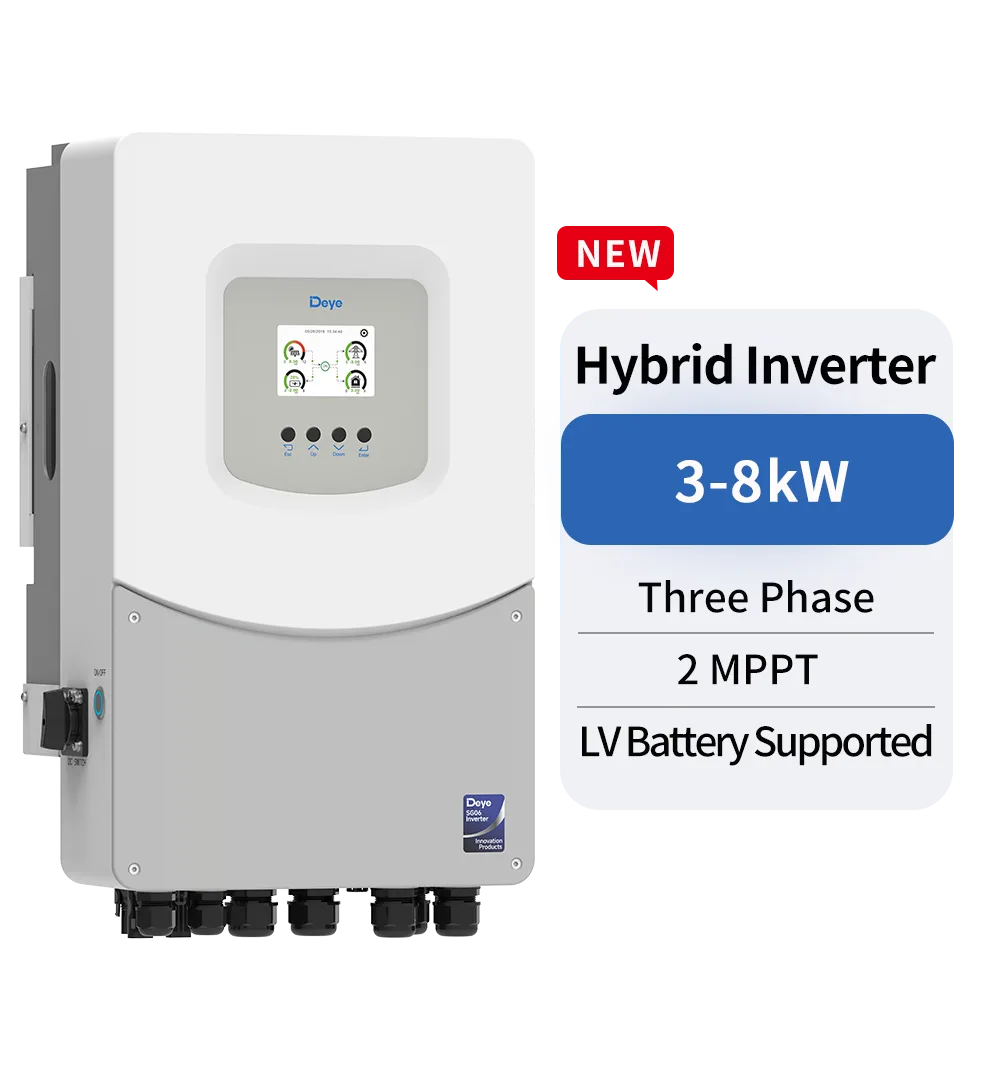
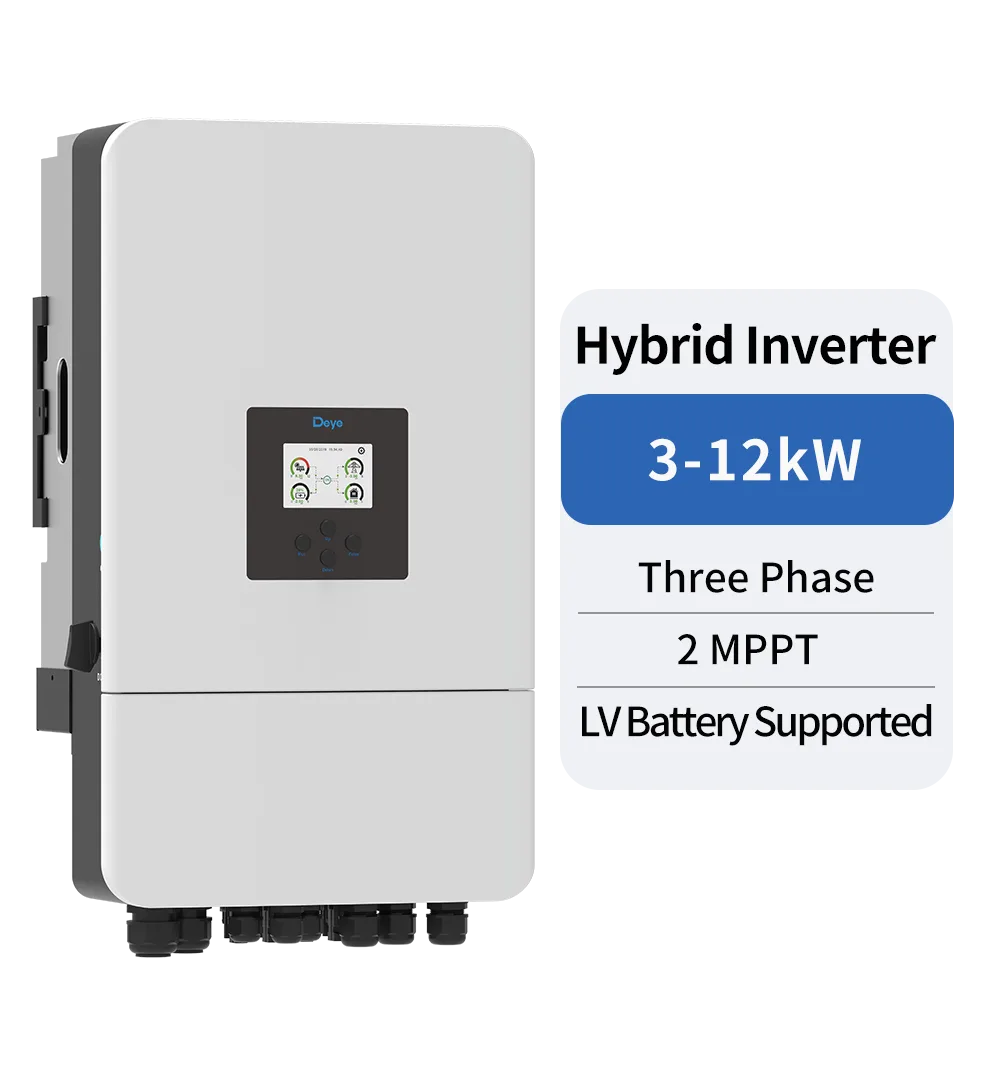
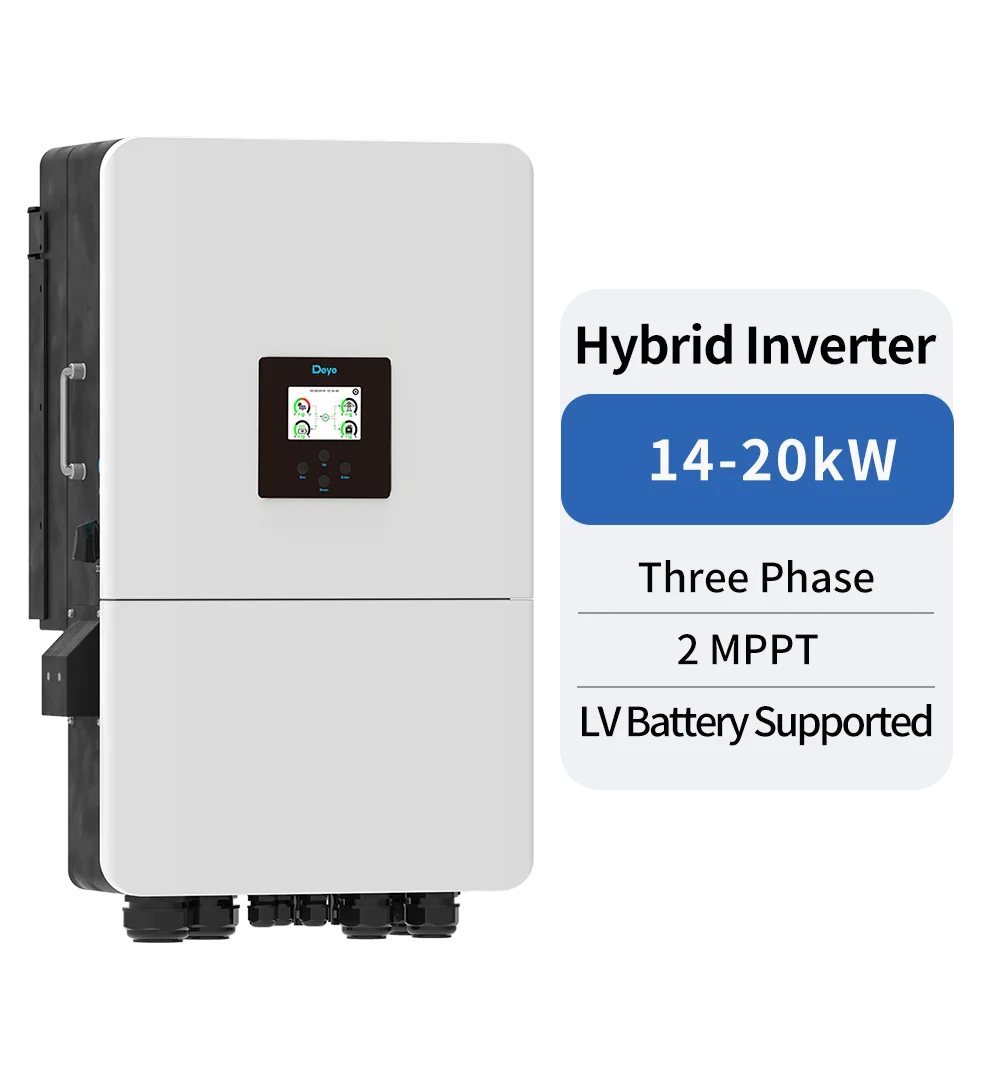
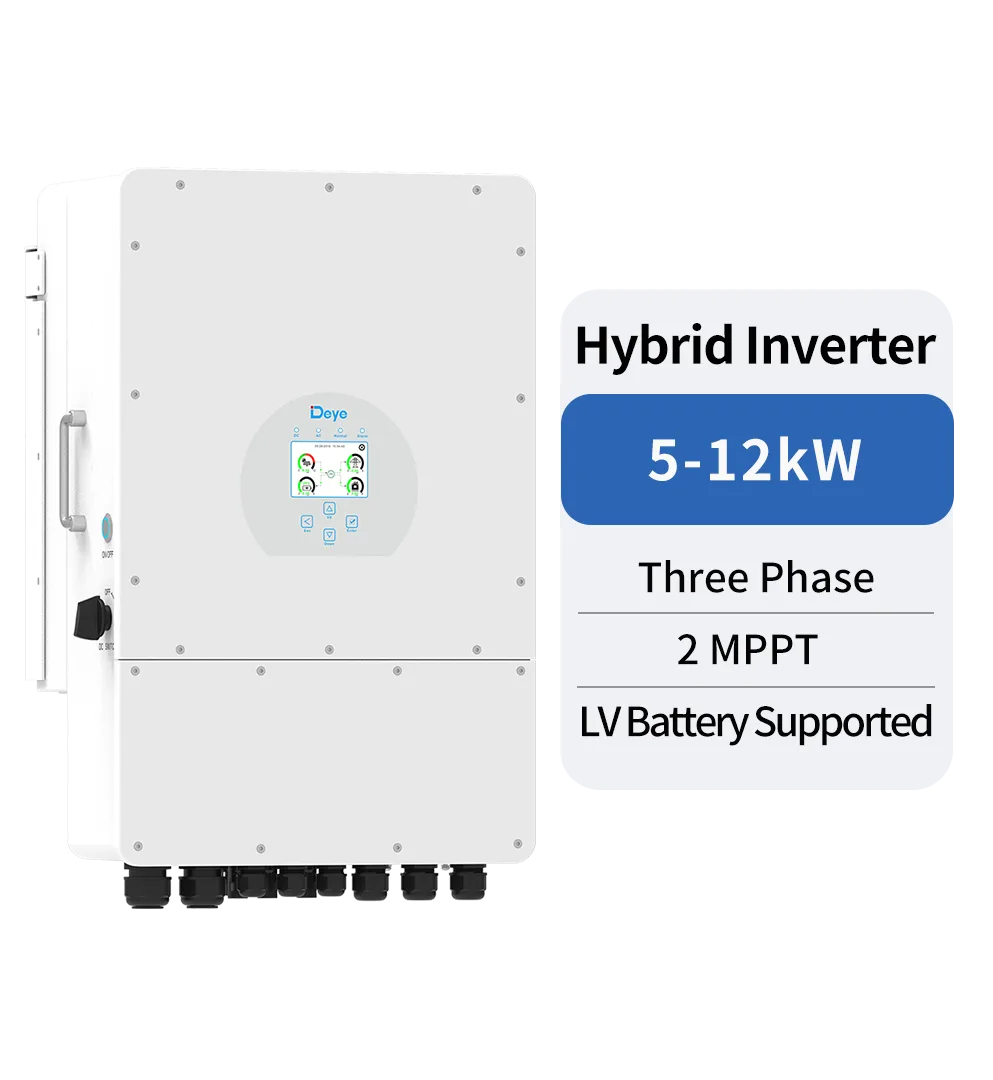
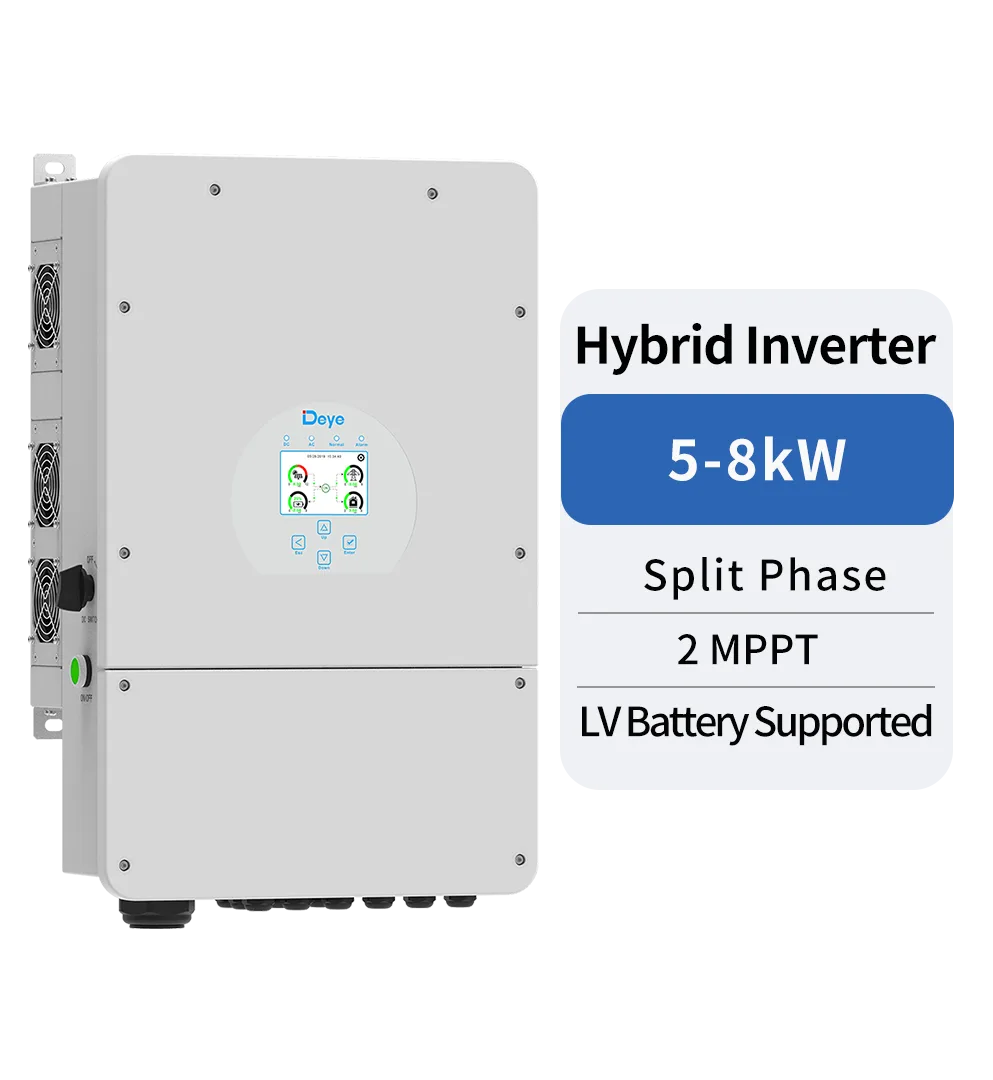
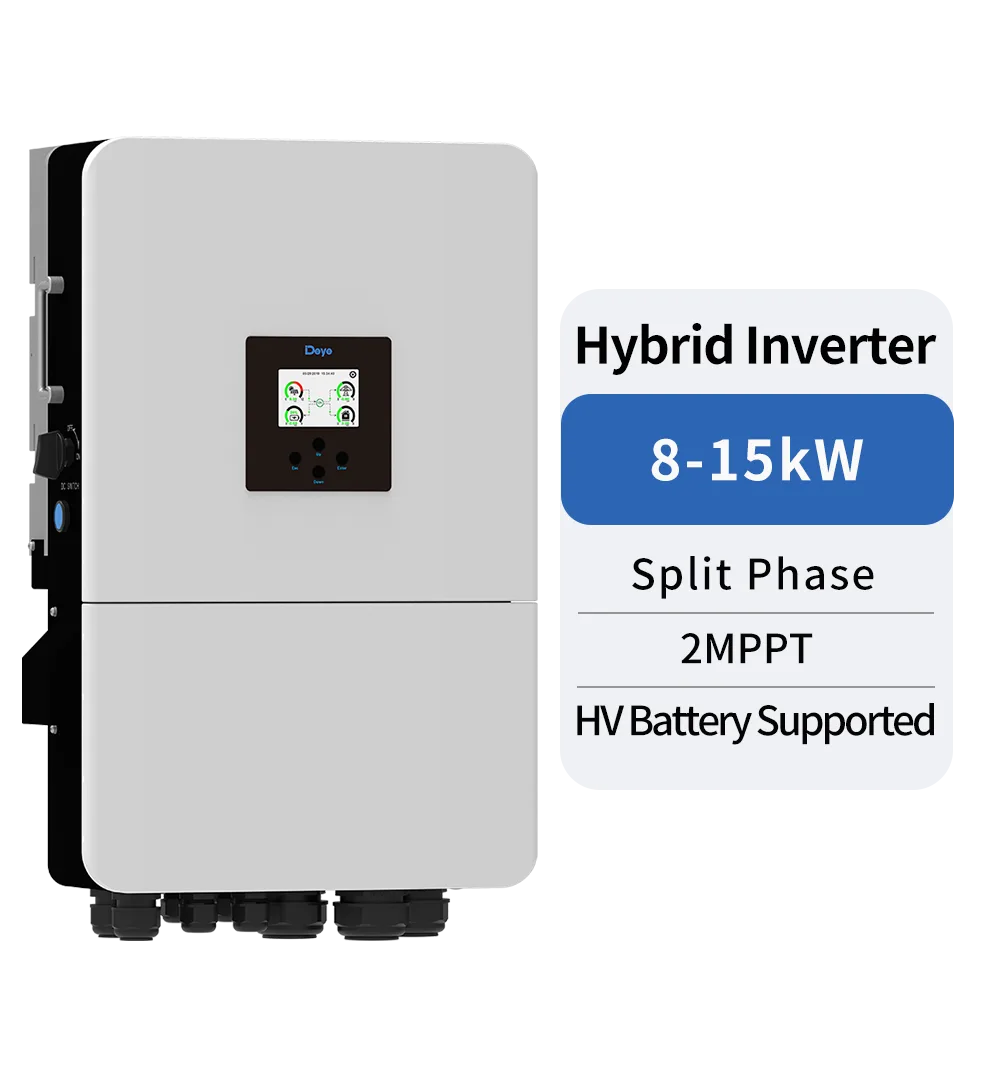
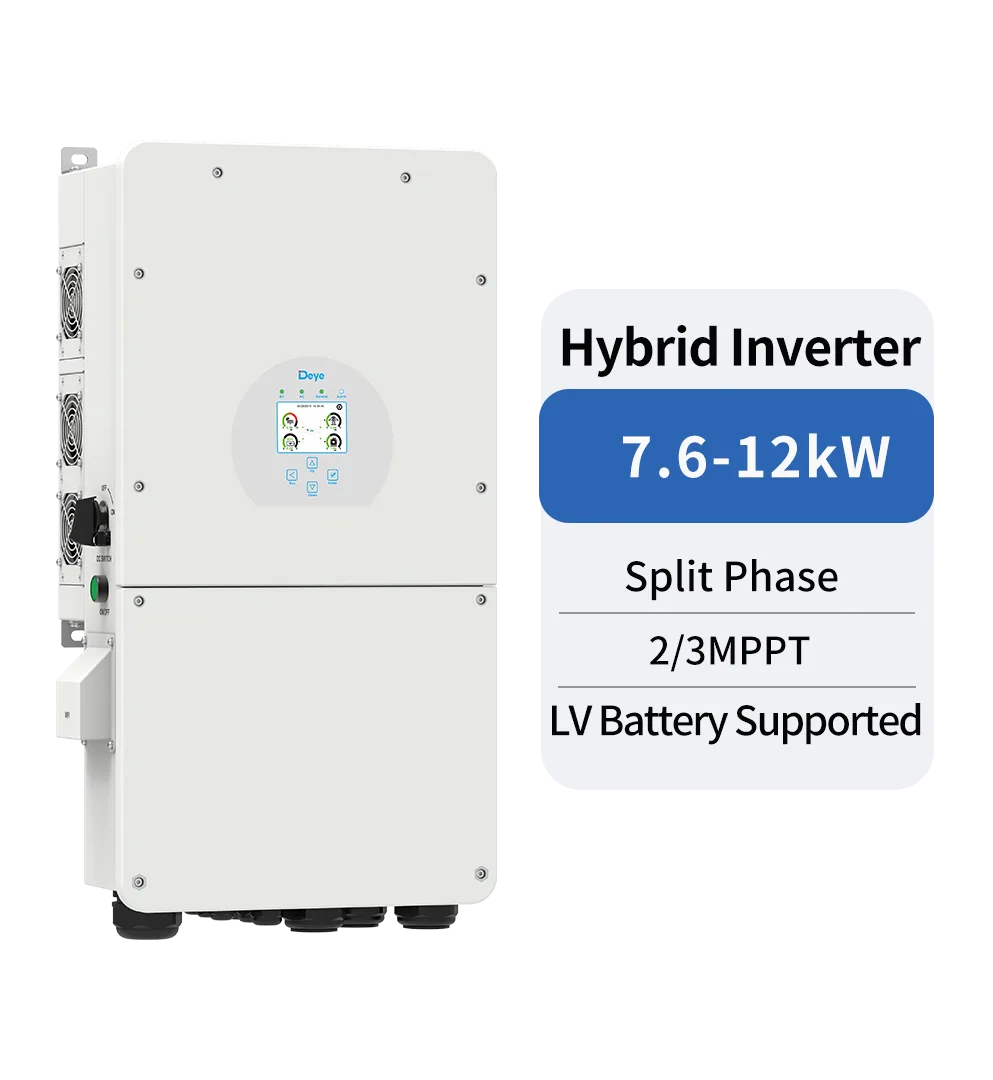
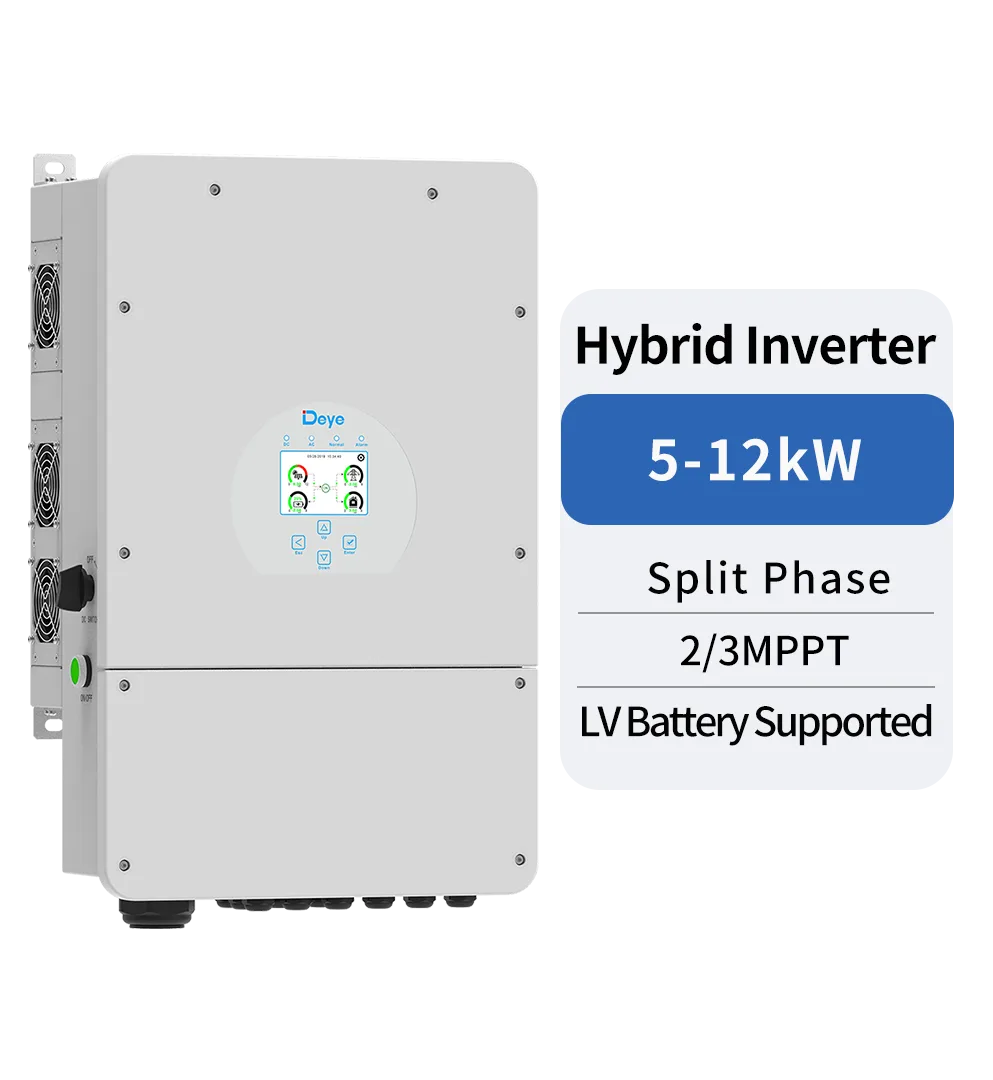
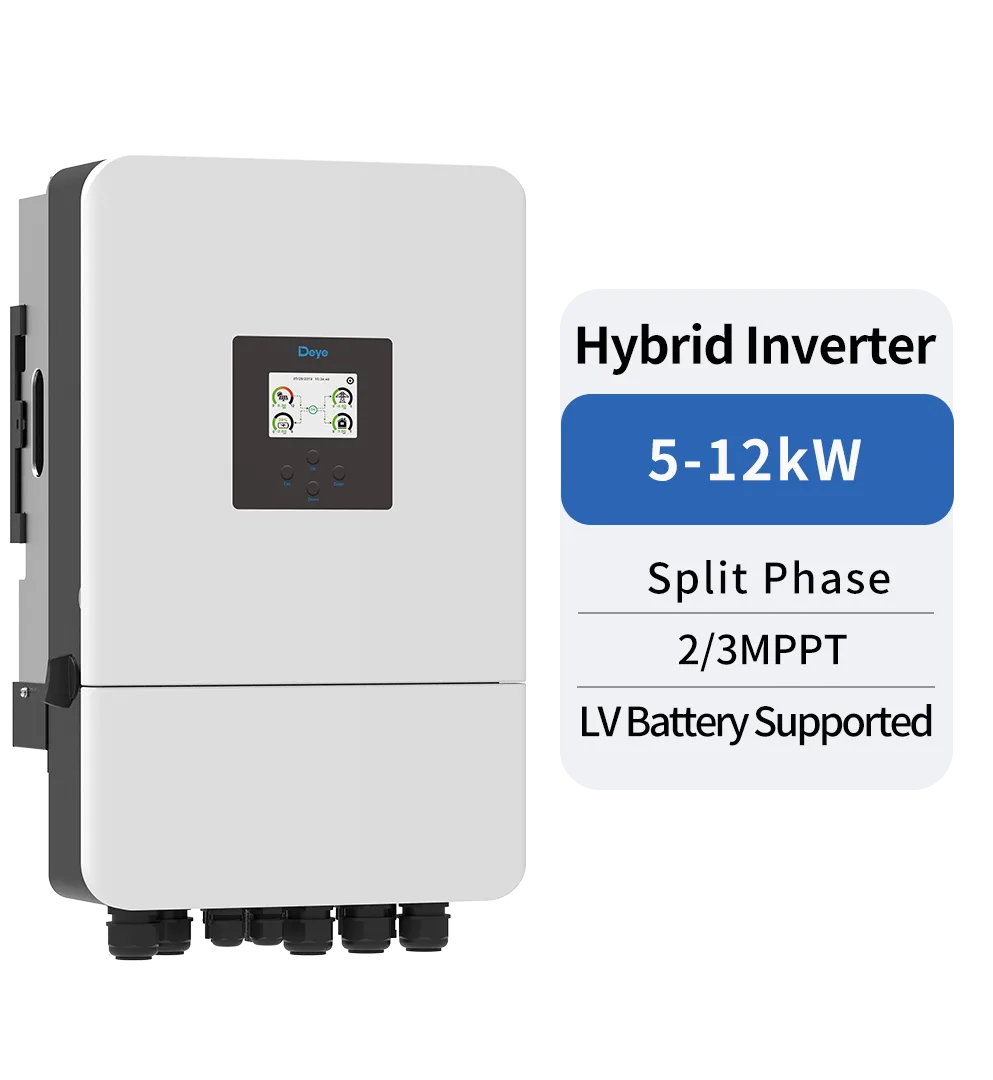
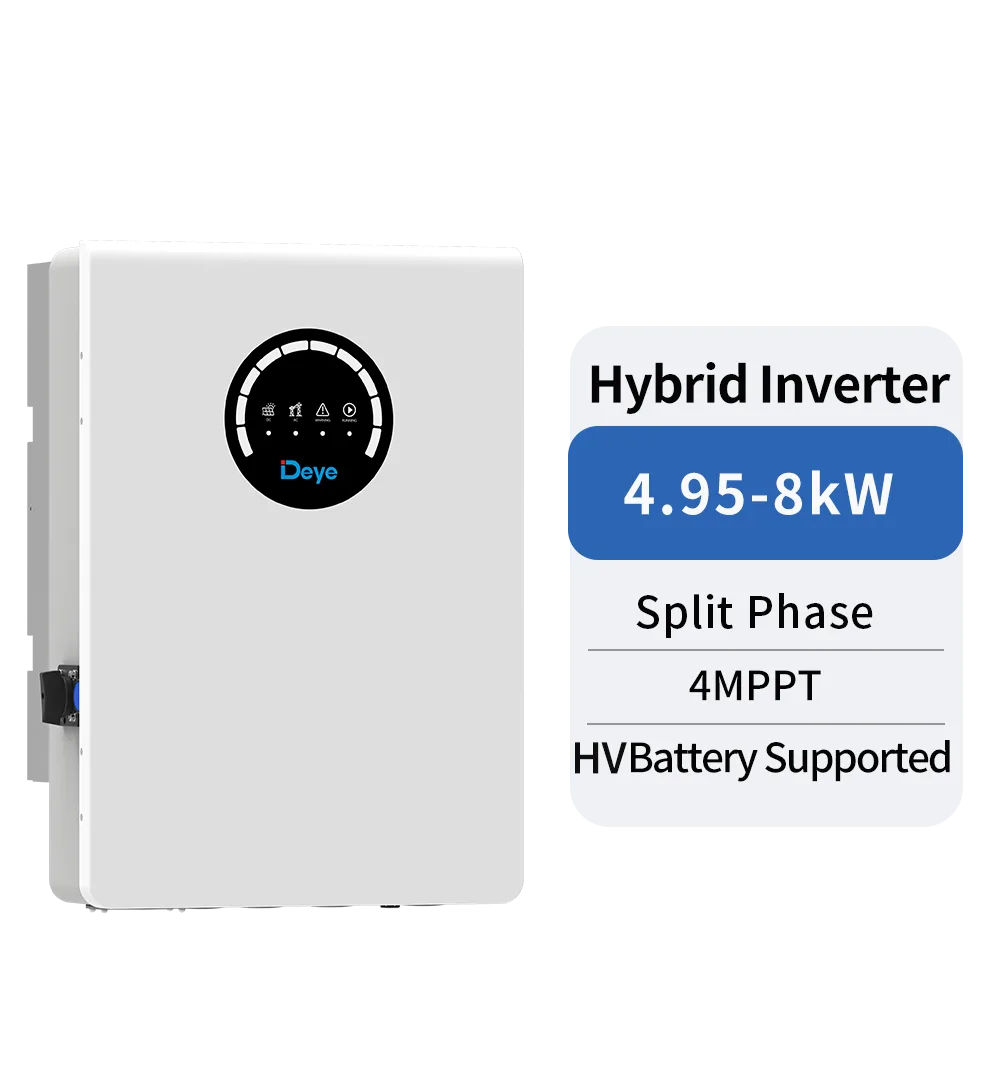
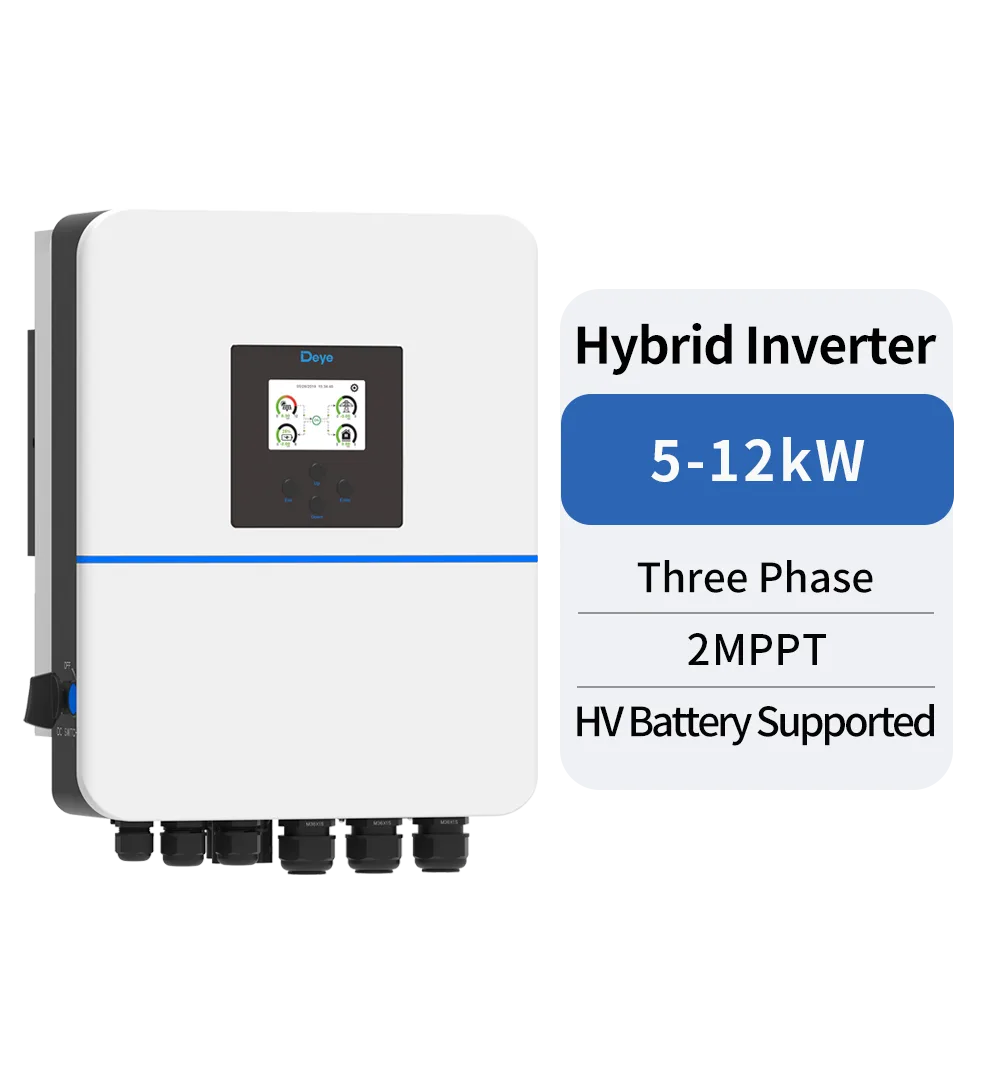
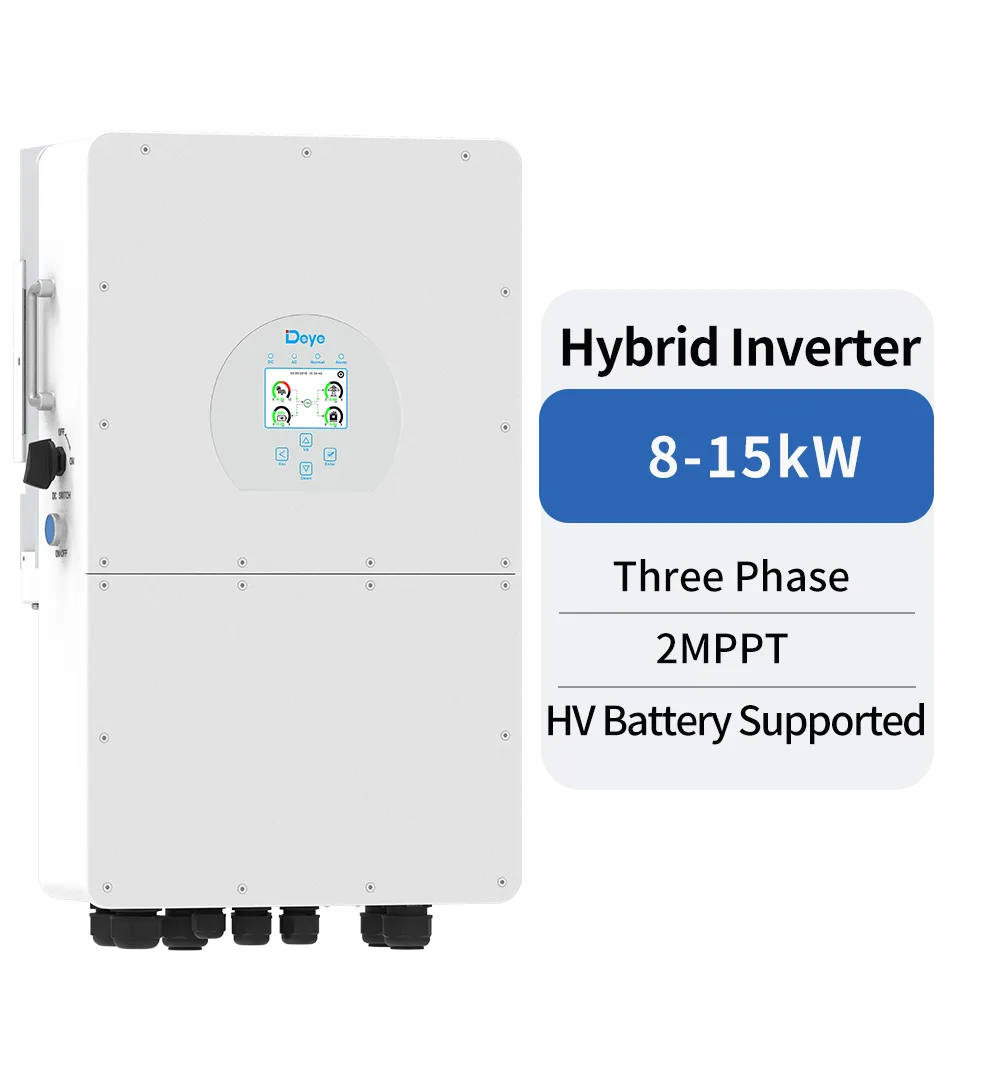
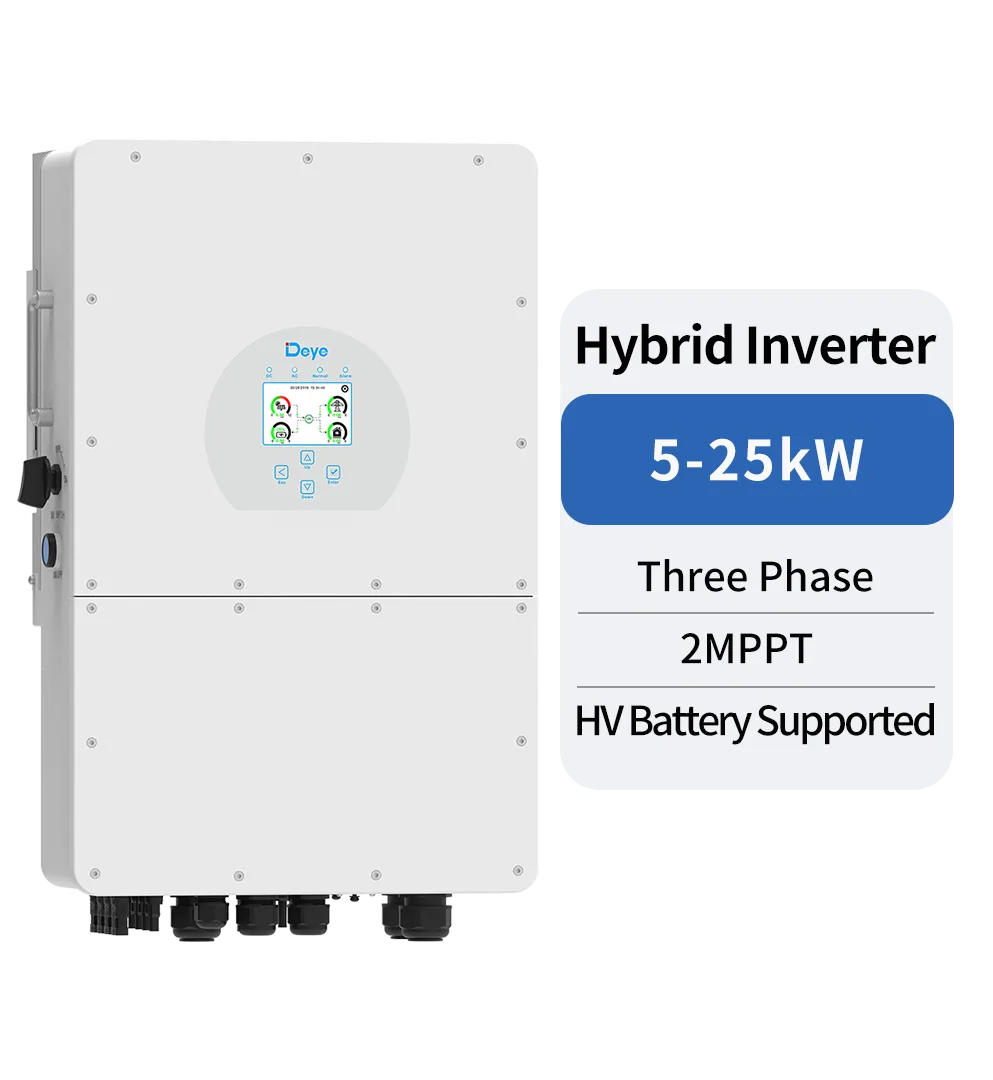
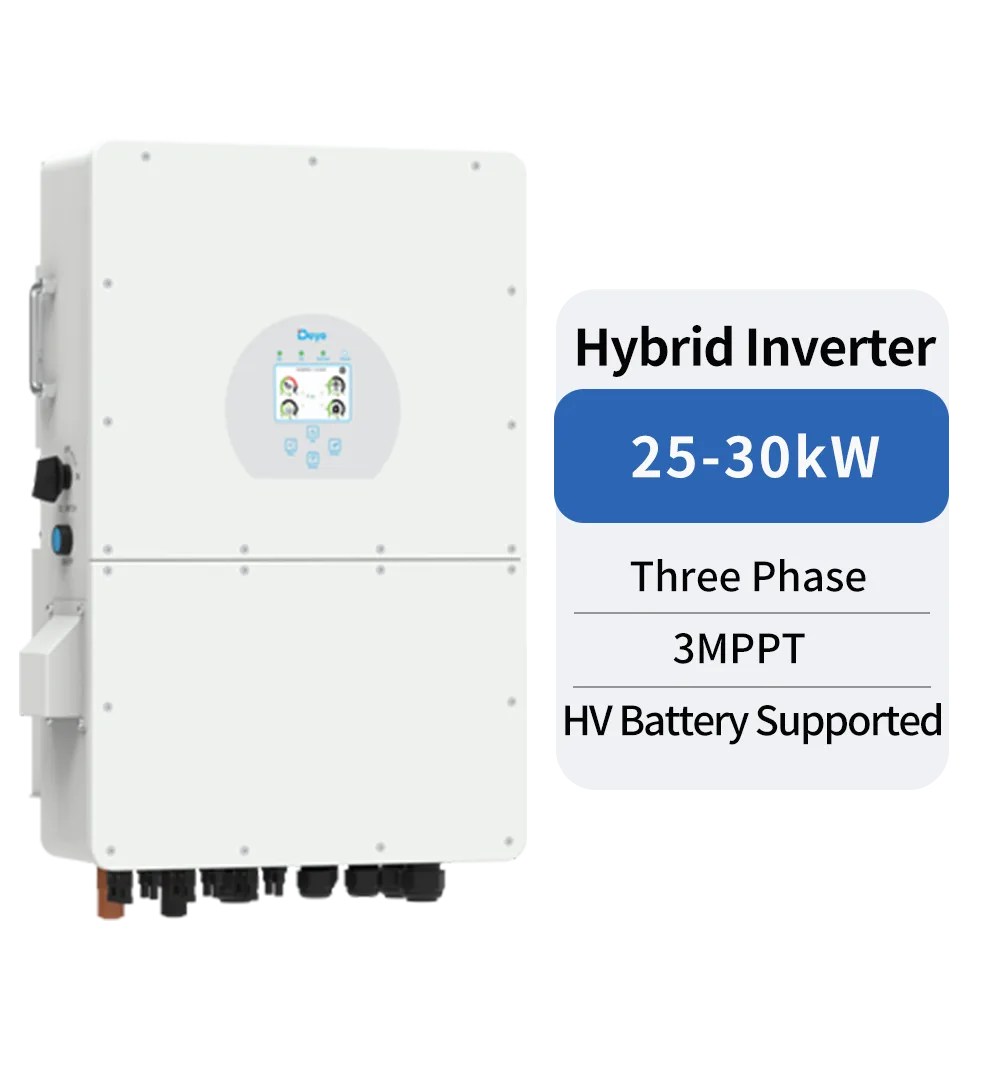
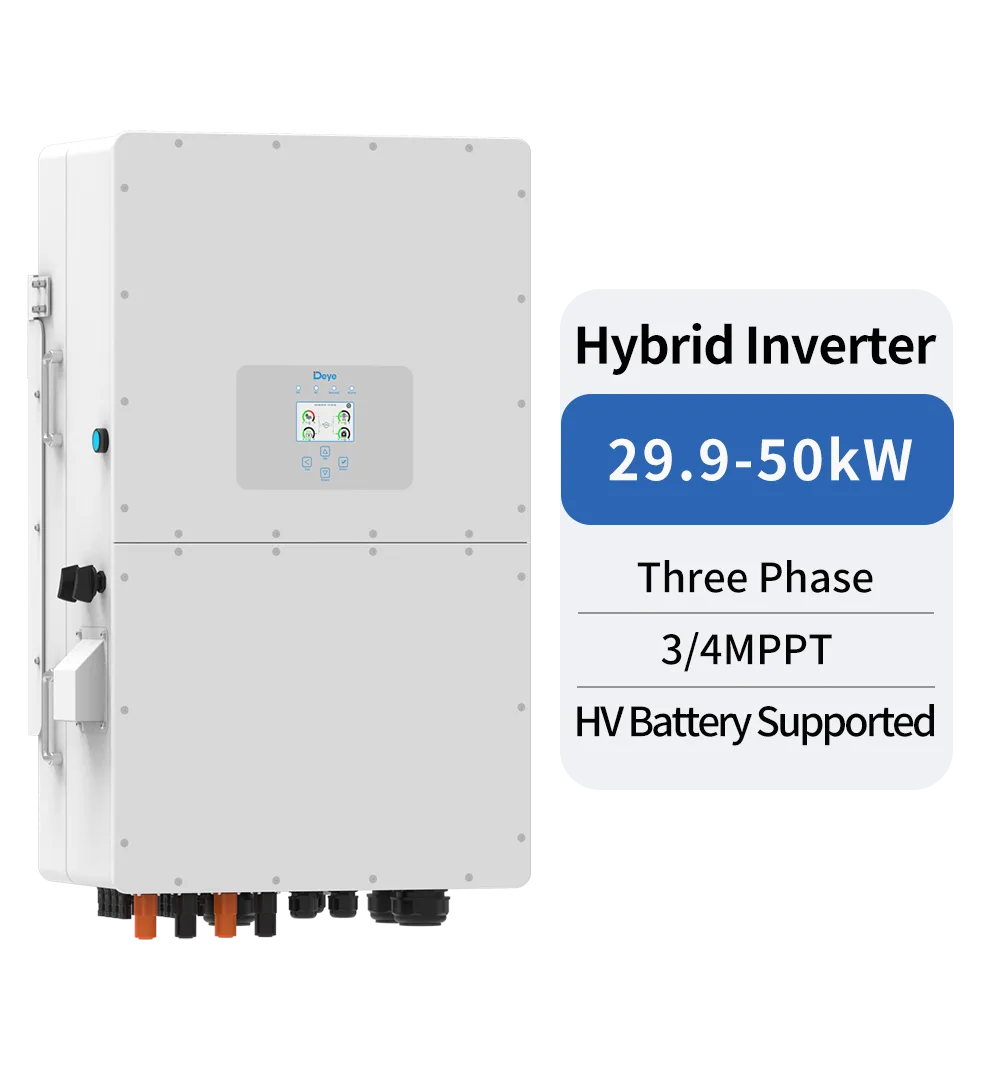
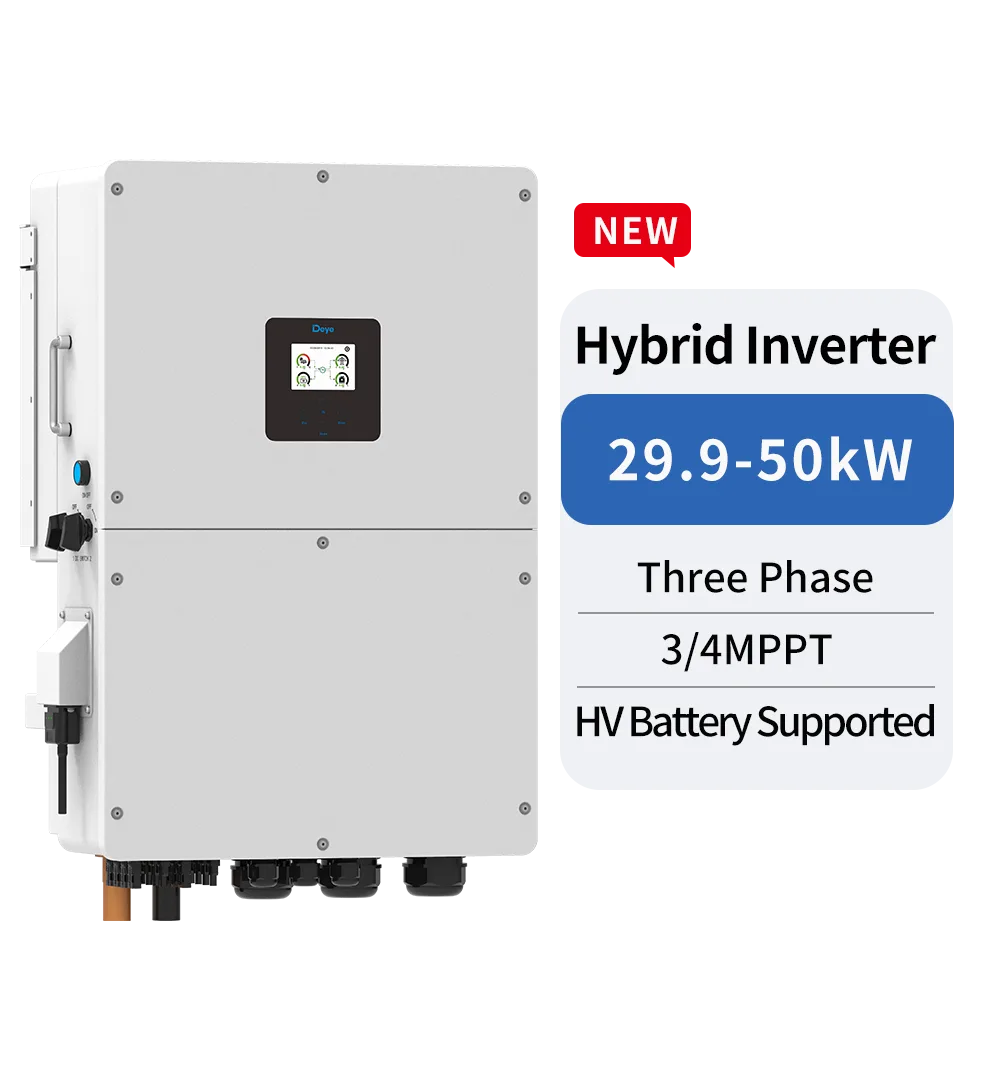
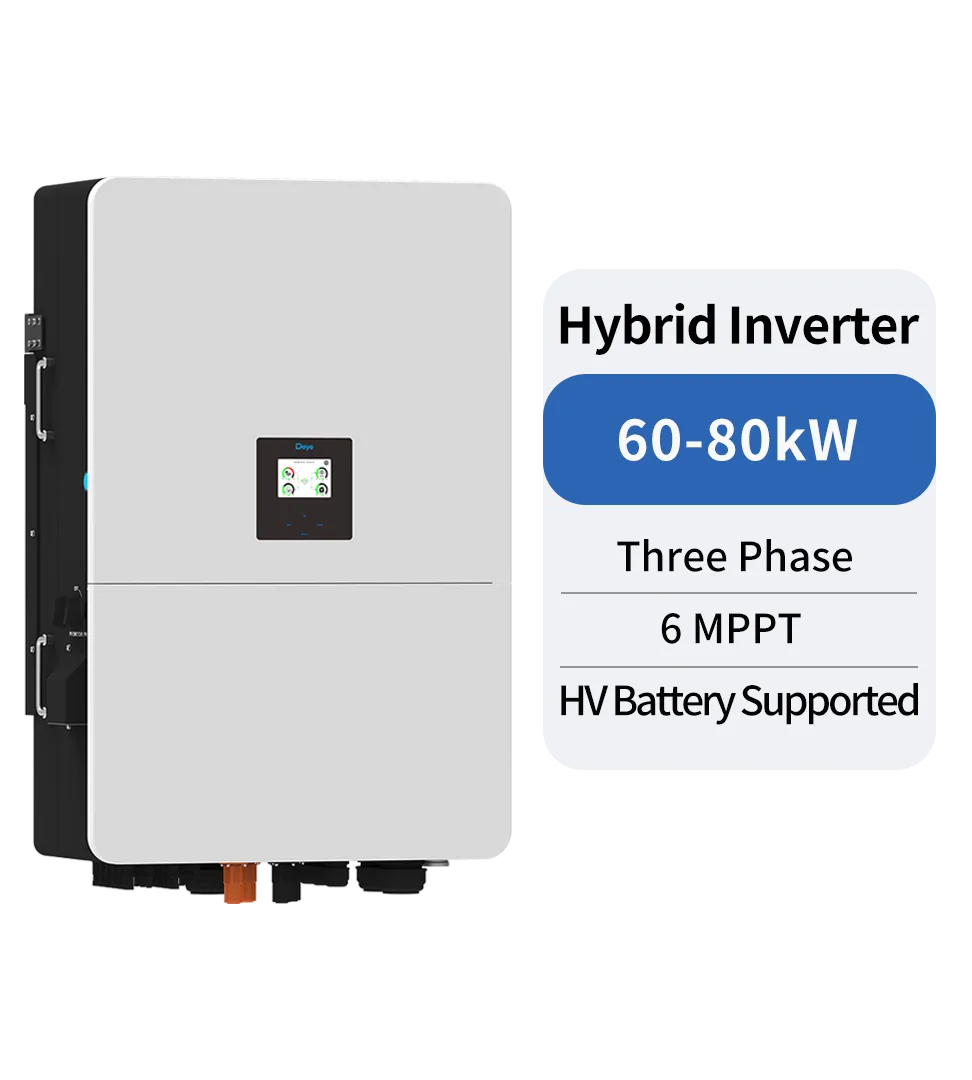
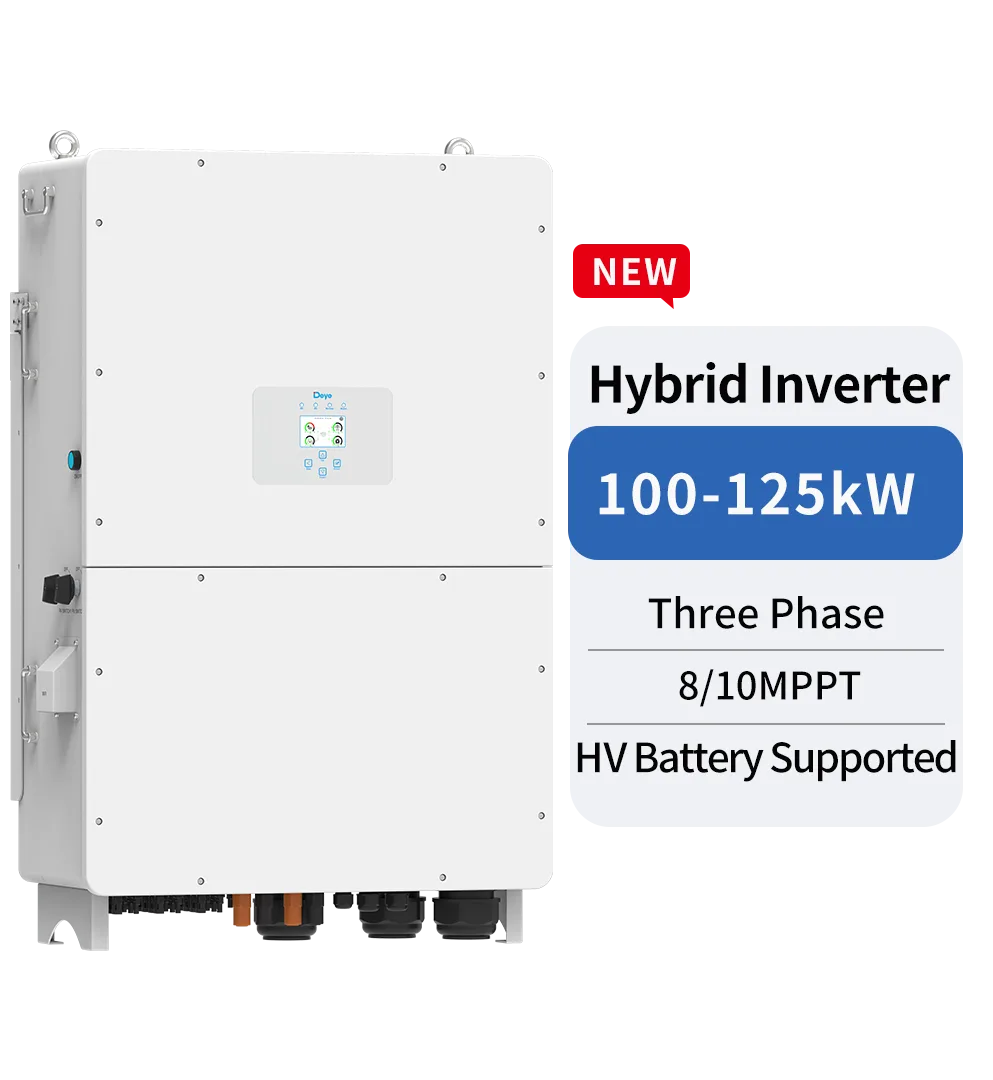
Displayed architecture routes
Separate AC phase, battery voltage and project scale
The Hybrid Inverter category is not one interchangeable series. Start with the operating architecture, then compare the exact suffix and model files.
Single-phase LV hybrid families
Displayed families include 3–18 kW source descriptors with one to three MPPT labels. Confirm nominal AC, PV limits, battery-voltage window, current, backup terminals and market suffix on the exact datasheet.
Split-phase LV and HV families
Displayed US-labelled families span LV and HV battery routes. Confirm split-phase voltage, neutral and grounding arrangement, backup output, battery pairing, transfer behavior, required accessories and destination listing.
Three-phase LV and HV families
Displayed families run from smaller residential/C&I ratings through 100–125 kW source pages. Compare AC voltage, phase, PV inputs, MPPT count, battery architecture, protection and project-level grid/ESS scope.
Regional, revision and option suffixes
EU, US, JP and suffixes such as AM, BM, CM, DM, EM, GM, P or other revisions are part of product identity. Do not shorten them or transfer specifications and documents between similar base names.
RFQ selection checks
Six checks before shortlisting a Deye hybrid inverter
A reviewable RFQ ties the exact model to the site's operating mode, PV array, battery, grid, backup loads and destination evidence.
Operating mode and backup boundary
State grid-connected, self-consumption, time-of-use, backup, generator-coupled or another mode; identify critical loads, whole-site exclusions, transfer requirement and expected behavior during grid loss.
AC system and destination
Provide country, phase, nominal voltage/frequency, service capacity, grounding/neutral arrangement, grid code, export limit and utility or authority documentation required for the exact model and firmware.
PV array and MPPT design
Provide module model, string count, temperatures, Voc/Vmp/Isc/Imp, orientation and shading; verify maximum DC voltage, MPPT window, current per input, string allocation and any oversizing basis.
Battery voltage and pairing
Provide battery make/model, LV or HV architecture, usable energy, voltage window, current, BMS protocol, firmware and approved pairing evidence. A nominal voltage label alone is not compatibility.
Power, loads and parallel scope
Confirm continuous and peak load, motor/start demand, backup output rating, phase balance, parallel quantity and accessories, generator interface and the exact limits and control design for the offered model.
Files and commercial release
Request the exact datasheet, manual, certificate/listing references, compatibility evidence, firmware/settings record, warranty terms, accessories, labels, serial traceability, stock status, lead time and substitution control.
Compatibility and approval boundaries
Hybrid capability does not define a complete approved system
Battery, backup, grid and generator functions depend on the exact model, suffix, firmware, settings, accessories and project design. Keep these boundaries visible in every quotation.
Battery supported is not universal pairing
LV or HV support does not prove compatibility with every battery in that voltage class. Confirm electrical window, current, BMS protocol, firmware, approved list and written pairing for the exact models.
Hybrid is not automatic whole-site backup
Backup terminals, continuous/peak output, transfer behavior, phase arrangement, load shedding, neutral/grounding and external switchgear determine what can operate during an outage.
Parallel and generator claims are model-specific
Permitted unit count, communication, common battery/AC arrangement, generator control, protection, commissioning and firmware conditions must come from the exact manual and approved design.
Regional suffix is not global approval
A model shown in a global catalogue or bearing an EU, US or JP suffix is not automatically accepted in every country. Confirm certificate scope, grid code, firmware, labels and authority requirements for the destination.
Continue the system review
Connect the model shortlist to backup design and inverter guidance
Use the solution page to define loads and responsibilities, then use the buyer guide to compare hybrid, on-grid and off-grid operating roles.
Residential solar backup solution
Review how PV, hybrid inverter, battery, critical-load distribution, protection and local installation responsibilities fit one backup procurement scope.
Review solution context
Hybrid, on-grid and off-grid inverter guide
Use the operating-mode, PV, battery, backup, grid and document checklist before fixing an inverter model in the RFQ.
Read the buyer guide
Deye hybrid inverter FAQ
Questions to close before fixing a hybrid model
These answers support procurement comparison; final electrical design, battery approval, grid acceptance, backup behavior and commissioning remain model- and project-specific.
How should I choose between a Deye LV and HV hybrid inverter?
Start with the approved battery architecture, voltage/current window, required power and energy, phase, PV array, backup loads, cable/protection design and project scale. Then confirm that the exact inverter and battery models, firmware and communication protocol are documented as a supported pairing.
Does a Deye hybrid inverter provide whole-home or whole-site backup?
Do not assume so. Check the exact backup output, continuous and peak power, phase and voltage, transfer behavior, critical-load panel, motor starts, load shedding, neutral/grounding, external switchgear and the local design. Some loads may remain outside the backed-up circuit.
Can similar Deye hybrid model codes share the same datasheet and certificates?
Only when the document scope explicitly covers the full offered code and suffix. Similar families can differ by phase, market, battery class, MPPT count, option, firmware or revision. Keep the complete code on the quotation, approval record, label and shipment documents.
What should a Deye hybrid inverter RFQ include?
Include destination, exact model or target power, phase/voltage/grid code, module and string plan, battery make/model and BMS, critical loads and backup behavior, generator or parallel requirement, protection and accessories, requested files, quantity, delivery target and substitution rules.
Deye hybrid inverter procurement
Deye Hybrid Inverters Across LV and HV Battery Architectures
Compare 34 displayed source pages spanning 3–125 kW family ratings, single-phase, split-phase and three-phase AC, low-voltage and high-voltage battery descriptors, and 1–10 MPPT family labels. The catalogue includes regional and revision suffixes that can change electrical boundaries, battery interface, grid package and documents. Keep the full model code from shortlist through quotation, then confirm PV design, battery pairing, backup scope, grid settings, protection, firmware, certificates and commercial availability for the destination.
Prepare a Deye hybrid inverter RFQ by exact architecture
Send the destination, phase and grid, PV array, exact battery/BMS, backup loads, generator or parallel scope, target model/power, documents, accessories, quantity and delivery target.