
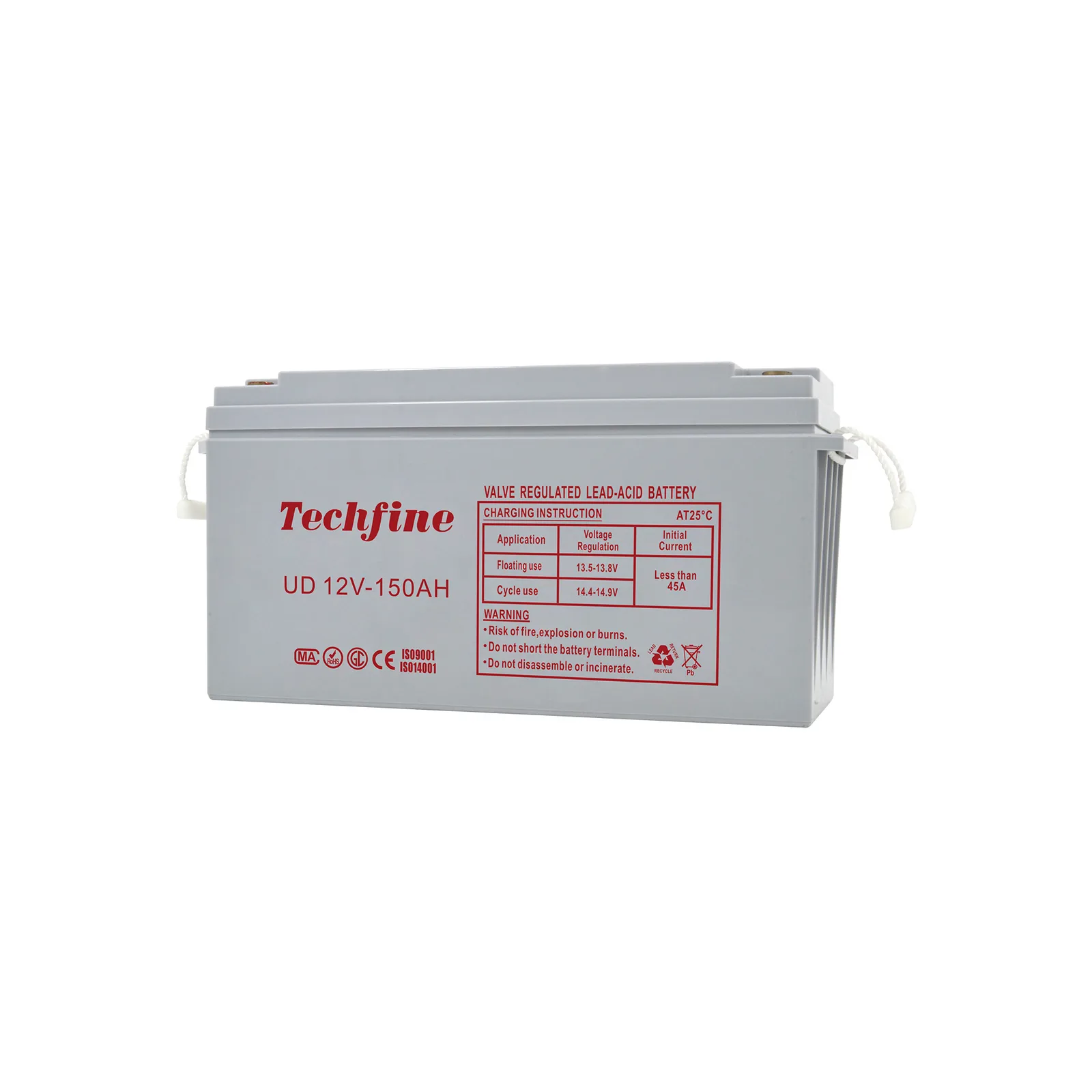
 Lead Acid Battery
Compare the 10 displayed Techfine lead-acid battery pages
Open the exact product page, then confirm chemistry/construction, Ah test basis, charging and duty curves, case/terminal, documents, warranty, current MOQ and supply terms.
Lead Acid Battery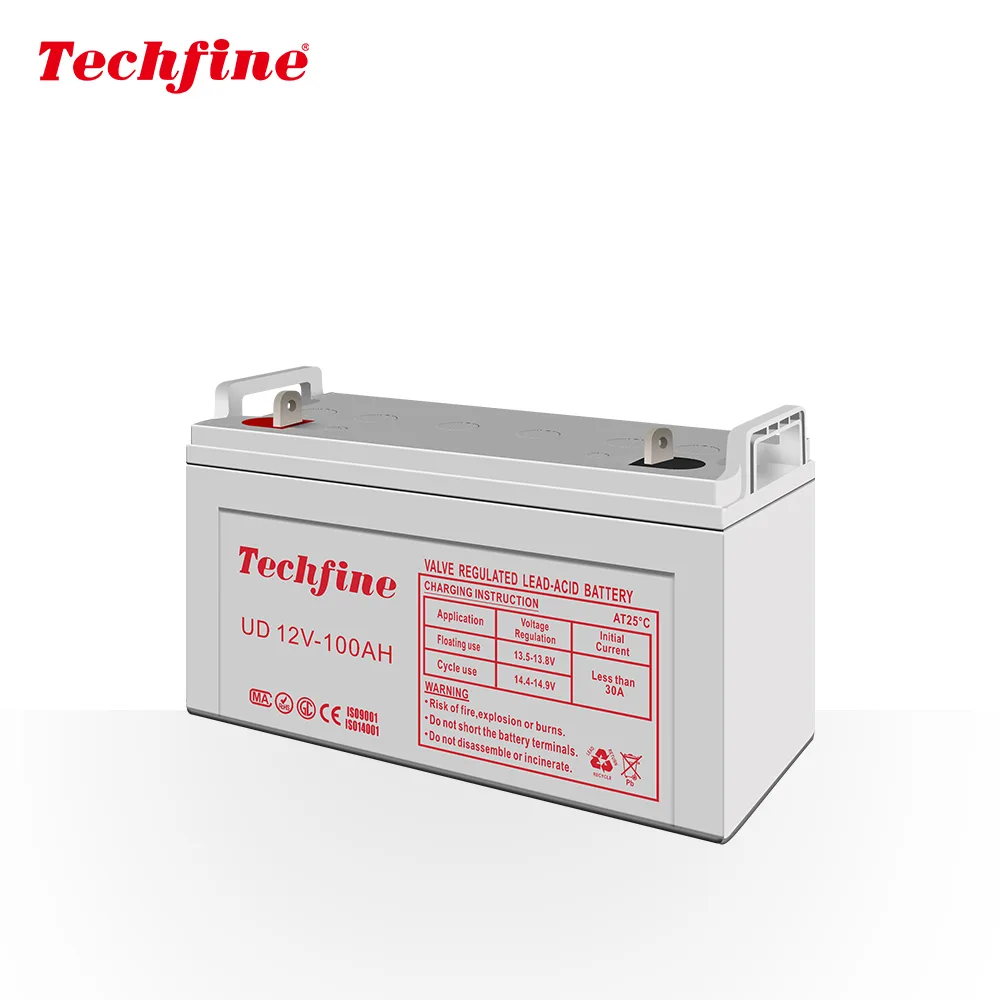 Lead Acid Battery
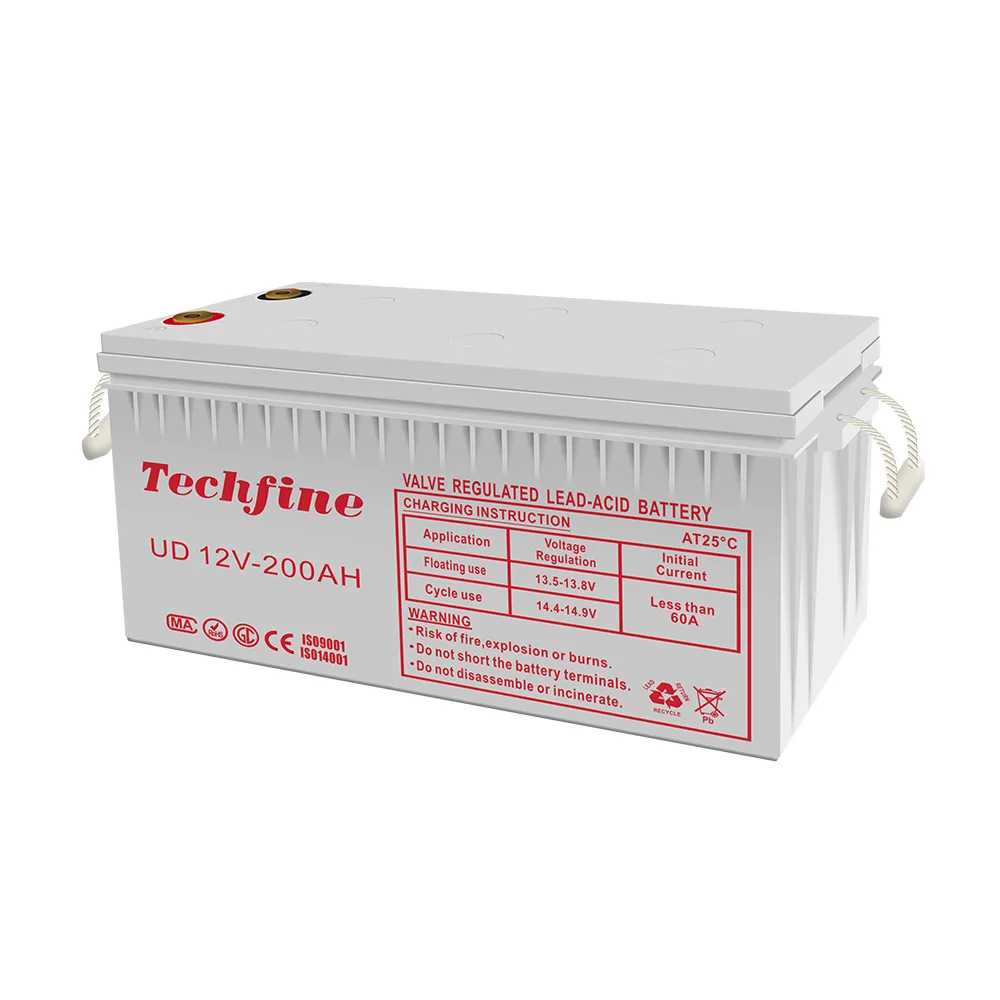 Lead Acid Battery
 Lead Acid Battery
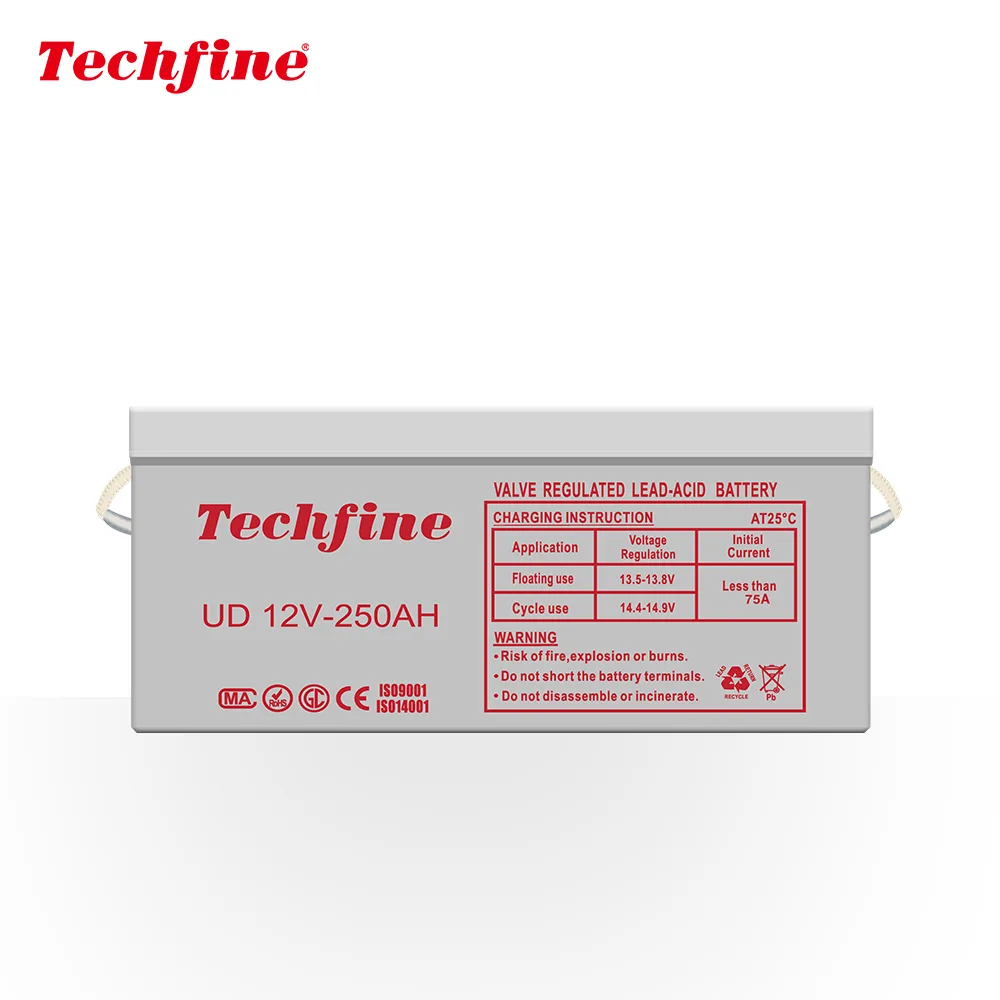
Techfine Gel Battery 12v 250ah Lead Acid AGM Batteries For Solar Home System
Minimum order quantity (MOQ) ≥5 Pieces;
View Details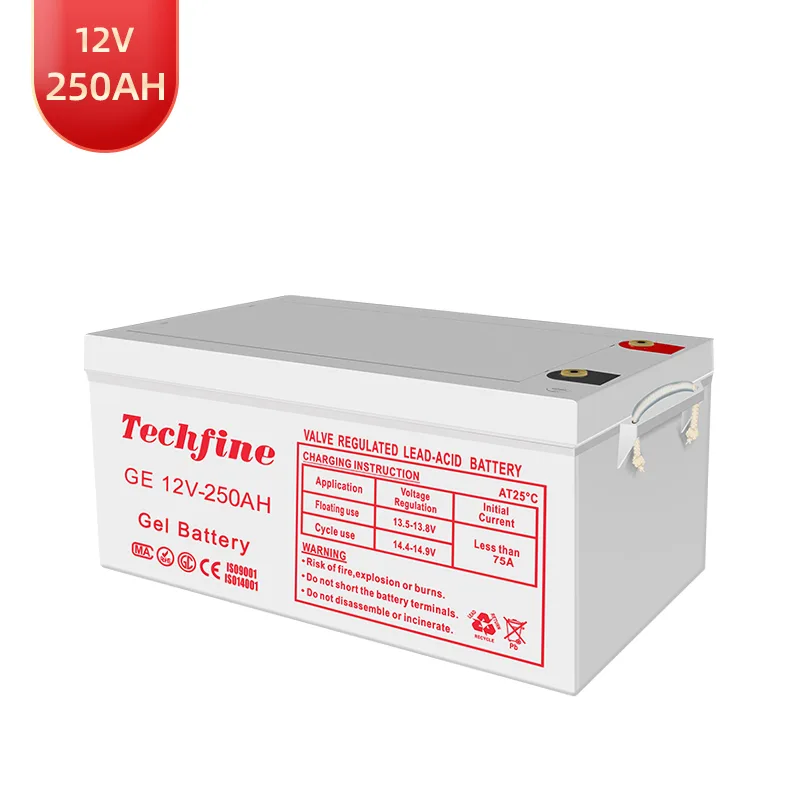 Lead Acid BatteryLead Acid Battery
Techfine Solar Battery 12V 250AH Lead Acid Battery Off Grid
Minimum order quantity (MOQ) ≥5 Pieces
View Details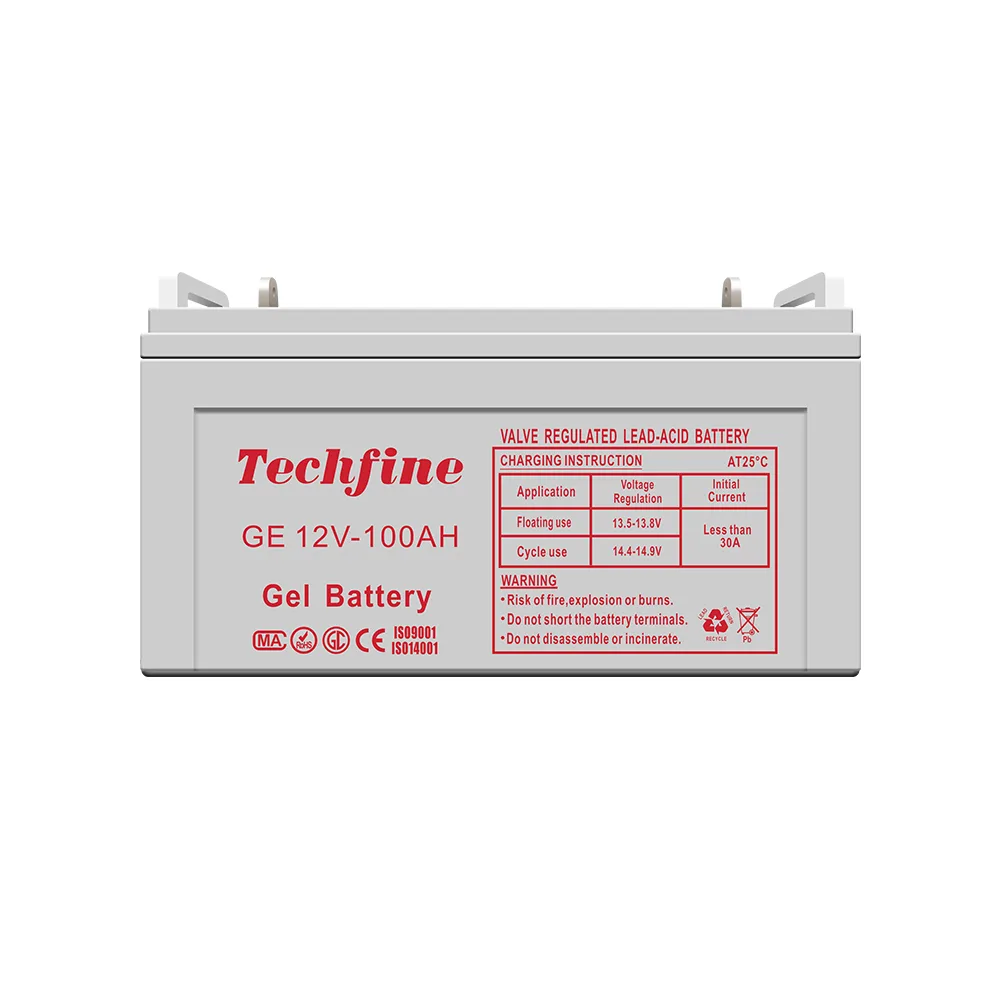 Lead Acid Battery
 Lead Acid Battery
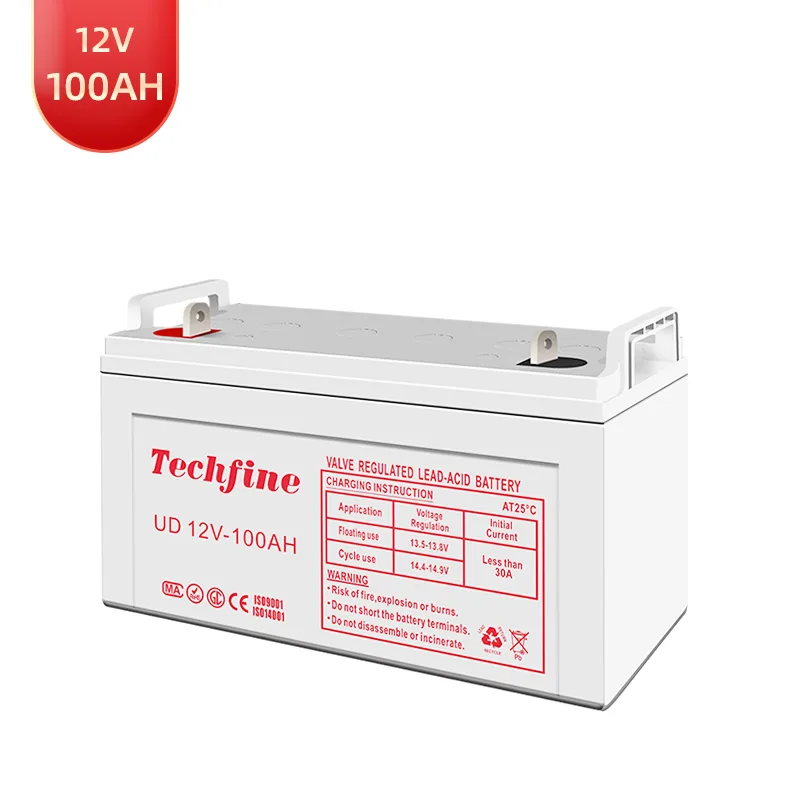
12V 100AH Lead Acid Battery Long
Tips:
5.Good charge receptively and Deep discharge protection
View Details Lead Acid Battery
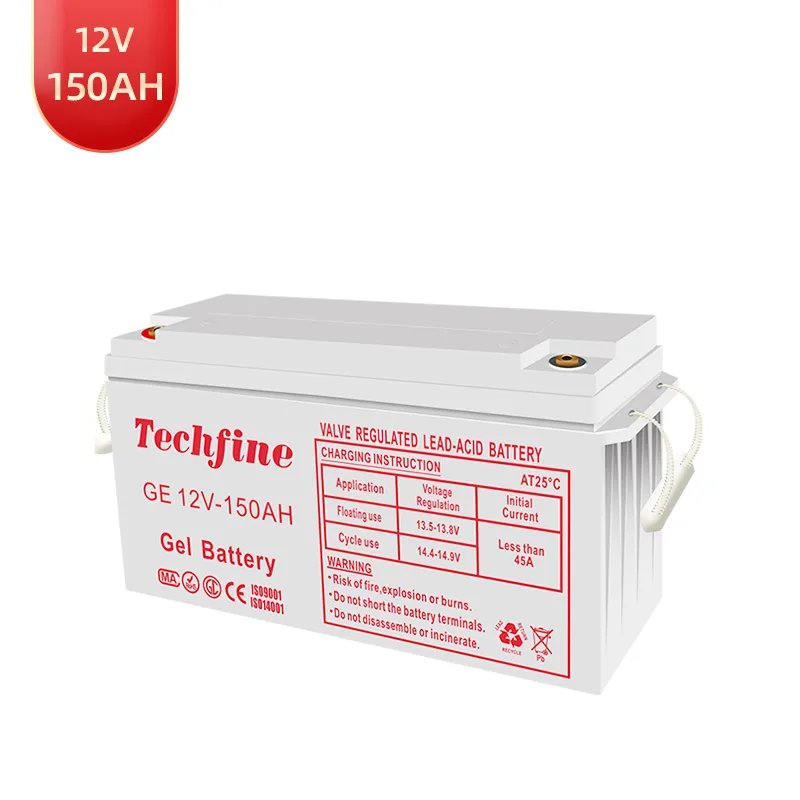 Lead Acid Battery
Displayed battery routes
Separate AGM, Gel, capacity and case construction
The catalogue contains overlapping voltage/capacity labels with different construction and case descriptions. Exact dimensions and charging data remain essential.
AGM and VRLA routes
Several pages reference AGM separators, sealed valve-regulated construction and maintenance-free wording. Confirm exact valve design, charge/float voltage, ventilation, case material, terminals and intended cyclic/standby duty.
Gel battery routes
Displayed Gel pages include 100–250 Ah labels and temperature/life wording. Request the exact datasheet and test basis; do not transfer a range or design-life statement to other AGM/Gel pages.
100–250 Ah capacity pages
Nominal Ah must include test rate, cutoff voltage and temperature. Compare rated energy, usable depth of discharge, current, recharge time and aging on a common duty basis.
Short, long and other case variants
Similar 12 V 100 Ah or 250 Ah titles can represent different dimensions and terminal layouts. Confirm case code, size, mass, terminal type/polarity, rack/box clearance and handling.
Battery RFQ checks
Six checks before selecting a Techfine lead-acid battery
A reliable bank design begins with duty, capacity-test basis, charging, environment and exact mechanical identity.
Cyclic or standby duty
State solar cycling, backup/UPS float, telecom or another use; provide cycles, outage frequency, daily energy, reserve, autonomy and required recovery time.
Capacity and discharge basis
Confirm Ah test rate, cutoff voltage and temperature, expected load/current and usable DOD; request discharge curves rather than converting nominal Ah directly into runtime.
Charging profile
Confirm bulk/absorption/float and equalization rules, maximum charge current, temperature compensation, charger/inverter settings and series-bank balance requirements for the exact AGM or Gel model.
Bank configuration
Define system voltage, series/parallel quantity, cable/fuse arrangement, equal-length connections, string protection, monitoring, replacement policy and compatibility of batteries within one bank.
Environment and mechanics
Provide ambient range, ventilation, enclosure, orientation, vibration and access; confirm exact case dimensions, mass, terminal, torque, polarity, spacing and handling.
Evidence and commercial scope
Request datasheet, curves, test/certificate and transport/SDS scope, manufacturing/lot traceability, warranty conditions, packaging, current MOQ/sample policy, lead time and substitution control.
Life and runtime boundaries
Nominal Ah and design-life wording are not delivered runtime or warranty
Actual performance depends on rate, cutoff, temperature, depth of discharge, charging, storage and bank maintenance.
Ah needs a test rate
A 100, 150, 200 or 250 Ah label is incomplete without hour rate, cutoff and temperature. Higher discharge current generally reduces accessible capacity and runtime.
Design life is not guaranteed service life
Source wording such as 15-year design life must remain tied to the exact model and stated standby/test conditions; cycling, heat, undercharge and deep discharge can materially shorten service.
AGM and Gel are not automatic substitutes
Charge voltage, temperature behavior, cycle/float duty, internal resistance, dimensions and terminal layout can differ. Revalidate charger settings and mechanical fit before substitution.
Maintenance-free does not mean condition-free
Sealed VRLA batteries still require correct ventilation, temperature, charging, terminal inspection, bank balance and safe end-of-life handling under applicable rules.
Continue the battery review
Connect battery-bank selection to charging compatibility and backup design
Use the compatibility guide for charge settings and the backup solution for load, autonomy and responsibility context.
Battery and inverter compatibility checks
Review voltage/current, lead-acid charging stages, temperature compensation, protection, cables and commissioning before fixing a bank.
Review compatibility
Residential solar backup solution
Review how loads, inverter/charger, battery bank, protection and local installation form one backup scope.
Review backup context
Techfine lead-acid battery FAQ
Questions to close before building an AGM or Gel battery bank
These answers support procurement; final capacity, runtime, charging, ventilation and bank design remain application-specific.
Can two Techfine 12 V batteries with the same Ah rating be substituted?
Not automatically. Confirm AGM/Gel construction, case dimensions, terminal/polarity, mass, capacity test rate, discharge curves, internal resistance, charge/float settings, cycle/standby duty and warranty.
How should lead-acid battery runtime be calculated?
Use the actual load/current, battery discharge curve at the relevant hour rate and temperature, cutoff voltage, inverter losses, series/parallel bank, aging and permitted depth of discharge. Nominal volts times Ah is only a starting value.
Does 15-year design-life wording mean a 15-year warranty?
No. Confirm the exact model, stated float/test conditions, temperature and end-of-life criterion plus the written warranty. Cycling, heat, storage and charging can change actual service life.
What should a Techfine lead-acid battery RFQ include?
Include exact product/case, AGM or Gel, system voltage, Ah/rate and load/autonomy, cyclic or standby duty, charger settings, environment, terminals/rack, documents, quantity, sample, packaging and delivery target.
Techfine lead-acid battery procurement
Techfine 12 V AGM, Gel and VRLA Batteries for Solar and Backup Duty
Compare 10 displayed source pages spanning 12 V, 100–250 Ah labels, AGM and Gel routes, and short/long case descriptions. Capacity and chemistry labels alone do not establish usable energy, cycle life, standby life or interchangeability. Preserve the exact product/page identity, then confirm battery type and construction, C-rate capacity basis, dimensions and terminals, charge/float/equalization limits, cyclic or standby duty, depth of discharge and temperature, series/parallel bank design, test and transport documents, warranty, current MOQ/sample status and commercial terms.
Prepare a Techfine AGM or Gel battery RFQ
Send the duty, system voltage, load/autonomy, Ah test basis, charging, bank layout, environment, exact case, files, quantity and schedule.