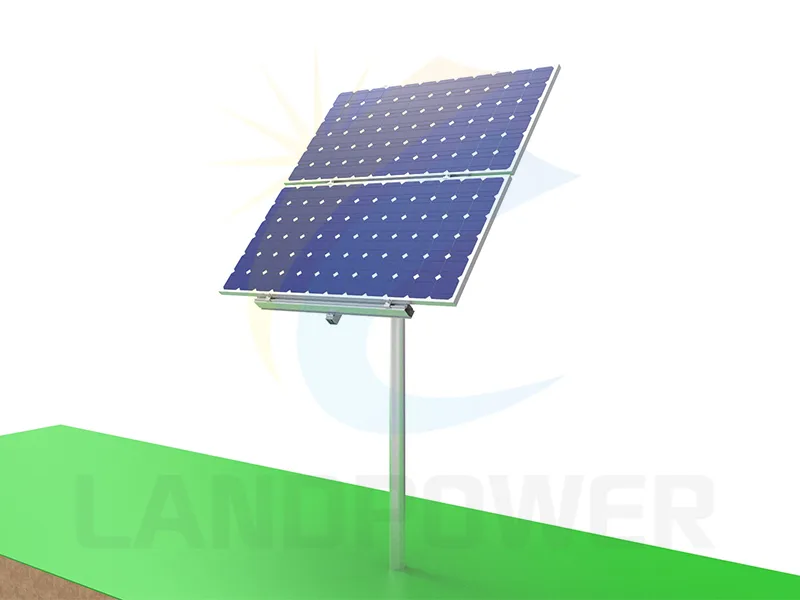
Compare the two displayed pole-mount routes

Open the top-of-pole or adjustable side-of-pole page for available catalogue fields. Confirm the exact item, module area, approved pole interface, foundation, loads, documents and order scope in the RFQ.

Displayed mounting routes

Choose top-of-pole or side-of-pole from the complete load path

The two catalogue products serve different geometries. Neither route establishes the capacity of an existing pole or foundation without project verification.

Adjustable side-of-pole mounts

Review bracket offset, permitted pole diameter or section, clamp or bolt geometry, module size, approved tilt positions, locking, torsion, rotation, tool access and cable movement.

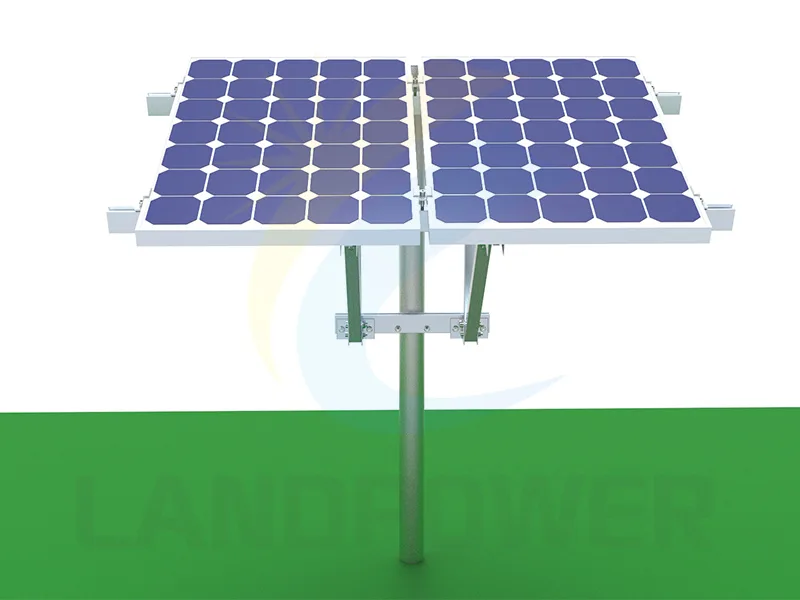
Top-of-pole mounts

Confirm pole-head connection, array centroid, module count and orientation, tilt, cantilever and torsion, erection/lifting method, access and protection of cables entering or running down the pole.

New pole and foundation packages

If the pole is in supply, define material, section, length, coating, base or embedment, foundation interface, tolerances, access openings, bonding and the responsible civil/structural design.

Existing pole retrofits

Record pole material, dimensions, wall thickness, joints, corrosion, previous loads, foundation and ownership. Do not assume a lighting, telecom or utility pole has spare structural capacity.

RFQ selection checks

Six checks before requesting a pole-mount quotation

Define the array and the entire pole-foundation system so the bracket is not reviewed in isolation.

Application and site

State the use—remote power, pumping, lighting, monitoring or another compact array—plus location, terrain, exposure, access, security, people nearby and maintenance constraints.

Modules and array area

Provide exact module dimensions, mass, frame and mounting guidance, module count, portrait/landscape orientation, total projected area, cable arrangement and equipment attached to the pole.

Pole condition and geometry

Provide pole material, section, diameter or width, wall thickness, height, taper, joints, base/embedment, corrosion condition, photos/drawings and whether drilling or clamping is permitted.

Foundation and ground

Provide foundation drawings or site/geotechnical information, soil and groundwater conditions, embedment or base details, buried services, excavation limits and the responsible verification route.

Loads, tilt and locking

Provide governing wind, snow, seismic and maintenance loads, allowed tilt positions, eccentricity, torsion, anti-rotation and locking requirements plus safe adjustment/installation method.

Materials, cables and documents

Specify coatings and fasteners, galvanic/corrosion environment, protected cable route, bonding, drawings, calculations where included, installation/torque guidance, labels, packing and spares.

Structural and operational boundaries

The bracket, pole and foundation must be verified as one system

Pole mounting concentrates wind and eccentric loads into a compact support. Final suitability depends on the exact array, connection, pole, foundation, site and adjustment procedure.

Existing poles need capacity review

Original use, section loss, joints, base, foundation, previous equipment and ownership restrictions affect spare capacity. A compatible diameter does not prove structural suitability.

Eccentricity and torsion matter

Side mounts and tilted arrays can create bending, torsion and rotation demands. Use the actual array area, offset, height, tilt, exposure and load combinations in the responsible calculation.

Adjustment must be controlled

Only approved positions, locking hardware and procedures should be used. Changing tilt can change clearance, loads, fastener demand, cable movement and safe access.

Foundation approval is separate

A bracket rating does not approve the pole base or soil. Foundation type, geometry, reinforcement/embedment and ground response require project evidence and local design.

Continue the project review

Connect pole mounting to the remote-power system scope

Use the remote microgrid solution to frame equipment and operating context, then control the bracket, pole, foundation and document lines in the project BOM.

Pole mount FAQ

Questions to close before attaching an array to a pole

These answers support a shortlist; final pole, foundation, structural, electrical, installation and safety approval remains project-specific.

Can a solar mount be added to an existing pole if the clamp fits?

Not on fit alone. Confirm the pole material, section and wall thickness, height, joints, corrosion, base and foundation, previous equipment, ownership restrictions, module area, offset, tilt and site loads. The responsible party must verify spare capacity and the connection.

What is the difference between top-of-pole and side-of-pole mounting?

They place the array and connection differently. That changes the centroid, eccentricity, bending, torsion, rotation, pole-head or side connection, cable route, lifting, service access and possible module count. Compare the approved complete-system design, not only bracket shape.

Can an adjustable pole mount use any tilt angle?

No. Use only documented positions and locking arrangements for the exact product and approved design. Tilt changes projected area, loads, clearances, fastener demand and cable movement, and adjustment needs a safe procedure.

What should a pole-mount solar RFQ include?

Include application and site, exact module and array area, pole drawings/dimensions/condition, foundation or ground information, mount position and tilt, governing loads and code, materials/corrosion, cable route, drawings/calculations required, installation access, quantity and destination.

Pole mount procurement

Pole Mount Solar Panel Systems for Remote and Compact Arrays

Compare two displayed routes: an adjustable side-of-pole mount and a top-of-pole mount. Position on the pole changes the load path, eccentricity, rotation risk, service access and cable route. Confirm the exact module area and mass, pole section and condition, bracket geometry, permitted tilt, wind/snow design, foundation capacity, corrosion, fasteners, locking, installation method, documents and project responsibility before selection.

Prepare a pole-mount RFQ with array and support details

Send the application, module count and dimensions, pole section and condition, foundation or ground data, mount position and tilt, loads and code, materials, cable route, document scope, quantity and destination.

Build Pole Mount RFQ
Chat with Us