
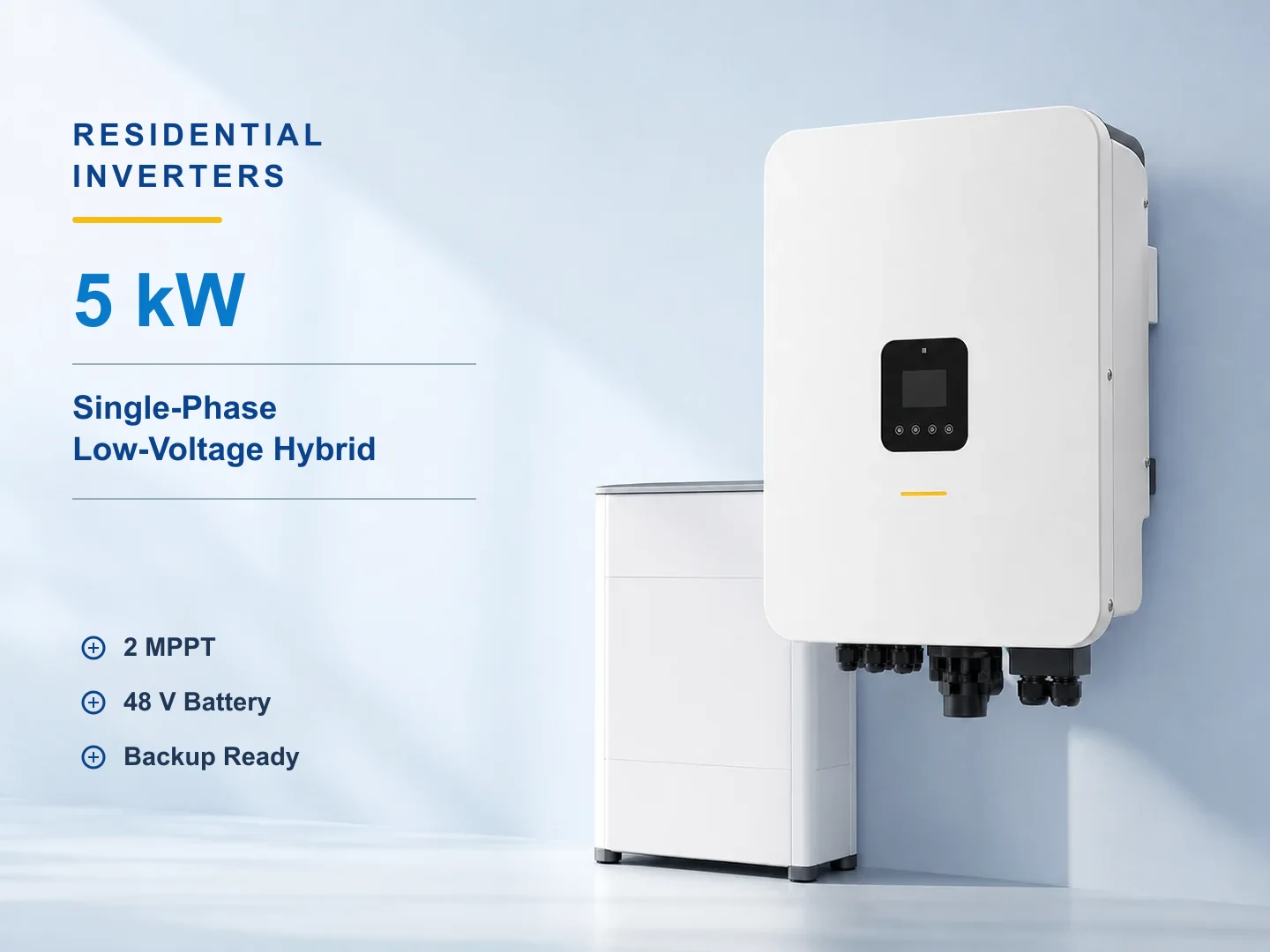
5kW Single-Phase Low-Voltage Hybrid Inverter
5 kW single-phase hybrid for solar-plus-storage homes and small villas.
Single-phase hybrid2 MPPT
View DetailsOpen a product page to review its sourcing configuration, then confirm the approved factory model, exact electrical limits, accessories, firmware, documents, compatibility, order status, and destination requirements in the RFQ.
5 kW single-phase hybrid for solar-plus-storage homes and small villas.
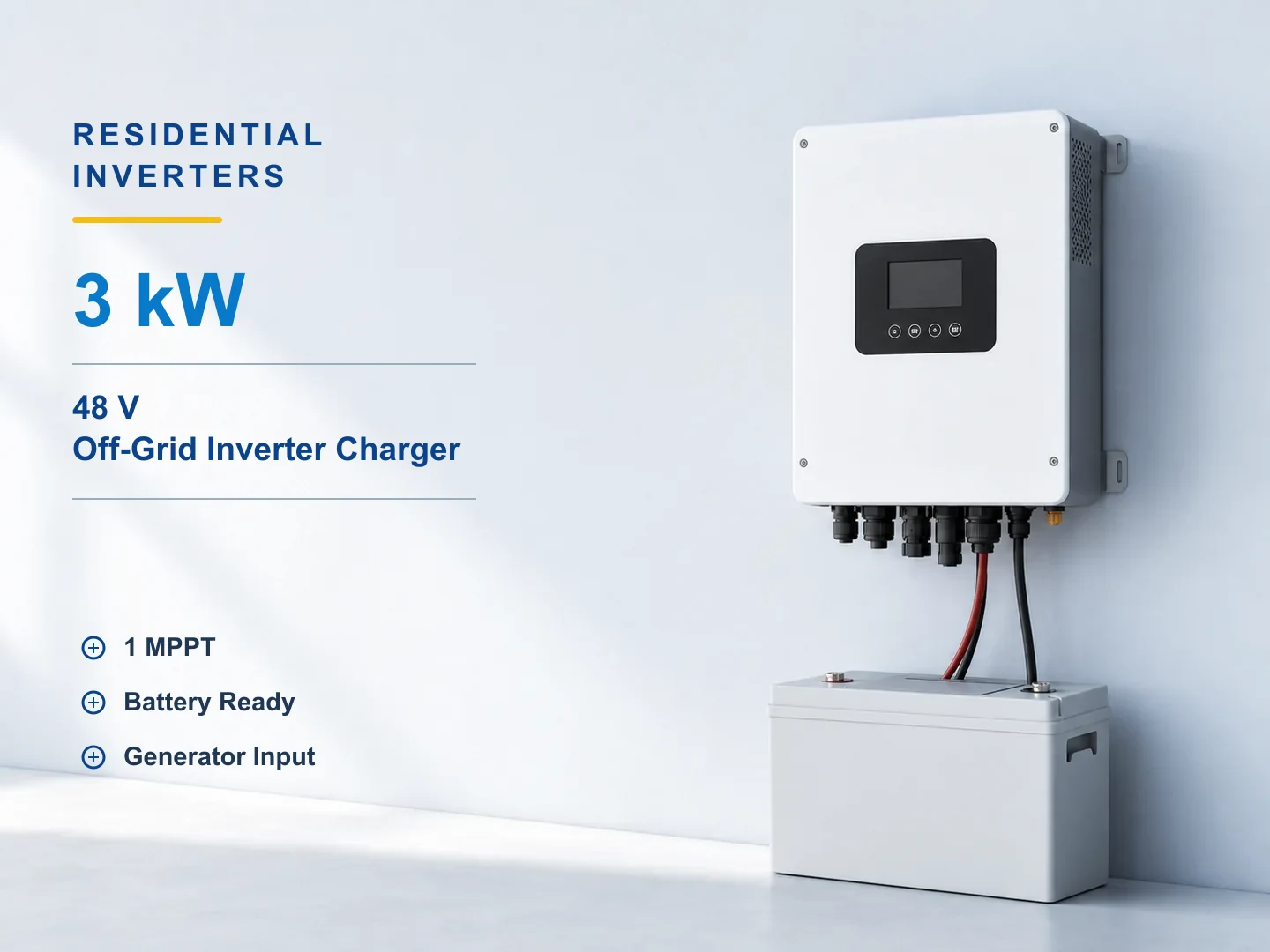
3 kW off-grid inverter charger for remote homes, cabins and weak-grid sites.
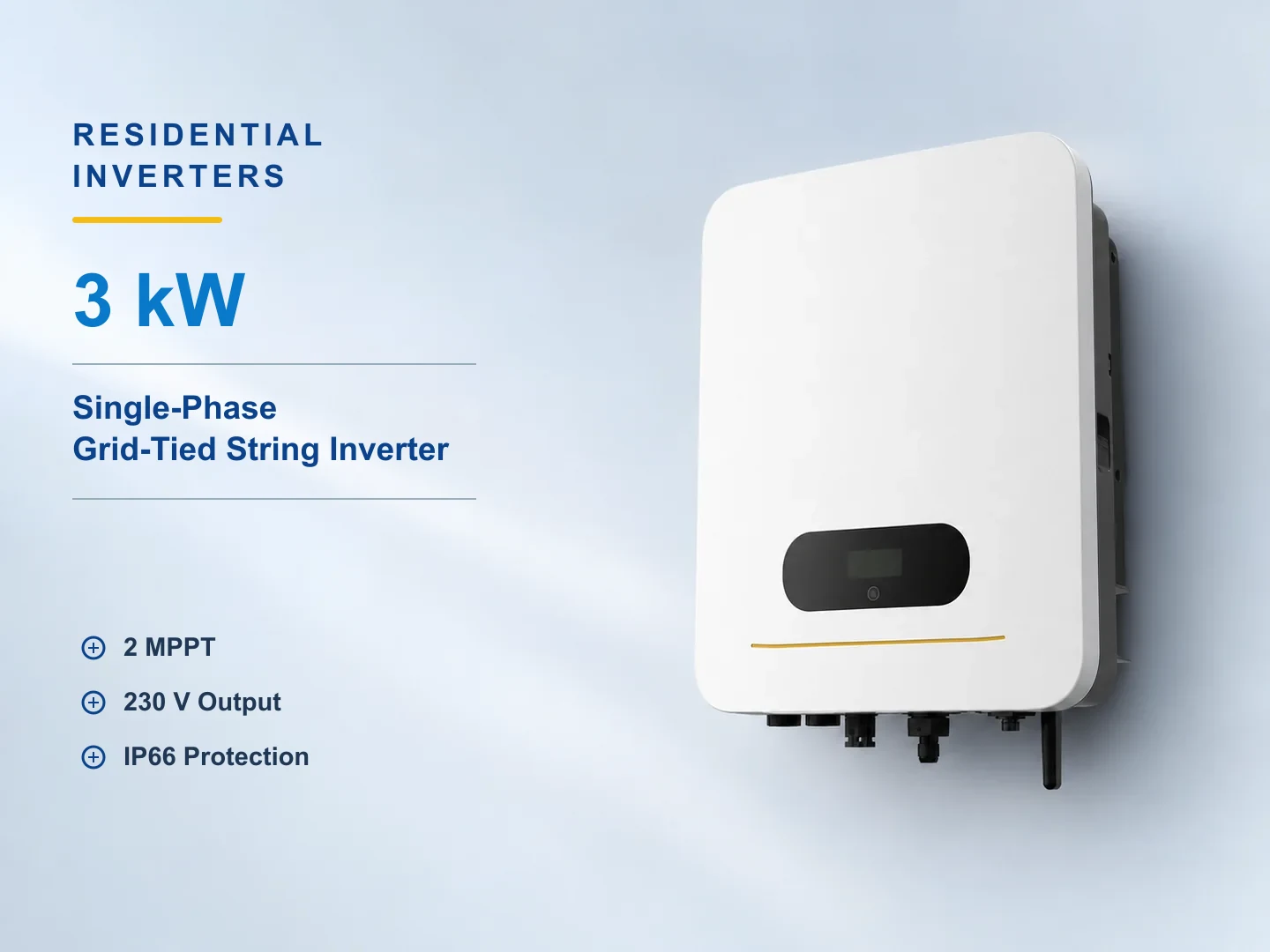
3 kW single-phase on-grid for apartment and small-home rooftop systems.
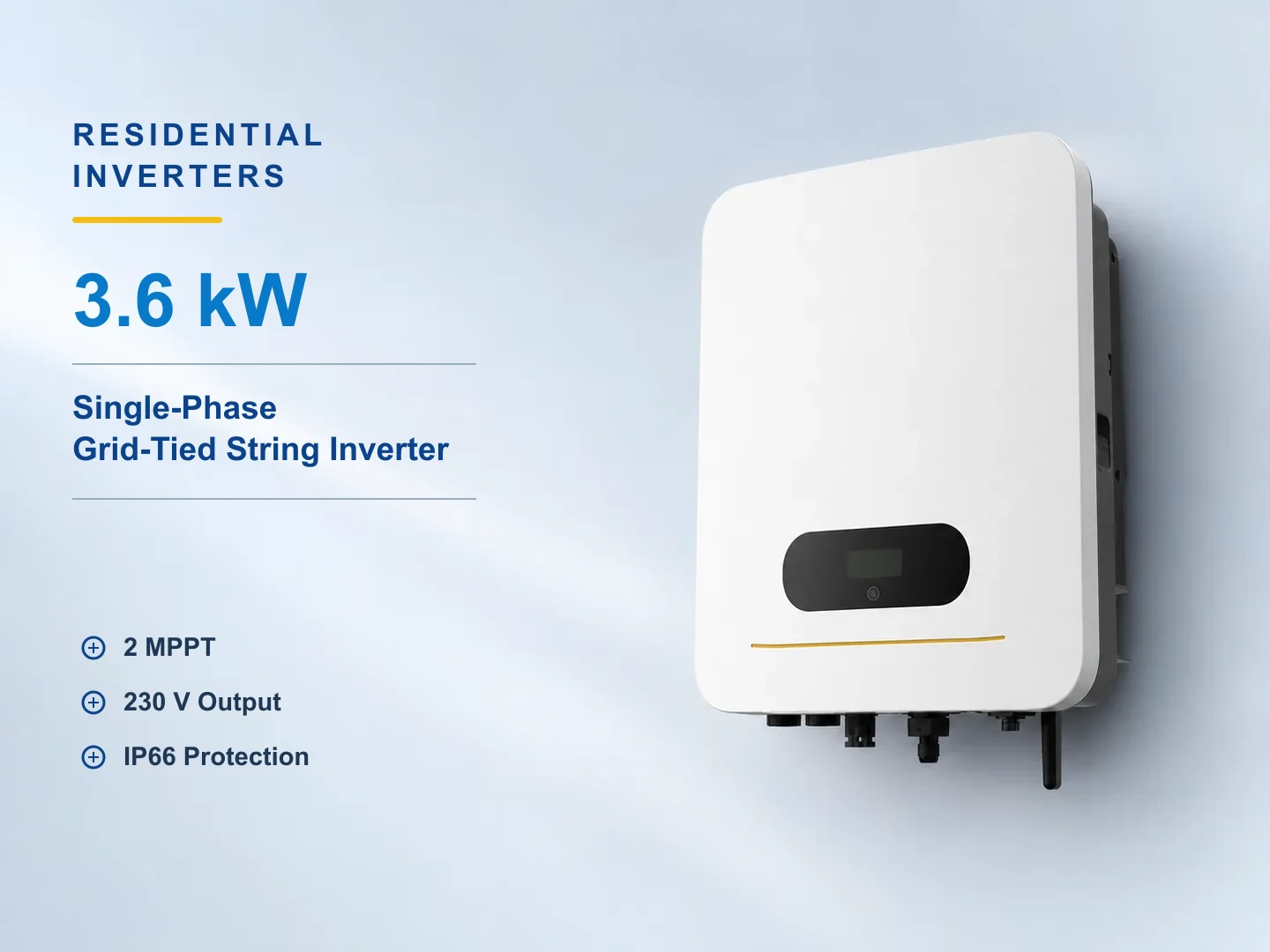
3.6 kW single-phase on-grid for standard residential rooftops.
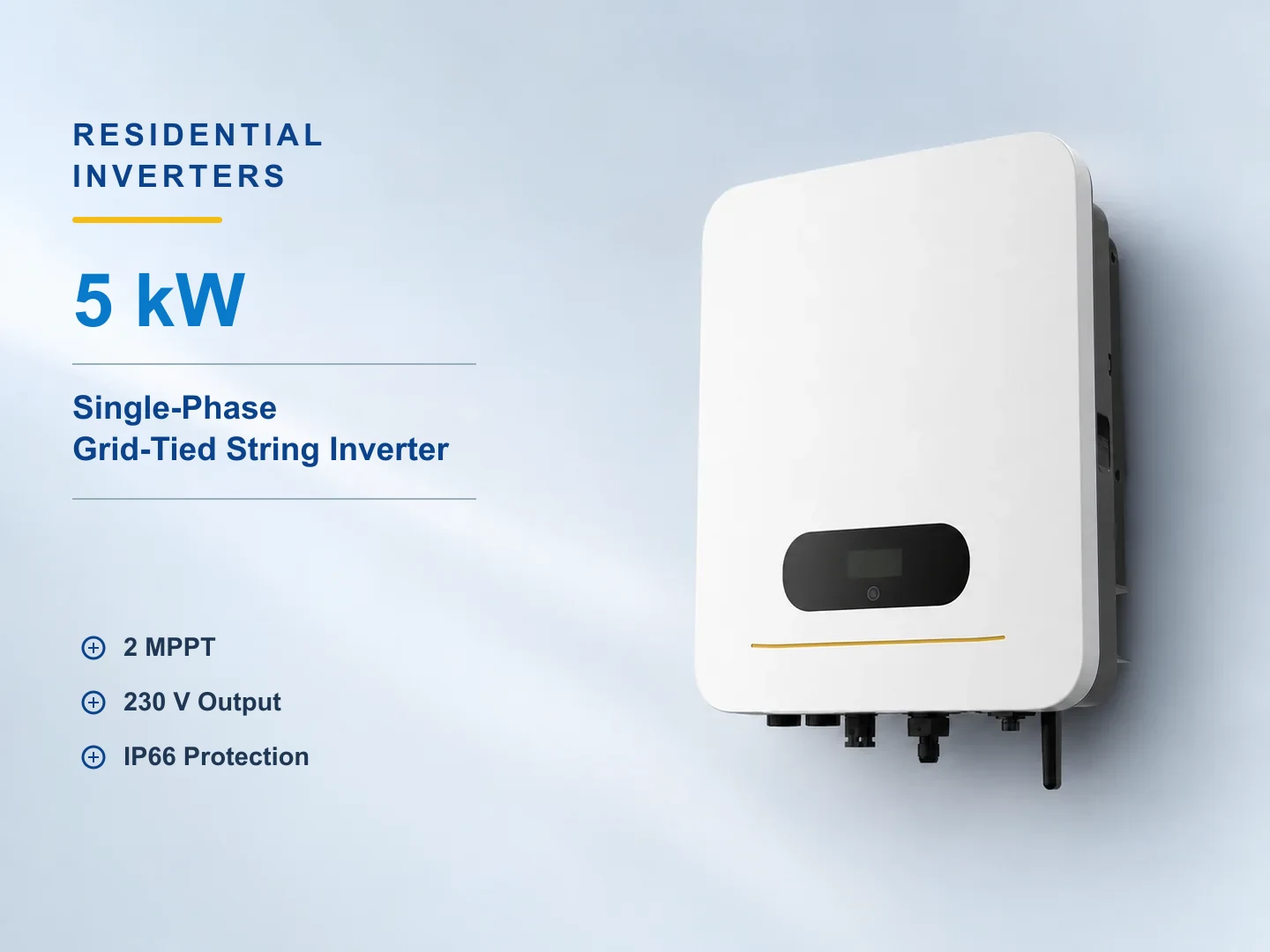
5 kW single-phase on-grid for larger homes and high-consumption households.
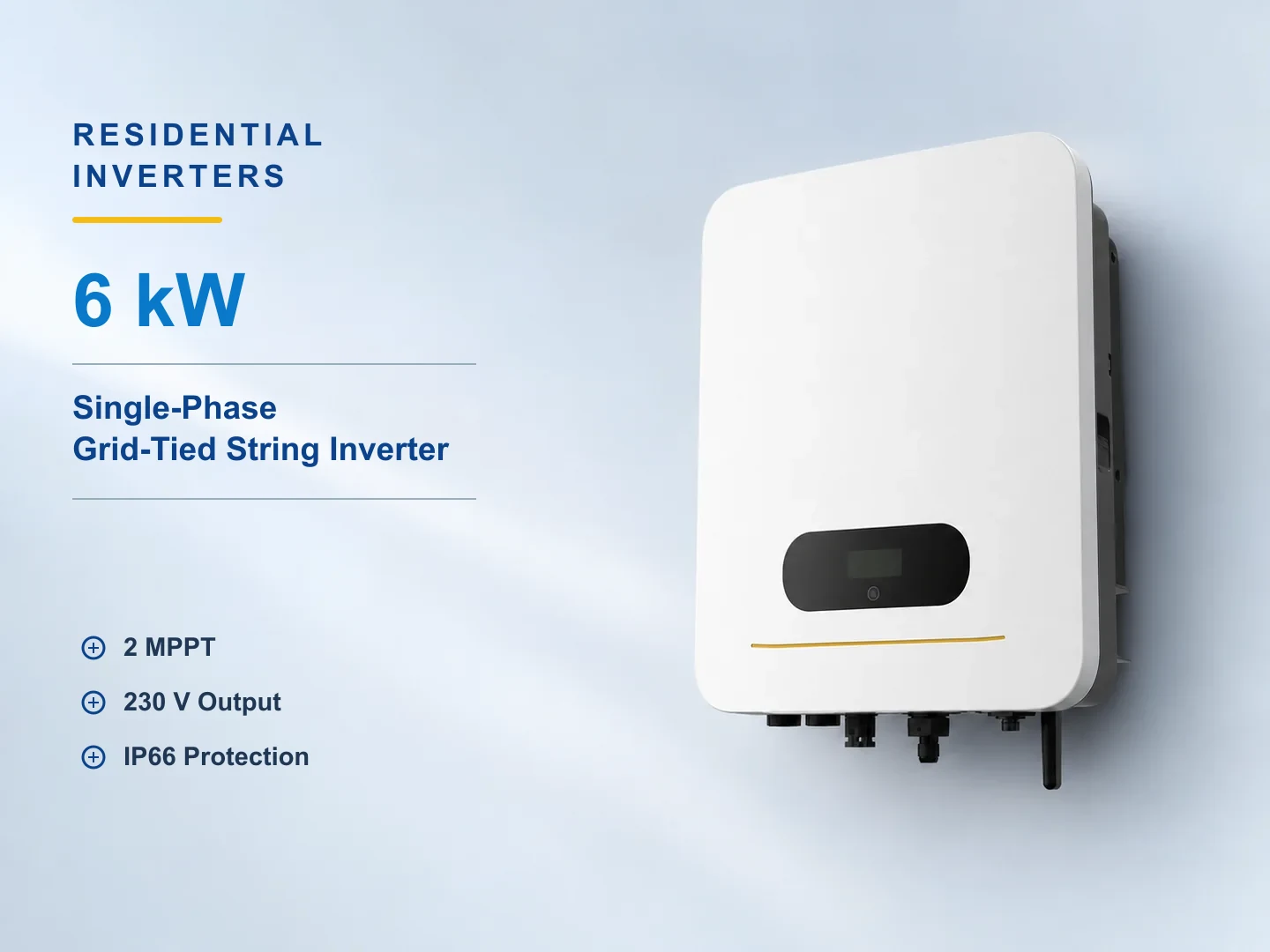
6 kW single-phase on-grid for high-load single-phase homes and small villas.
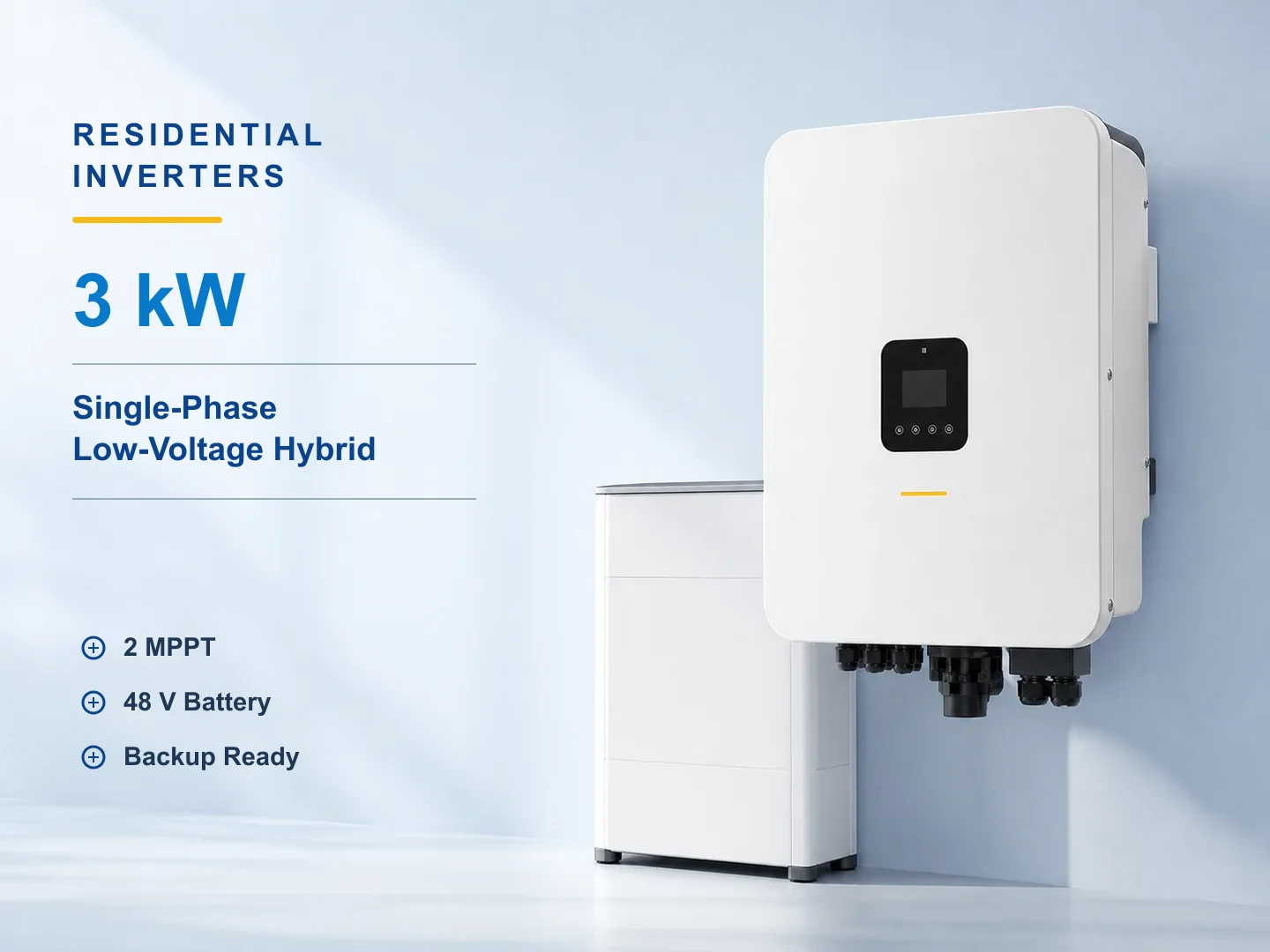
3 kW single-phase hybrid for battery-ready homes and essential-load backup.
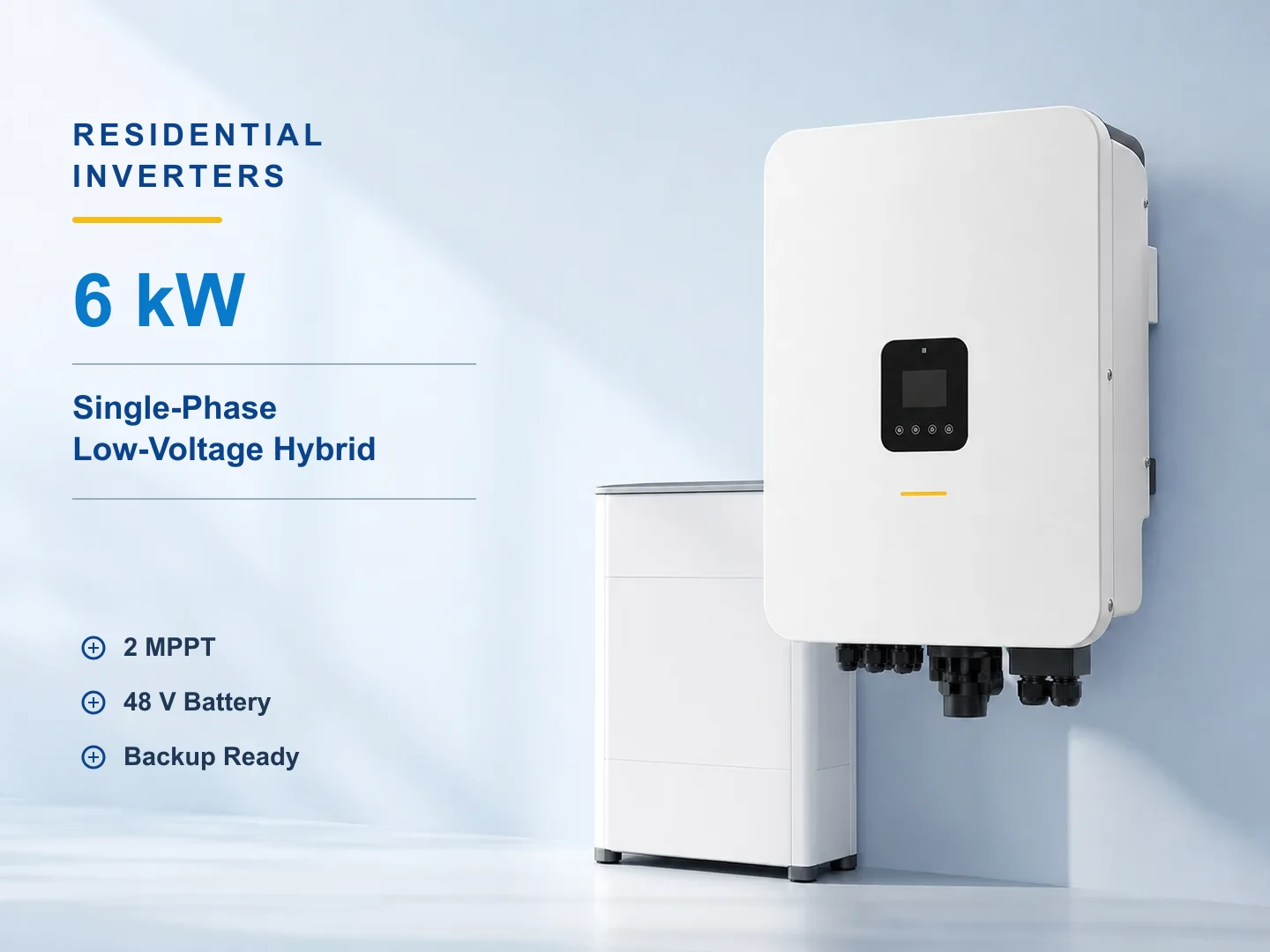
6 kW single-phase hybrid for high-consumption homes requiring storage and backup.
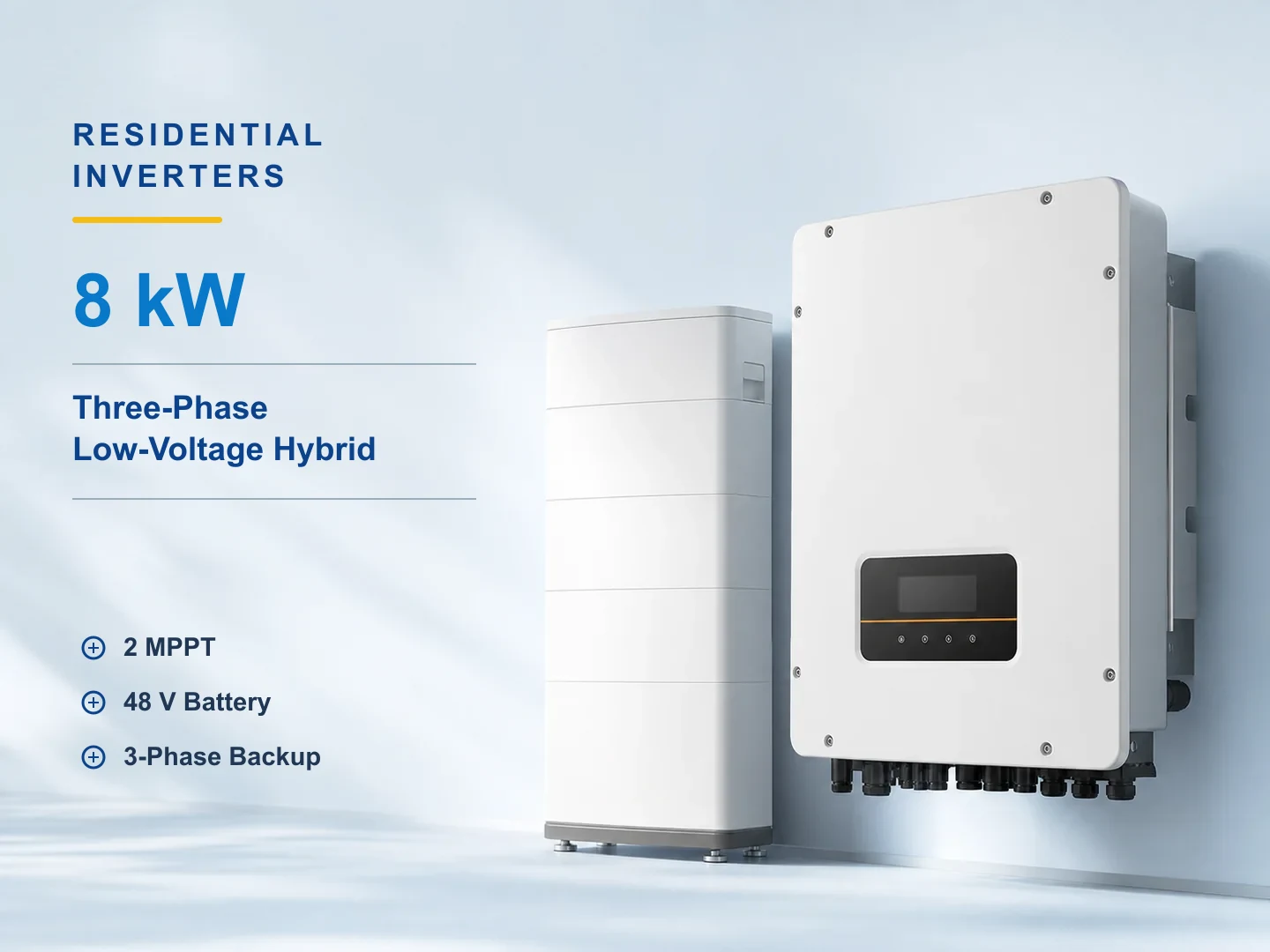
8 kW three-phase hybrid for three-phase homes, villas and small mixed-use properties.
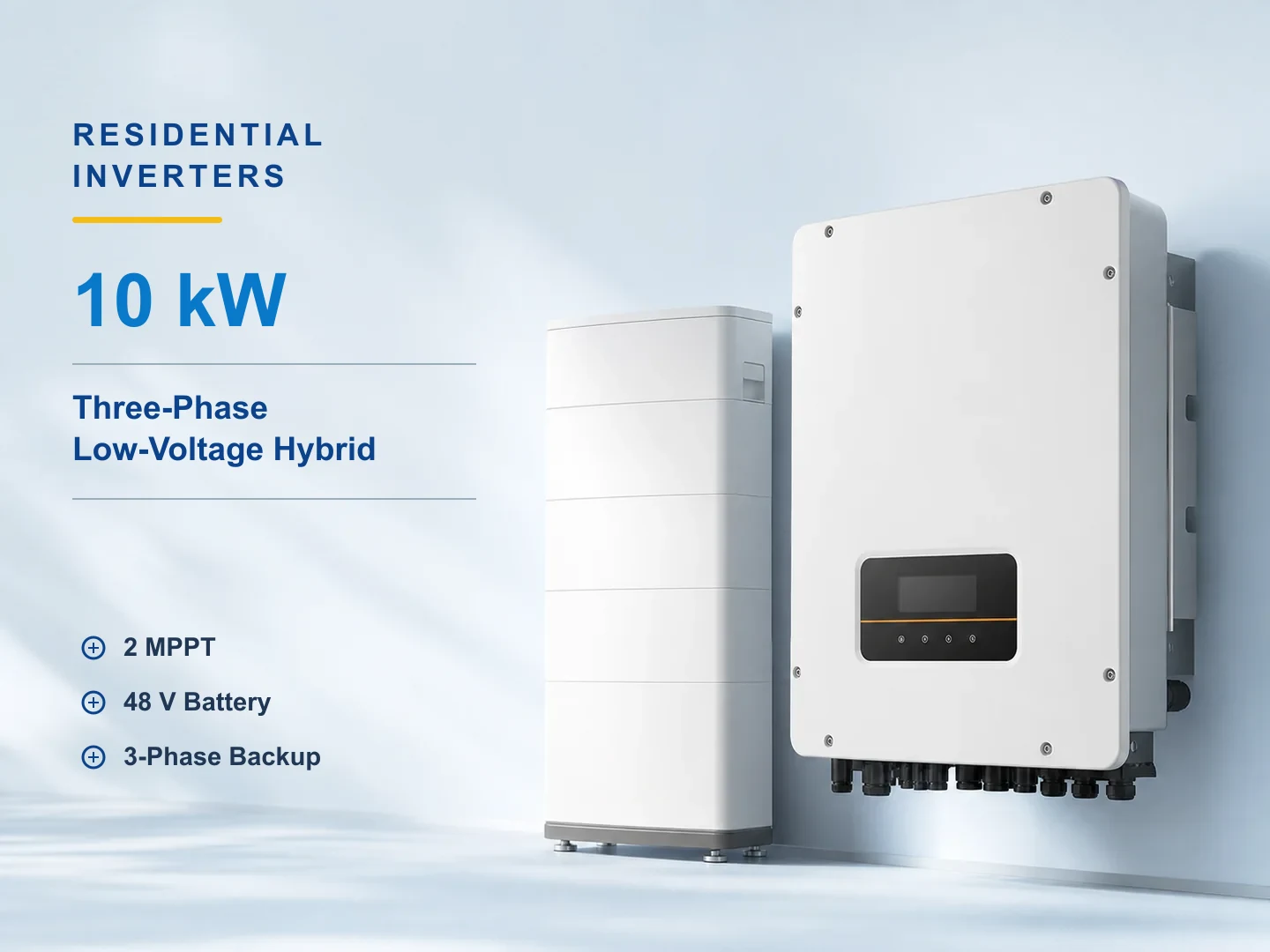
10 kW three-phase hybrid for large homes, villas and small residential compounds.
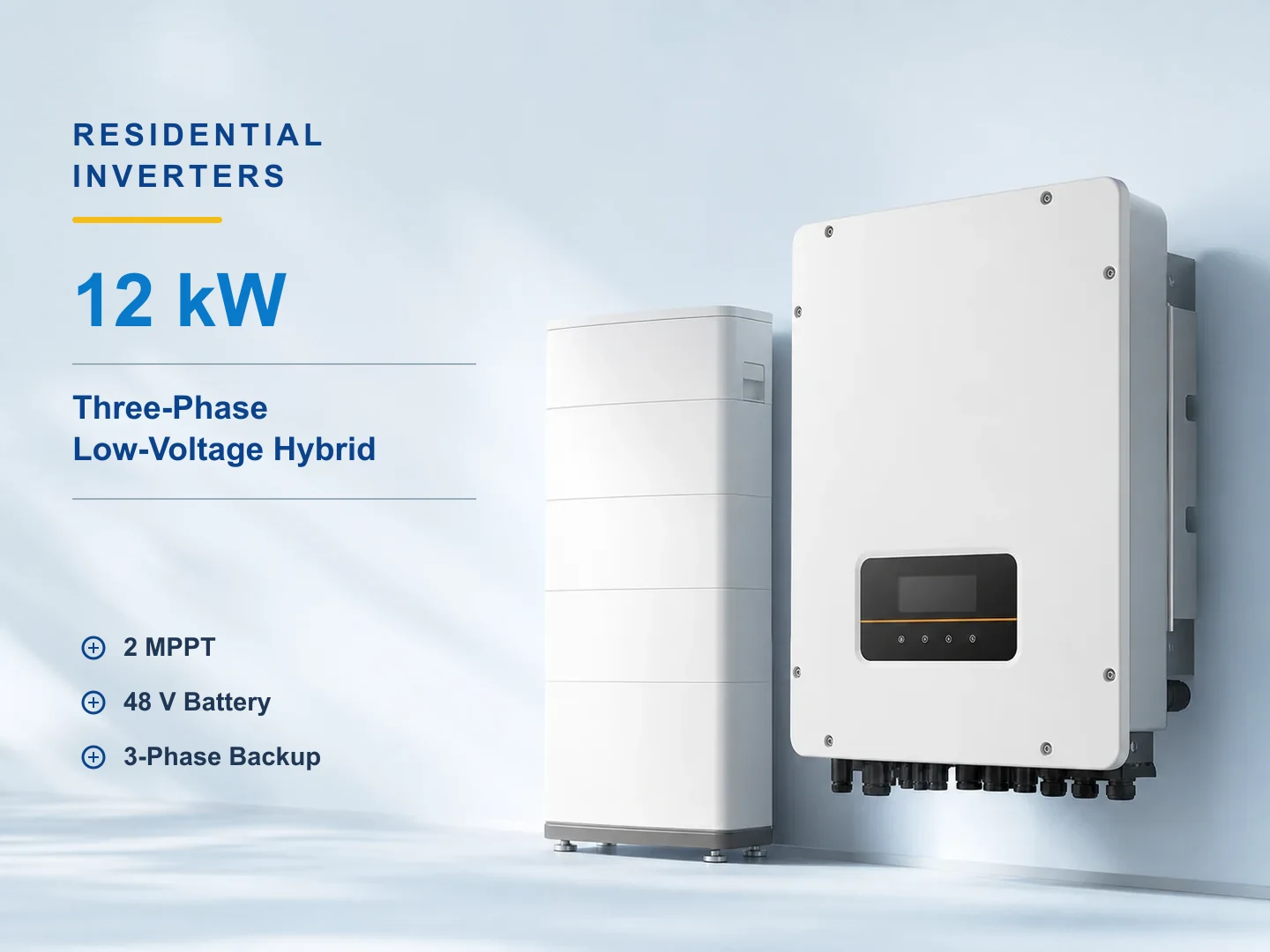
12 kW three-phase hybrid for large villas and residential systems with significant three-phase loads.
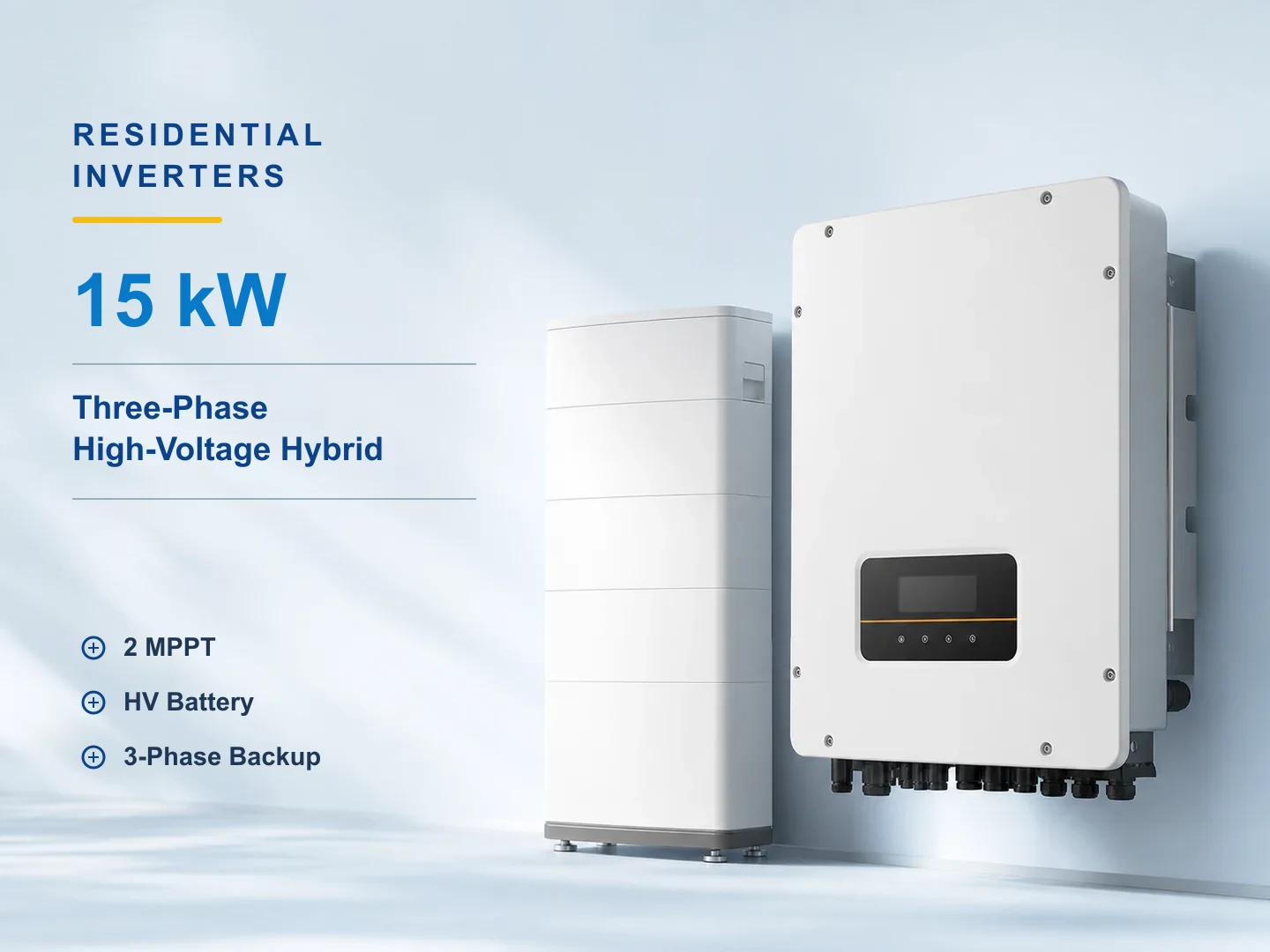
15 kW three-phase hybrid for large villas, multi-meter homes and premium residential storage.
The current range contains four different system roles. Their power labels can overlap, but their grid relationship, battery interface, backup output, wiring, protection, and approval paths are not interchangeable.
Four 230 V grid-tied string inverter pages with two MPPTs. These platforms do not include a battery or outage backup function unless the exact factory model states otherwise.
Three 230 V hybrid pages with 40–60 V battery references and EPS output. Confirm battery list, BMS protocol, charging current, critical loads, meter or CT, and changeover design.
Four pages for larger homes: 8–12 kW low-voltage and 15 kW high-voltage battery platforms. AC balance, battery architecture, backup wiring, and local grid rules differ.
One 48 V standalone inverter-charger page for PV, battery, and optional AC or generator input. It requires load, surge, autonomy, charging, indoor-environment, and protection review.
Start with the required behavior during normal grid service and an outage. Then connect that role to the exact AC system, PV array, battery, loads, wiring, settings, documents, and responsible local approvals.
Define on-grid, hybrid, or off-grid operation, grid condition, circuits that must remain powered, continuous and peak loads, motor starting, and required autonomy.
Confirm single- or three-phase service, nominal voltage, frequency, export rule, grid-code package, earthing, protection, meter or CT arrangement, and local approval owner.
Check module Voc and Isc at site conditions, string length, strings per MPPT, operating window, maximum input current, DC oversizing, connector, isolation, and protection.
Match low- or high-voltage architecture, chemistry, usable energy, charge and discharge limits, CAN or RS485 protocol, firmware, approved pairing, protection, and commissioning.
Confirm EPS rating, peak duration, transfer behavior, phase balance, neutral and earthing arrangement, critical-load panel, generator interaction, black start, and restart sequence.
Verify enclosure, temperature and derating, mounting clearance, noise, communications, portal or dongle, manual, datasheet, certificate scope, warranty, accessories, and packing.
The displayed pages are neutral sourcing configurations. Final factory model, firmware, accessories, documents, battery pairing, grid approval, installation design, availability, and commercial terms must be confirmed for the destination and project.
Backup coverage depends on output rating, surge capability, battery power, wiring, protection, transfer design, phase balance, load priorities, and the exact model configuration.
A voltage class alone does not prove BMS protocol, firmware, current, charging profile, series or parallel arrangement, protection, warranty, or approved battery pairing.
Their grid relationship, AC input and output paths, battery dependence, backup behavior, generator functions, protection, certification, and commissioning responsibilities differ.
Grid code, certificates, protection options, price, MOQ, lead time, accessories, and availability remain tied to the confirmed factory model, destination, and quotation.
Use the solution page to define loads and operating objectives, then use the buyer guide to separate on-grid, hybrid, and off-grid requirements before requesting a model.
Define essential loads, grid conditions, PV, battery autonomy, inverter role, protection, installation responsibility, documents, and supply scope.
Review residential solution
Use operating behavior, AC service, PV inputs, battery pairing, backup expectations, grid route, documents, and commissioning to compare models.
Read the inverter guide
These answers define the inputs needed for a responsible shortlist. Final system design, grid approval, battery pairing, installation, commissioning, and safety decisions remain project-specific.
Choose by operating role, not the product label alone. Use on-grid where normal grid-connected PV export or self-consumption is required without outage supply; consider hybrid where a confirmed battery and backup scope are required; use off-grid where loads must operate without a normal grid. The responsible designer must confirm the exact architecture, loads, PV, battery, protection, and local rules.
Not automatically. Confirm continuous and peak backup output, transfer behavior, battery power and usable energy, single- or three-phase load balance, motor starting, critical-load panel, neutral and earthing design, generator interaction, protection, and restart behavior for the exact model.
No. Nominal voltage is only one input. Confirm the battery's operating window, charge and discharge current, chemistry, series or parallel rules, CAN or RS485 protocol, firmware, approved compatibility evidence, protection devices, cables, commissioning settings, and warranty conditions.
Include country, AC phase and voltage, grid condition, operating role, load list and surge, backup circuits and duration, PV module and string plan, battery make or target architecture, communications, installation environment, required grid code and documents, accessories, quantity, and delivery target.
Compare 12 displayed residential inverter sourcing pages from 3 kW to 15 kW across single-phase on-grid, single-phase and three-phase hybrid, low-voltage and high-voltage battery, and off-grid inverter-charger roles. Use the exact page and approved factory model to confirm AC connection, PV input, MPPT and string limits, battery protocol, backup behavior, grid settings, protection, monitoring, and documents.
Send the AC service, grid condition, on-grid/hybrid/off-grid role, loads and surge, backup target, PV array, battery, monitoring, destination, documents, quantity, and delivery target. Final model, price, compatibility, availability, and lead time are confirmed in the quotation.