
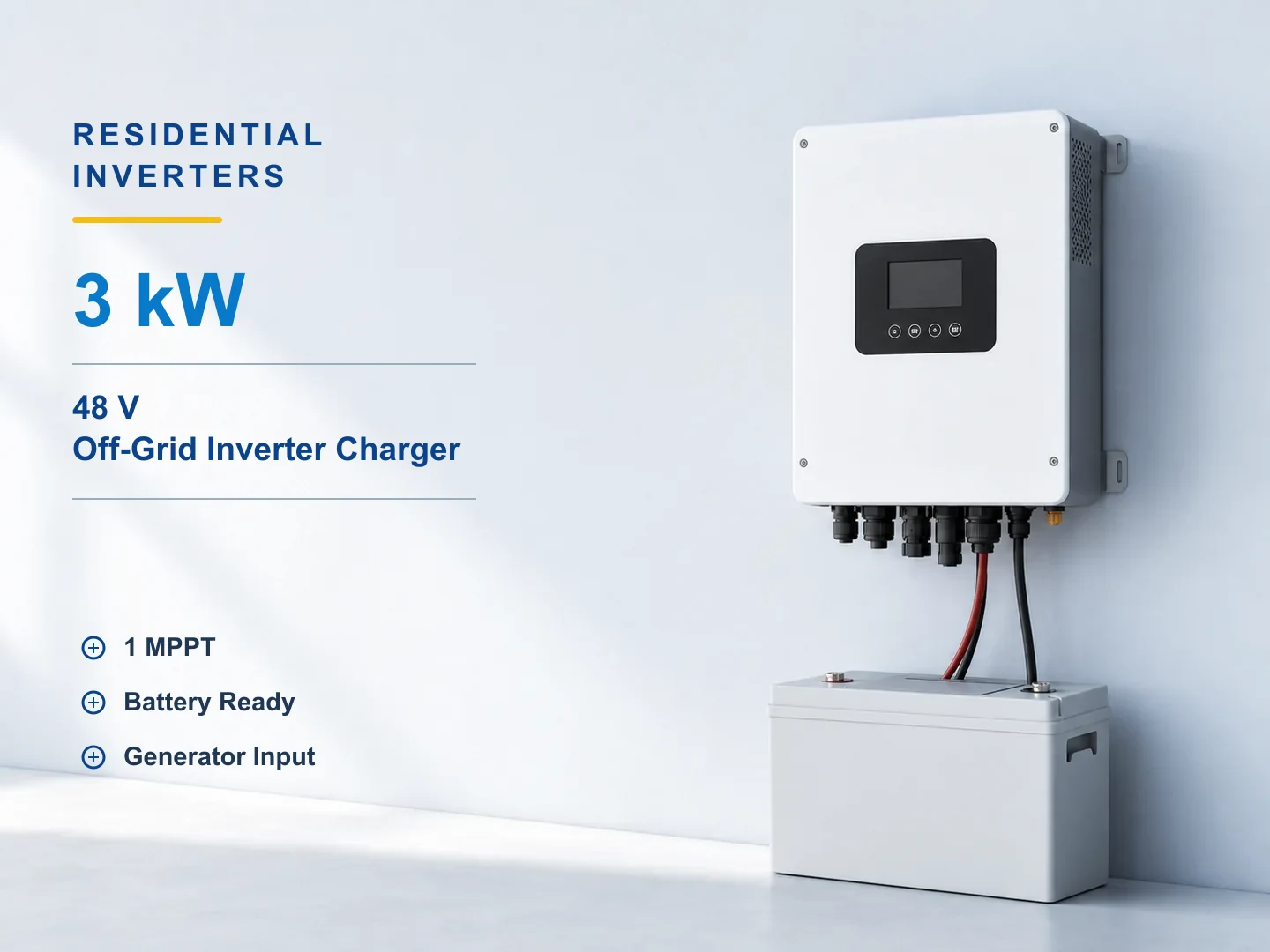
3kW 48V Off-Grid Inverter Charger for Remote-Power RFQs
Current source identity: an internal representative off-grid configuration; manufacturer, exact model, charger variant and released manual are not attached.
This representative configuration combines a 3 kW, 230 V single-phase inverter, one MPPT route, a 48 V battery interface and an AC input described as generator-compatible. The current record lists 4.5 kW maximum PV input, a 60–450 V MPPT range, 6 kVA short-duration peak wording and indoor IP20 installation. No exact factory model is fixed, so load-starting behavior, peak duration, generator window, charger current, BMS support and protection must be documented before selection.
Current sourcing-configuration specifications
These values are preserved from the current internal product record. They define shortlist requirements, not a released manufacturer model; require a matching supplier datasheet before order.
PV Input & MPPT
| Maximum PV input | 4.5 kW |
|---|---|
| PV / MPPT range | 60–450 V; 500 V max. |
| MPPT configuration | 1 MPPT |
Battery & Backup
| Battery interface | 48 V low-voltage lithium or lead-acid |
|---|---|
| Backup / EPS | Continuous off-grid output; 6 kVA short-duration peak |
AC Output & Grid
| Rated AC output | 3 kW |
|---|---|
| AC connection | 230 V single-phase |
| Maximum efficiency | Up to 93% inverter efficiency |
| Grid | 50/60 Hz AC input / generator compatible |
| Rated output current | 13.0 A rated AC output |
Installation & Communication
| Protection rating | IP20; indoor installation |
|---|---|
| Communication | RS232 / RS485; BMS option |
| Dimensions | Approx. 120 × 300 × 440 mm |
| Weight | Approx. 10 kg |
Current document status
Request a released datasheet/manual, PV and charger-current table, battery/BMS support, generator input limits, transfer/bypass behavior, protection diagram and certificate set for the exact quoted model.
Current off-grid evidence
Use the record to define a shortlist, not to infer a complete power system
The final model must demonstrate how PV, battery, AC input and loads operate through daily and failure conditions.
Continuous and peak output
The record states 3 kW continuous output and 6 kVA short-duration peak. Peak duration, power factor, overload curve and supported motor/compressor starts are not supplied.
PV charger route
One MPPT, 4.5 kW maximum PV, 60–450 V operating range and 500 V maximum are listed. Input current, cold-Voc margin and charger-current limits remain required.
48 V battery bank
Lithium or lead-acid is stated without a complete DC window, maximum charge/discharge current, BMS list, charge profiles, cutoff, cable or DC protection schedule.
AC input and installation
50/60 Hz AC input, generator compatibility and IP20 indoor use are listed. Voltage/frequency/THD windows, transfer, bypass, grounding and environmental limits need confirmation.
Off-grid RFQ checks
Six calculations and evidence checks before choosing the inverter charger
Daily energy, surge demand and the worst solar period matter more than the 3 kW headline alone.
Load schedule
List every load by hours/day, running W/VA, power factor and startup surge; separate simultaneous critical loads from deferrable loads.
Autonomy and battery
Define usable kWh, reserve SOC, worst-day autonomy, temperature, battery current, chemistry, BMS/profile and future expansion.
PV design
Provide module electrical data, quantity, strings, minimum temperature, shading and expected seasonal production for voltage/current and energy-balance checks.
Generator or weak grid
Provide generator kVA, voltage/frequency regulation, waveform THD, neutral/grounding and desired charge contribution; confirm automatic-start hardware separately.
Distribution and protection
Define AC/DC breakers, fuses, isolators, surge protection, cable lengths, earthing, RCD strategy, indoor ventilation and essential-load distribution.
Exact model evidence
Request model/suffix, manual, overload curve, charger data, BMS support, generator limits, certificates, warranty, accessories, packing and commercial terms.
Off-grid design boundaries
Rated kW does not establish autonomy, surge success or generator behavior
A stable off-grid system is an energy and protection design, not a single inverter selection.
3 kW is not daily energy
The rating does not show how many kWh can be supplied overnight or during poor solar weather. Battery usable energy, PV yield, losses and reserve determine autonomy.
6 kVA peak needs a time basis
Do not approve pumps, refrigerators or tools until peak duration, waveform, power factor, voltage dip and actual starting current are checked.
Generator-compatible is conditional
Acceptance depends on voltage/frequency/THD window, generator size, neutral/grounding, charge current and control settings; auto-start is a separate function.
48 V does not prove battery pairing
Confirm DC limits, BMS/protocol, firmware, charge profile, current capability, DC protection and warranty for the exact battery bank.
Continue the off-grid review
Turn the equipment shortlist into an energy-balanced remote system
Use the microgrid solution for system responsibility and the sizing guide for autonomy inputs.
Remote microgrid and hybrid power
Coordinate PV, battery, inverter, generator, distribution, monitoring and local installation responsibilities.
Review remote-system scope →Battery and backup sizing guide
Translate load hours, usable kWh, losses, reserve and operating objective into a transparent capacity basis.
Review autonomy inputs →3 kW off-grid inverter FAQ
Questions to answer before finalizing the remote-power configuration
A released model sheet and a site load/energy study are both required.
Is this page an exact manufacturer model?
No. It is a representative 3 kW/48 V sourcing configuration. The selected supplier must provide the full model and matching released documentation.
Can it start a 3 kW motor or pump?
Do not infer that from the 3 kW or 6 kVA labels. Check motor starting current, duration, power factor, voltage dip and the exact model's overload curve.
Does generator-compatible include automatic start?
Not necessarily. Confirm the accepted AC window and THD, generator sizing and grounding, charge-current settings, dry contacts and the required external start controller.
How should battery autonomy be quoted?
Use the actual load profile, usable battery energy, reserve, conversion loss, temperature, battery power limit and expected PV/generator contribution under stated conditions.
Prepare a 3 kW off-grid system RFQ
Send the hourly load and surge schedule, autonomy target, PV site/module data, battery preference, generator details, destination electrical system and required evidence.
Start with the product, application or project information you have. We can help identify the remaining configuration, document or delivery questions before a final quotation.
Verify an Off-Grid ModelRelated Products
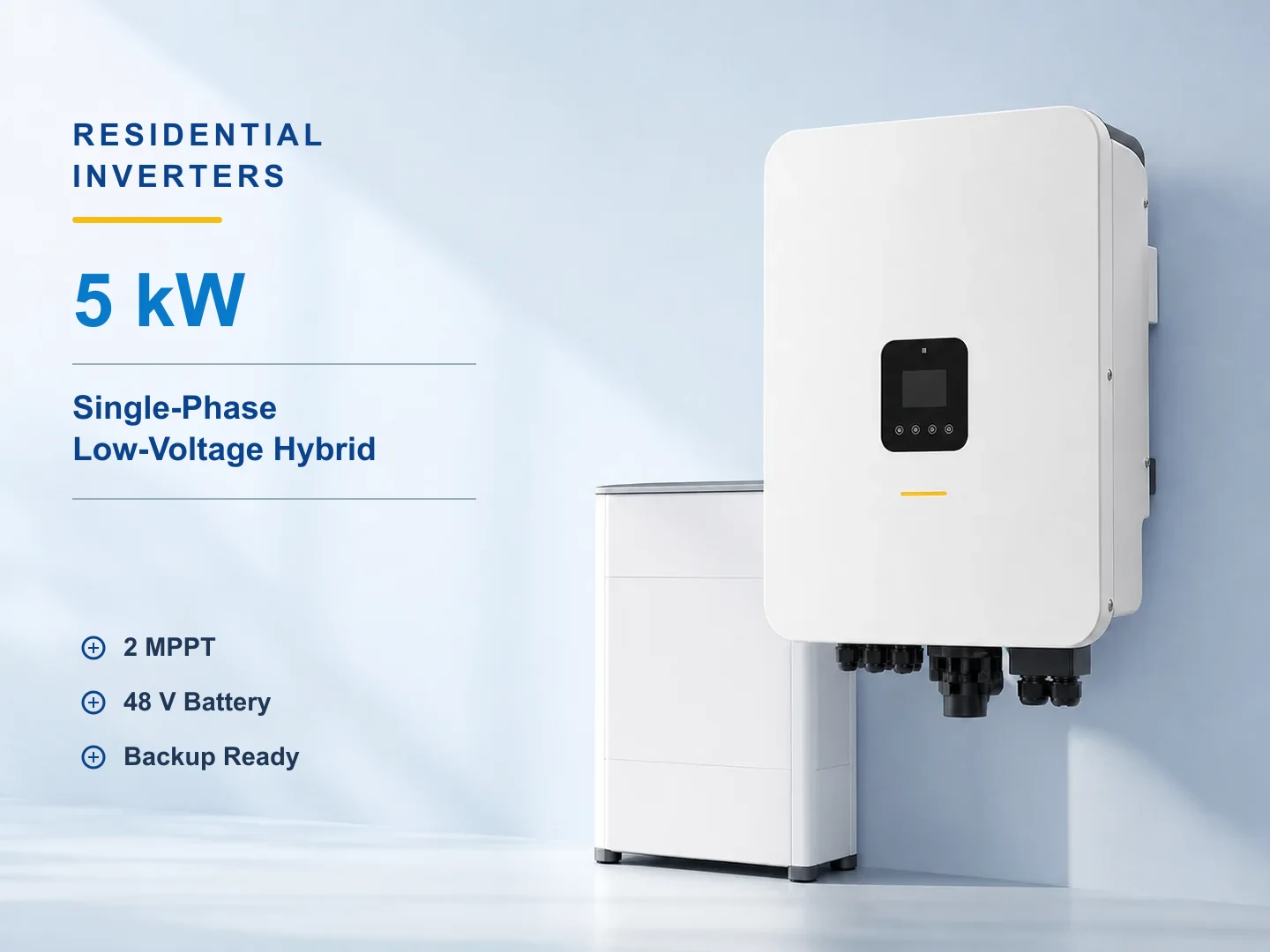
5kW Single-Phase Low-Voltage Hybrid Inverter
5 kW single-phase hybrid for solar-plus-storage homes and small villas.
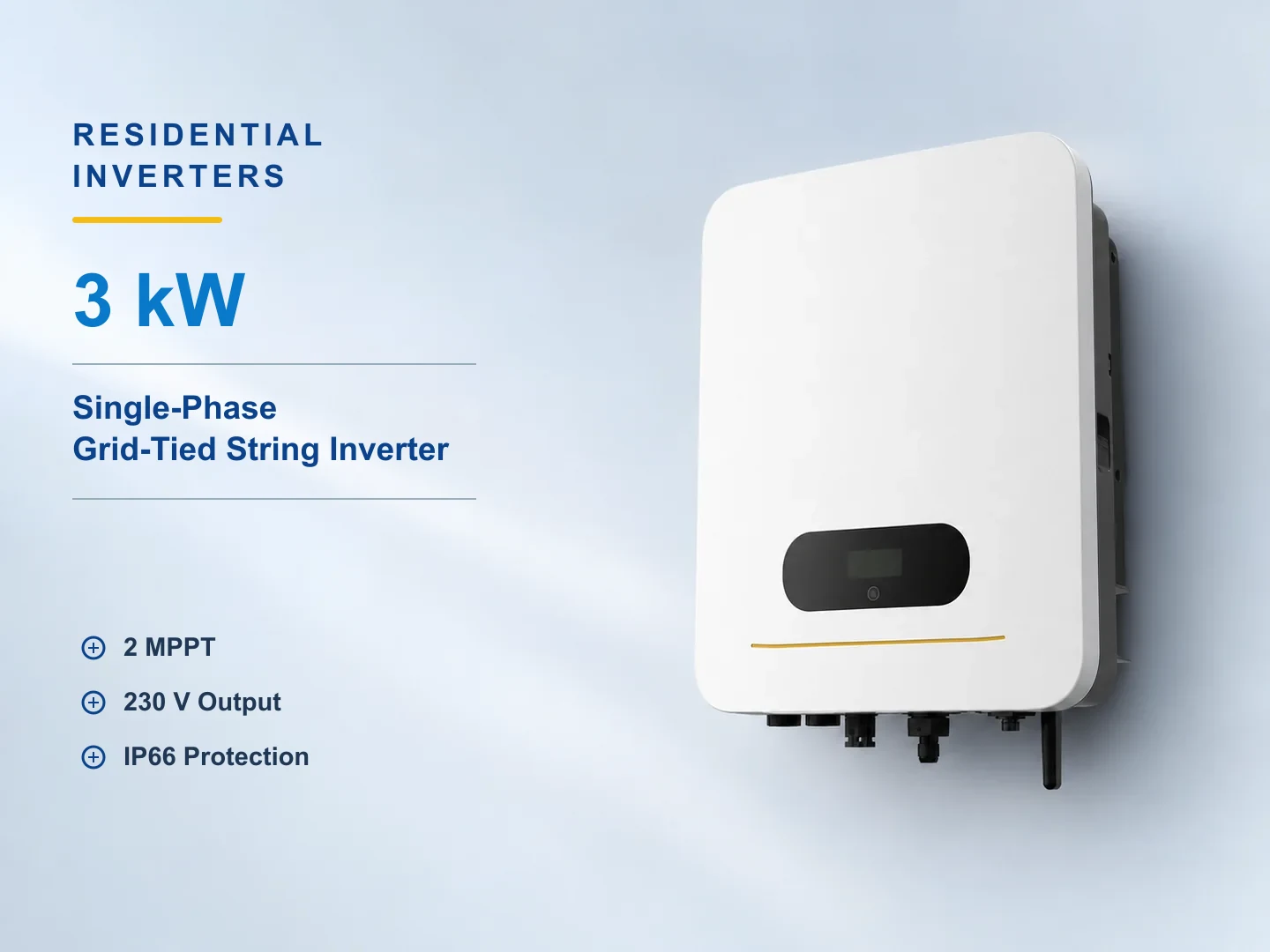
3kW Single-Phase Grid-Tied String Inverter
3 kW single-phase on-grid for apartment and small-home rooftop systems.
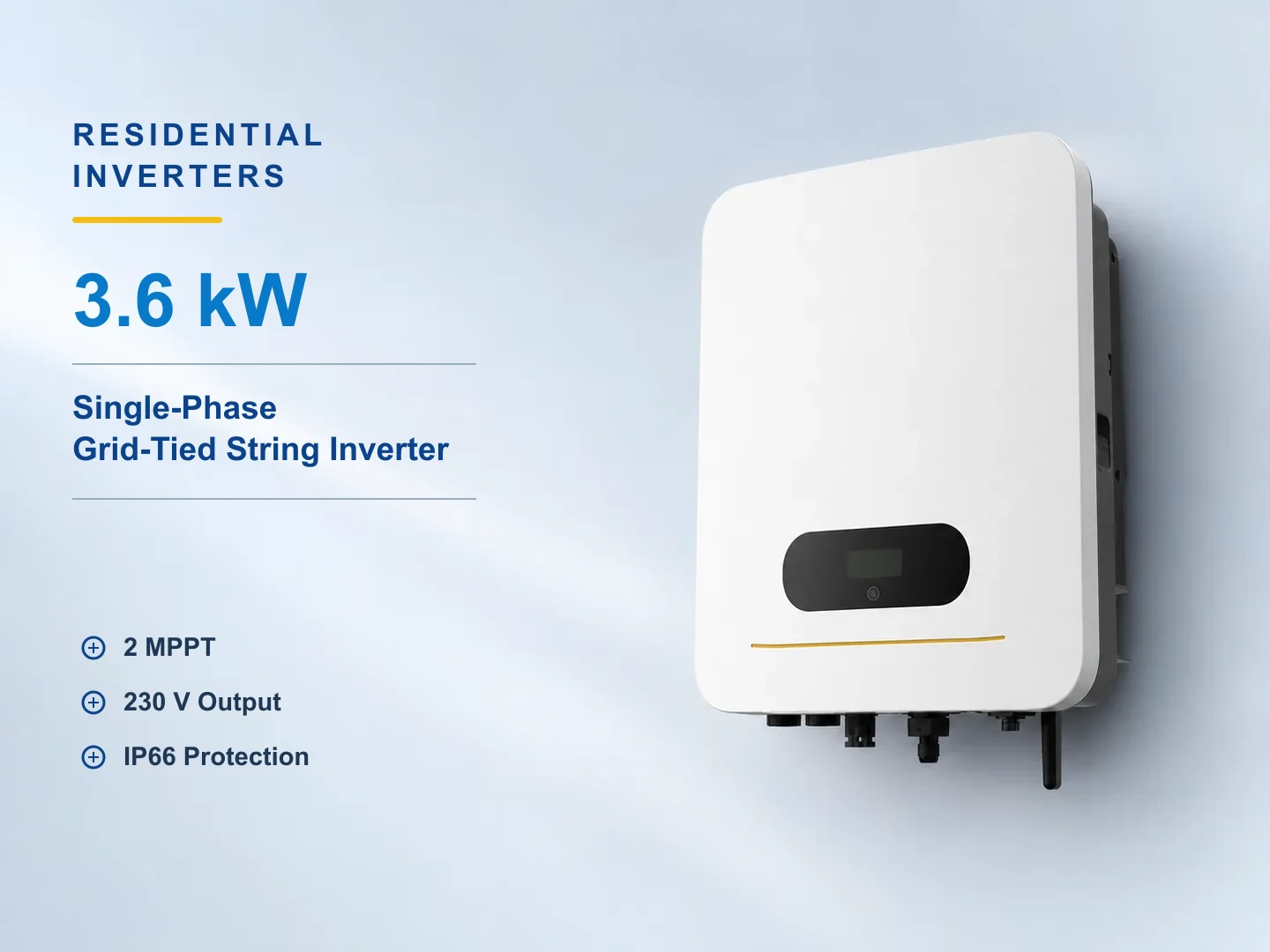
3.6kW Single-Phase Grid-Tied String Inverter
3.6 kW single-phase on-grid for standard residential rooftops.