
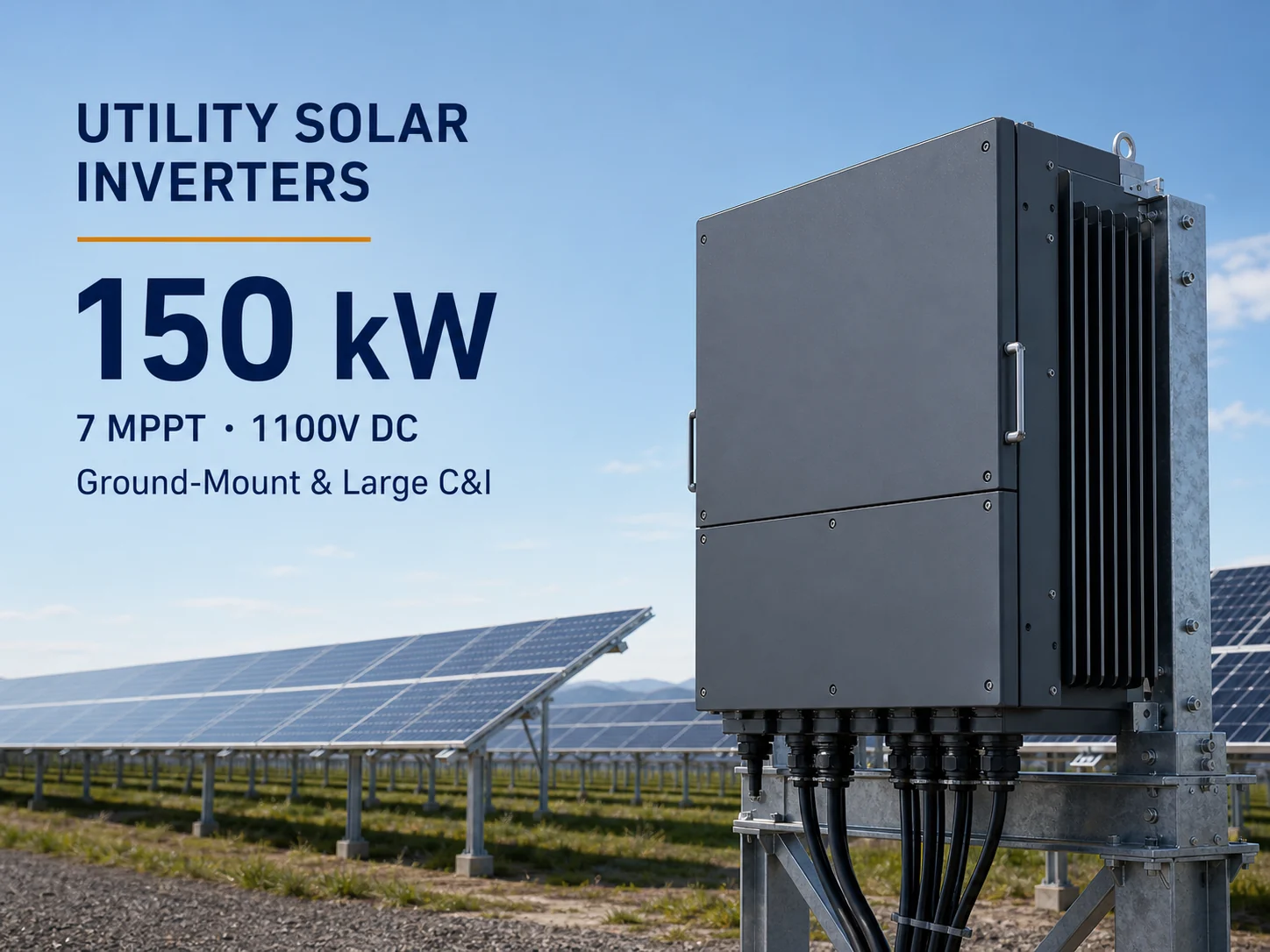
150kW Utility String Inverter
150 kW platform for ground-mount and large c&i pv plants on 1000/1100 v dc systems.
Up to 225 kW recommended maximumLarge commercial / utility string inverter
View DetailsOpen a platform page for its planning inputs, then confirm the manufacturer model, electrical ratings, studies, type-test and certificate scope, interfaces, options, documents, service, commercial allocation, availability, and project approval path.
150 kW platform for ground-mount and large c&i pv plants on 1000/1100 v dc systems.
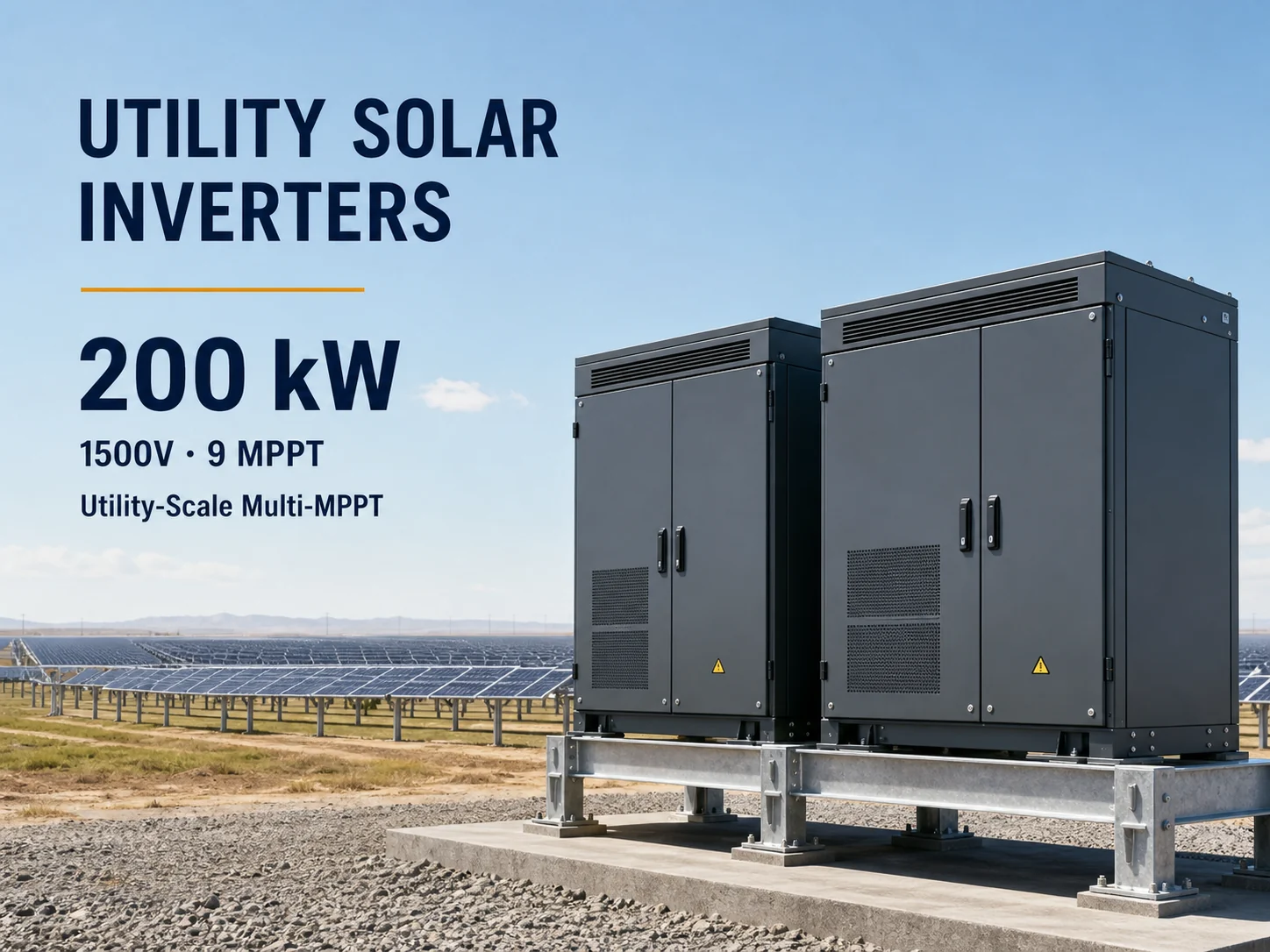
200 kW rated / 215 kVA maximum platform for 1500 v ground-mount pv plants and high-capacity tracker blocks.
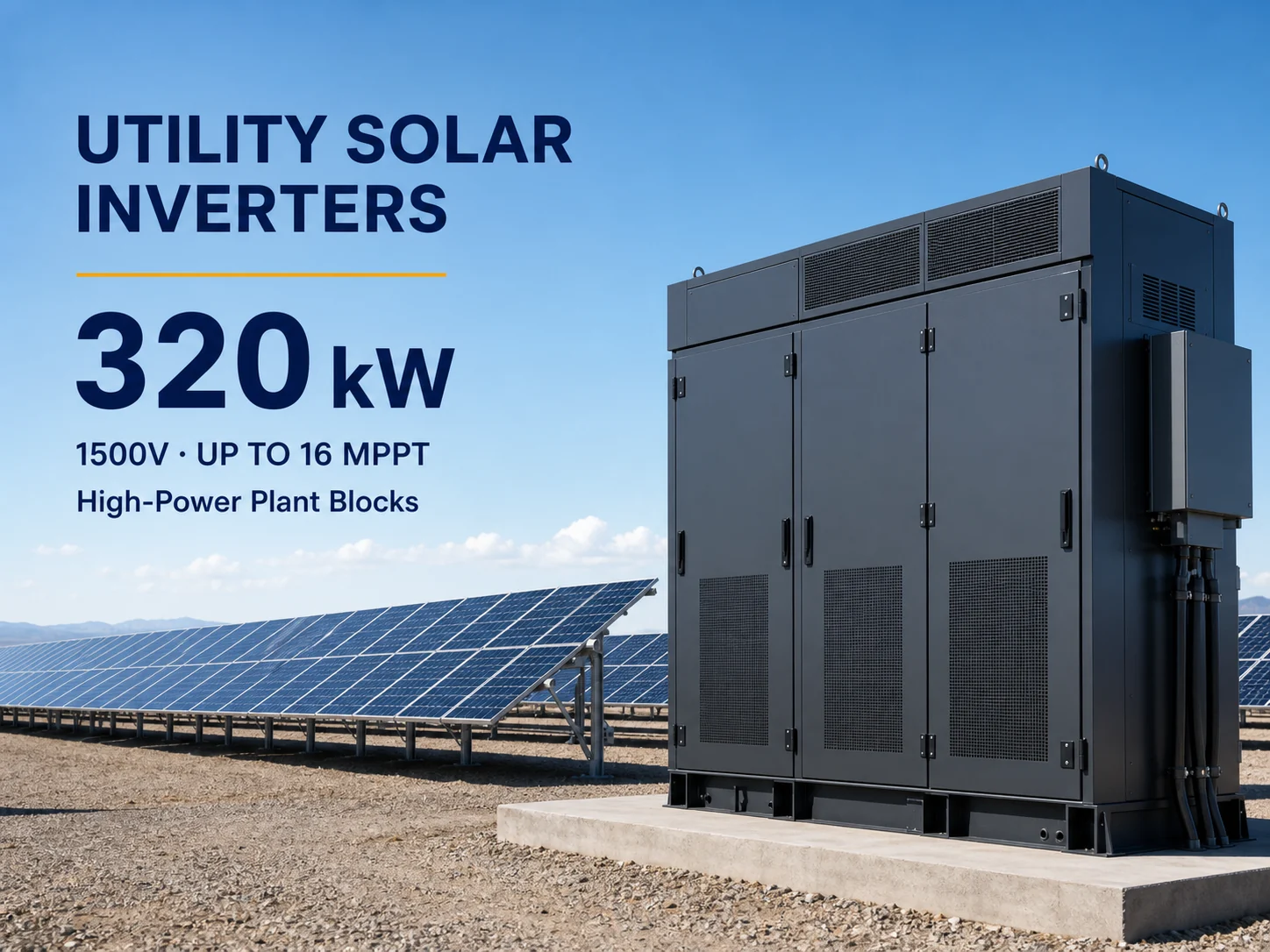
320 kW platform for large utility pv plants requiring high-power decentralized inverter blocks.
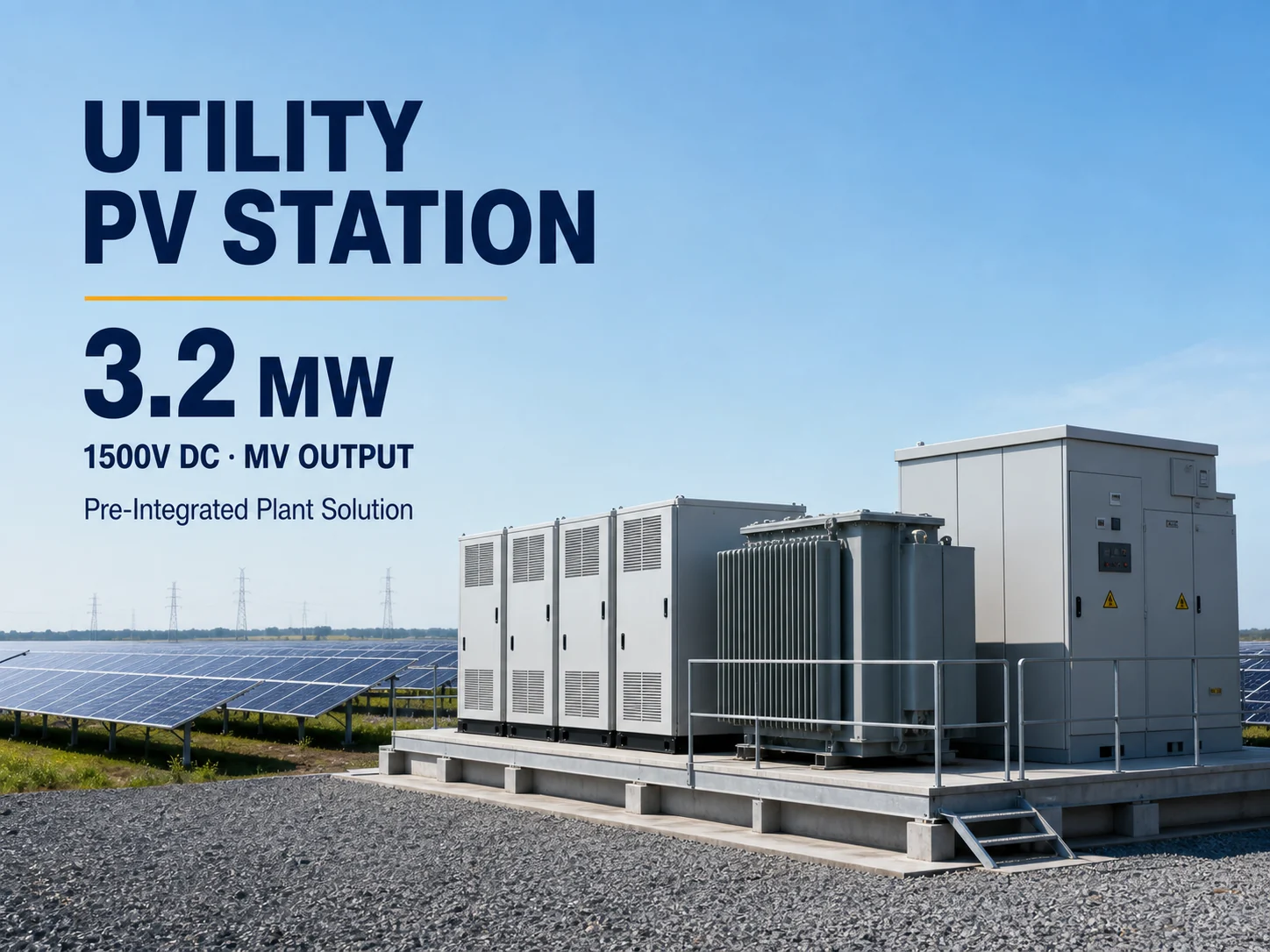
Approx. 3.2 MW AC platform for utility-scale ground-mount pv plants requiring a pre-integrated inverter and mv transformation solution.
The current pages span decentralized string inverters and a pre-integrated MV station concept. They are planning and RFQ entry points, not final plant designs, bankability evidence, approved equipment schedules, or live-stock commitments.
One seven-MPPT, up-to-21-string sourcing page for ground-mount and large C&I blocks. Confirm module current, tracker zoning, AC voltage, protection, communications, and exact factory model.
Two high-power pages with different MPPT, string-input, AC-voltage, collection, and plant-integration concepts. Do not treat the 200 kW and 320 kW platforms as drop-in alternatives.
One project-level concept combining inverter blocks, LV collection, transformer, and MV interface. Voltage, switchgear, protection, auxiliary power, container, controls, and scope are engineered per project.
Utility procurement begins with plant architecture and the grid interconnection basis. The inverter is one coordinated element within the array, tracker, collection, transformer, protection, controls, civil, logistics, commissioning, and document systems.
Define plant MW, module and tracker basis, 1000/1100 or 1500 V DC, block size, DC/AC objective, terrain and shading zones, string design, cable loss, and availability strategy.
Check Voc at minimum temperature, operating range, Isc and maximum-power current, strings per input, MPPT zoning, combiner or direct-string concept, connectors, isolation, SPD, and diagnostics.
Confirm inverter AC voltage, current, LV collection, transformer winding and impedance, MV level, switchgear, protection zones, auxiliary power, harmonics, reactive power, and losses.
Define PPC or plant controller, SCADA, communications, active and reactive power, voltage and frequency response, ramp rates, ride-through, utility testing, cybersecurity, and settings ownership.
Review temperature and altitude derating, corrosion, dust, flooding, seismic and wind conditions, noise, access, foundations, cable routes, spares, replacement method, service response, and training.
Create a model and revision register for datasheets, certificates, studies, drawings, manuals, test reports, labels, packing, lifting, phased delivery, FAT, SAT, grid tests, handover, and warranties.
The displayed pages are neutral planning references. Final manufacturer, exact model, type-test and certificate scope, plant studies, grid approval, bankability review, integration, availability, performance obligations, warranty, and commercial allocation require project evidence.
Maximum voltage alone does not define operating window, current, strings, MPPT zoning, insulation, connectors, cable, combiner, SPD, temperature margin, module compatibility, or array losses.
Inverters, transformer, RMU or switchgear, protection, auxiliary power, HVAC, fire systems, container, controls, cabling, civil interfaces, testing, and installation must be itemized.
A generic grid-support statement does not prove compliance. Required models, studies, firmware, PPC logic, protection, settings, utility witnessing, and test evidence are project- and market-specific.
A page does not prove approved vendor status, financing acceptance, type-test coverage, availability, price, production slot, lead time, service capability, liquidated damages, or performance guarantee.
Use the utility solution to define the equipment and delivery interfaces, then use the document guide to assign exact-model evidence, reviewers, revisions, status, and change control.
Coordinate modules, trackers or mounting, inverter blocks, collection, transformer, switchgear, controls, documents, packing, spares, phased delivery, and project responsibilities.
Review utility solution
Use an exact-model document register with scope, source, revision, reviewer, status, substitutions, and release control rather than a generic certificate folder.
Read document guide
These answers define an RFQ starting point. Final plant design, studies, grid interconnection, civil and electrical engineering, controls, safety, approvals, testing, financing review, and commissioning remain project-specific.
Coordinate plant capacity, module and tracker layout, DC voltage, string and MPPT architecture, terrain zones, inverter availability, AC collection voltage, transformer size, MV system, protection, losses, service strategy, grid requirements, energy model, civil layout, and phased construction. Inverter kW alone is not a block design.
Not without plant redesign and approval. Recheck MPPT and string inputs, module current, DC/AC ratio, inverter quantity, AC voltage and current, collection cables, transformer, switchgear, protection, controls, foundations, access, spares, studies, documents, energy yield, logistics, and utility or owner approval.
The name alone does not define scope. Itemize inverter blocks, LV collection, transformer, MV switchgear or RMU, protection, metering, auxiliary power, controls, SCADA interface, HVAC, fire systems, enclosure, cables, civil interfaces, lifting, FAT, SAT, commissioning, spares, manuals, training, and site works.
Include project country and MW, module and tracker basis, DC voltage and strings, block concept, inverter and AC collection voltage, transformer and MV basis, grid-code and study requirements, PPC and SCADA interfaces, site environment, protection, documents, type tests, logistics, spares, service, warranty, schedule, and responsibility matrix.
Compare four displayed utility sourcing platforms: a 150 kW string inverter for 1000/1100 V DC systems, 200 kW and 320 kW multi-MPPT platforms for 1500 V plants, and an approximately 3.2 MW medium-voltage station concept. Final inverter blocks, AC collection, transformer, switchgear, plant controls, protection, grid support, documents, logistics, and commissioning require project engineering and a confirmed supply boundary.
Send the project MW, DC architecture, module and tracker basis, strings and MPPT, AC collection, transformer and MV scope, grid studies, controls, environment, documents, logistics, service, warranty, and schedule. Final model, scope, price, availability, and lead time require project confirmation.