
Can you install solar panels and battery backup on a flat roof?
A flat roof can be a good place for solar, but the roof and the energy system must be planned together. Here is what to check before choosing panels or a battery.
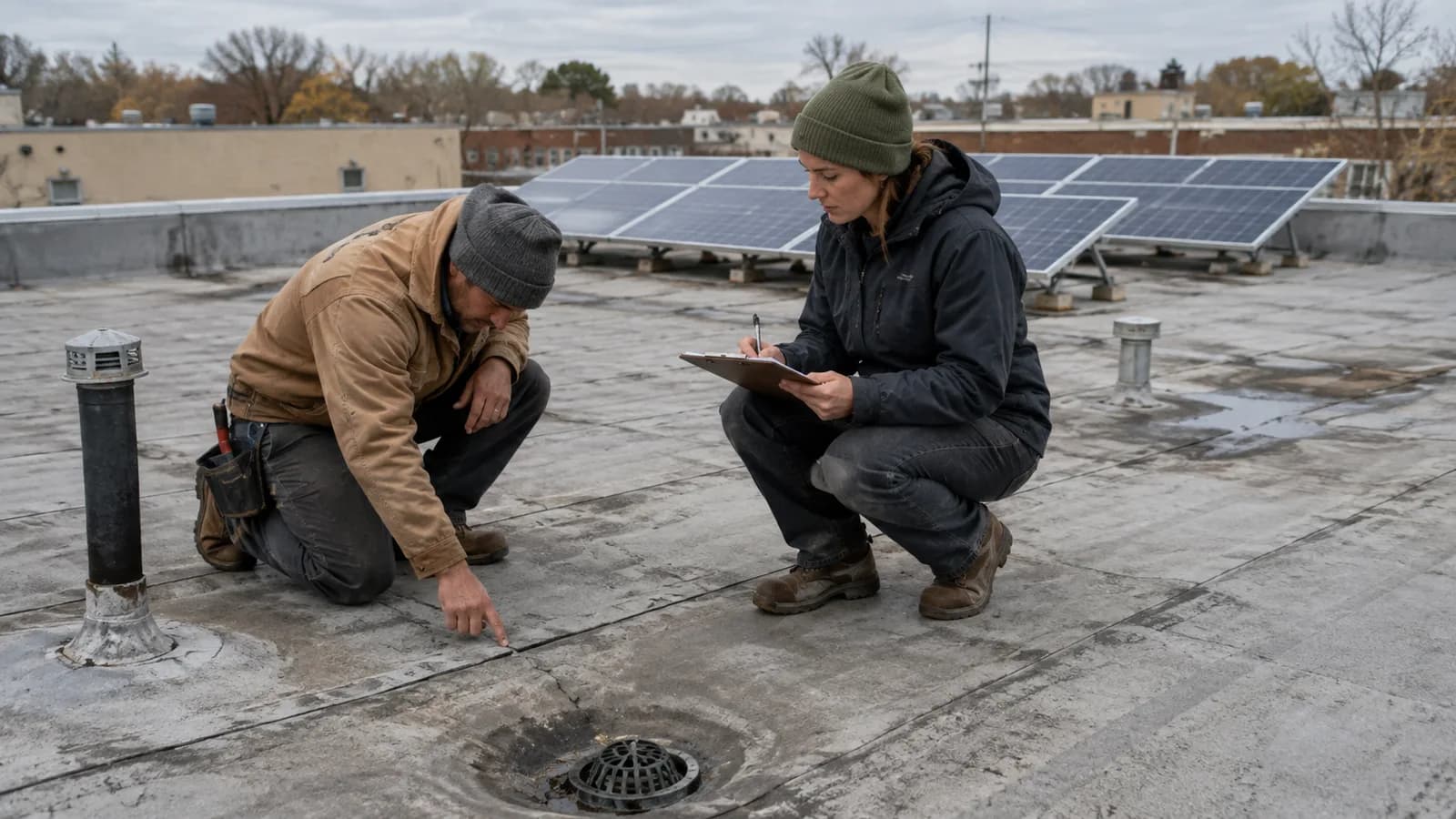
A flat roof can look like an easy place for solar panels. It is open, often easy to reach and may have little shade. Then the first quotation arrives and the simple roof turns out to have drains, vents, weak areas, access paths and a surface that will need repairing long before the panels are finished.
Adding battery backup brings a second set of questions. The battery does not make the roof more suitable, and the size of the house does not tell you how much backup is needed. The useful starting point is much more ordinary: check the roof, decide what should stay on during an outage, and ask every company to quote the same job.
This guide explains that process without turning it into an installation manual. Structural checks, mounting, waterproofing, electrical design and local approvals still belong with the qualified people responsible for the property. The photographs are illustrative editorial scenes, not Rongkai customer projects.
A flat roof can work, but not every square metre is usable
A clear view of the sky helps, but sunlight is only one part of the roof check. Parapet walls can cast shadows when the sun is low. Air-conditioning units, skylights, vents and chimneys break up the layout. Drains and overflow paths need room around them. People also need a safe way to reach equipment and inspect the roof.
Flat-roof panels are normally held at an angle rather than laid directly against the roof surface. The angle can help sunlight reach the panel and let rain run off, but it also changes the space between rows and the way wind acts on the array. A steep-looking layout is not automatically better. More tilt can mean more shading between rows, greater wind exposure or fewer panels in the available area.
This is why total roof area is a poor shortcut for system size. Start with a measured layout that shows the real roof features and required access areas. Then estimate solar production from the panels that actually fit, rather than filling a clean rectangle on a sales drawing.
Check the roof before discussing panel brands
Solar panels may remain in place for many years. A roof surface that is already cracking, blistering, holding water or approaching replacement can create a costly interruption much sooner. Repairing the membrane later may require panels, supports and cables to be moved, even when the solar equipment itself is working perfectly.
Ask a roofing professional who understands the roof type to record its condition. Useful evidence includes the roof age, membrane or covering, repair history, known leaks, wet insulation, drain condition and remaining warranty. A quick look from the street cannot answer those questions.
If meaningful roof work is likely soon, compare doing it before solar with coordinating both jobs. The answer depends on the actual roof, not a fixed age. It should also be clear who protects the roof during installation, who seals or flashes any attachment points, and who responds if a leak appears later. The solar workmanship warranty and the roof warranty are separate promises unless the contract says otherwise.
Ballasted or attached: two common routes
A ballasted system uses weight to help hold the mounting structure in place. An attached system connects the mounting structure to the building below. Some designs combine elements of both. From a homeowner's point of view, the important question is not which name sounds safer. It is whether the proposed method suits this roof and has been checked for structure, wind, water and long-term access.
- Mounting route
- Ballasted
- Why it may be considered
- Can reduce the number of roof penetrations by using weighted supports.
- Questions to settle
- Can the roof carry the added weight together with the array and local weather loads? How are the membrane and drains protected?
- Mounting route
- Attached
- Why it may be considered
- Transfers forces into the building structure and may need less added ballast.
- Questions to settle
- Where are the structural connections, how is each roof opening sealed, and who keeps the roof warranty valid?
| Mounting route | Why it may be considered | Questions to settle |
|---|---|---|
| Ballasted | Can reduce the number of roof penetrations by using weighted supports. | Can the roof carry the added weight together with the array and local weather loads? How are the membrane and drains protected? |
| Attached | Transfers forces into the building structure and may need less added ballast. | Where are the structural connections, how is each roof opening sealed, and who keeps the roof warranty valid? |
Neither route is automatically leak-free, lightweight or suitable for every building. The final choice needs the actual roof construction and site conditions.
Leave room for water, weather and future repairs
A layout that squeezes in the last possible panel can look efficient on paper. It may be awkward in real life. Roof drains still need cleaning. Seams and previous repairs need inspection. Technicians need to reach the back of the array without stepping on panels or dragging tools across the membrane.
Water is especially unforgiving on a low-slope roof. Supports and protective pads should not create places where leaves and dirt block drainage. Existing areas of ponding need investigation before they disappear under equipment. If a small roof repair would require dismantling half the array, the layout has created a maintenance problem.
Wind and snow also belong in the roof design. Their effect depends on the building, roof edges, array height, mounting method and local conditions. A heavy support is not proof against wind, and a panel angle is not a promise that snow will slide away. These checks should appear in the project scope instead of being covered by a sentence such as “standard mounting included.”
Low maintenance comes from good access and clear responsibility. Keep the final roof layout, photographs taken before equipment covered the surface, mounting details, roof warranty and inspection records together. Those documents are useful when the roof needs attention years later and the original salesperson is no longer involved.
The roof does not decide the battery size
A family of four in a medium-sized home could use very little electricity or a great deal. Heating, cooling, hot water, cooking, pumps and electric vehicles matter more than floor area. Battery planning should start with the job the battery is expected to do.
For evening self-use, look at how much solar is genuinely left after daytime appliances have used their share. For outage backup, write down the appliances that must remain available and how long they need to run. Keeping a refrigerator, lights and internet working is a different project from running electric heating, cooking and air conditioning as usual.
Here is a teaching example, not a household average. If the chosen essentials use an average of 300W for eight hours, they consume about 2.4kWh: 300 multiplied by 8. The battery needs more usable energy than that once conversion losses, reserve, temperature and ageing are considered. It also needs enough power to start and run the appliances that may overlap. A large energy number on a brochure does not answer both questions.
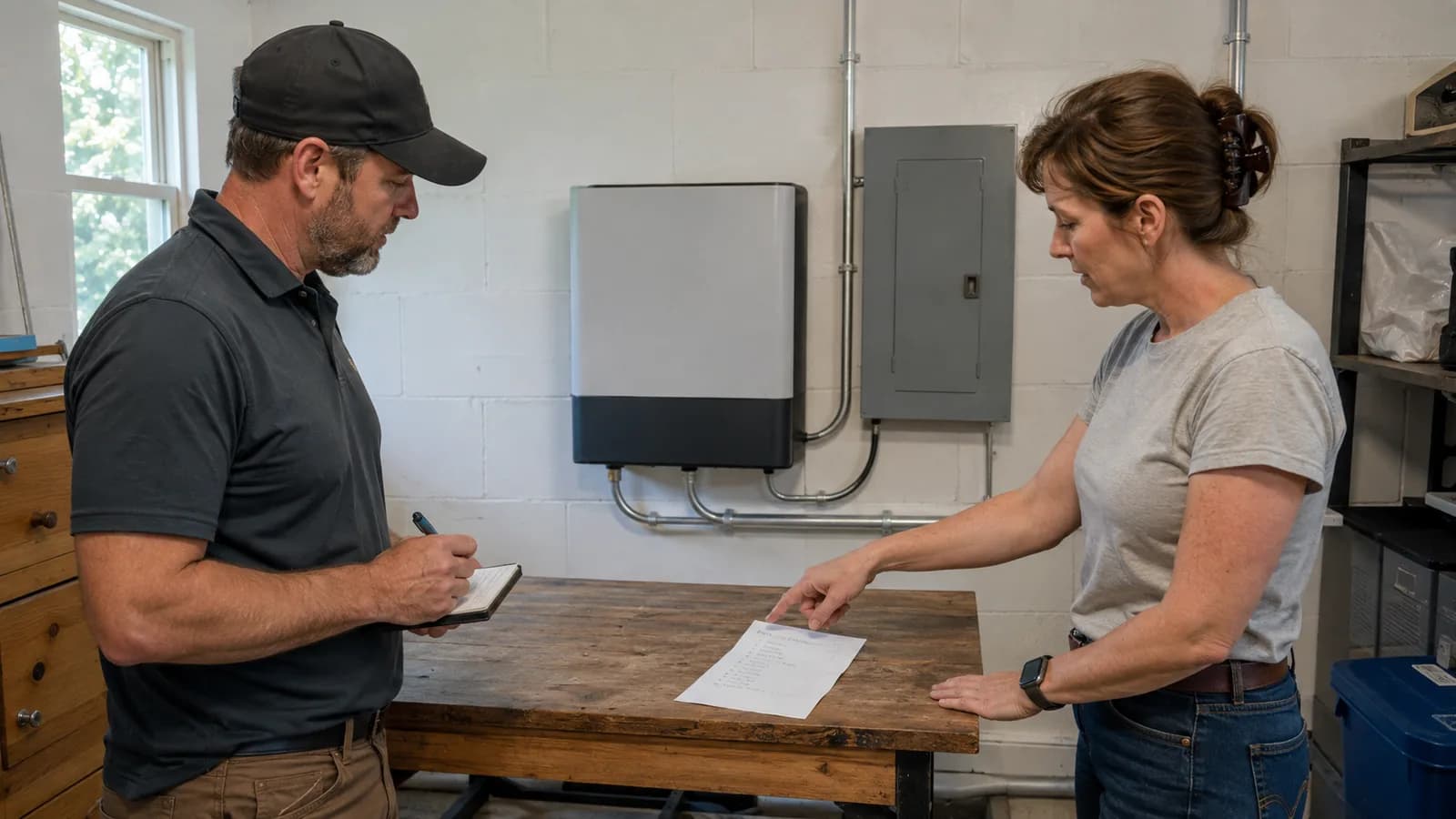
Ordinary grid-connected solar also tends to switch off when the grid fails. Backup needs a compatible inverter, battery and control arrangement designed to separate safely from the grid and supply the agreed circuits. The quotation should name those circuits or outputs. “Battery ready” and “whole-home backup” are too vague on their own.
How much battery backup does a family of four need?
Family size and floor area are not enough to calculate it. List the appliances that must run, their power, how long they are needed and which may operate together. Then allow for the usable battery capacity, reserve, losses, temperature and the exact equipment limits.
A battery should earn its place in the plan
A battery can move spare daytime solar into the evening and can provide outage power when the system is built for that purpose. Whether it is worth buying depends on the household's actual energy pattern, electricity tariff, payment for exported solar, outage risk and the value placed on keeping essential equipment available.
Start with recent electricity data rather than a promised percentage saving. Check when the home uses power and how much solar the proposed roof layout is expected to produce through different seasons. If the grid gives useful credit for exported energy, the financial reason for a large battery may be weaker. If evening electricity is expensive or outages matter, storage may solve a clearer problem. Local rules and rates change, so use current information from the electricity provider responsible for the property.
The buying method matters as well. Compare the cash price before comparing monthly payments. A loan, lease or power-purchase agreement may include rate increases, transfer conditions, early-exit costs, monitoring charges or rules about roof work. Ask what happens if the roof leaks, the battery fails, the home is sold or the panels must be removed for repair. A low monthly number can hide a difficult long-term agreement.
Ask every company to quote the same job
Several quotations are useful only when they describe the same result. One may include basic solar with no outage power. Another may include a battery for a few circuits. A third may assume roof reinforcement or a full membrane replacement. Putting the totals side by side without the scope can make the cheapest-looking offer the hardest one to compare.
Give each provider the same roof information, electricity history and backup list. Ask them to return the proposed panel layout, mounting route, roof responsibilities, expected production basis, battery role and named exclusions. The equipment model numbers matter, but so do the people responsible for structure, waterproofing, permits, commissioning and future service.
You do not need a finished engineering package before the first conversation. You do need enough detail to stop the quotation from guessing. The following brief is a practical starting point:
- Roof type, approximate age, repair history, known leaks and any remaining roof warranty.
- Roof plan or clear photographs showing drains, vents, parapets, equipment and shaded areas.
- Twelve months of electricity use plus any expected new loads such as cooling, heating or an electric vehicle.
- The short list of appliances that must work during an outage and the target backup time.
- A written explanation of the mounting method, structural review, waterproofing responsibility and maintenance access.
- Cash price and financing terms, exact equipment models, warranties, exclusions and the cost responsibility for future panel removal and reinstallation.
Should a flat roof be replaced before solar panels are installed?
If significant roof work is likely during the expected life of the array, doing it before or together with solar may avoid an early removal and reinstallation. A roofing professional should assess the actual roof and document the recommendation rather than relying only on its age.
Is a ballasted flat-roof system safer because it makes fewer holes?
Not automatically. Fewer penetrations may help in some designs, but the added weight, wind behaviour, membrane protection and drainage still need review. Attached systems also need correct structural connections and waterproofing. The roof and site determine the better route.
Related Articles
How do solar panels perform in clouds, heat, salt air and dust?
A panel's watt rating cannot describe every site. Learn what changes in cloudy, hot, coastal and dusty locations, and which details belong in a supply quote.
Read Article→
How to compare solar battery specifications before buying
Two batteries with the same kWh label can do different jobs. Here is how to read the numbers, check the missing details and compare like-for-like quotes.
Read Article→
Solar self-consumption and grid export: what equipment do you need?
For project buyers, installers and distributors: what to source as an equipment package, what to arrange locally, and what a useful supply quote should include.
Read Article→