
Solar self-consumption and grid export: what equipment do you need?
For project buyers, installers and distributors: what to source as an equipment package, what to arrange locally, and what a useful supply quote should include.
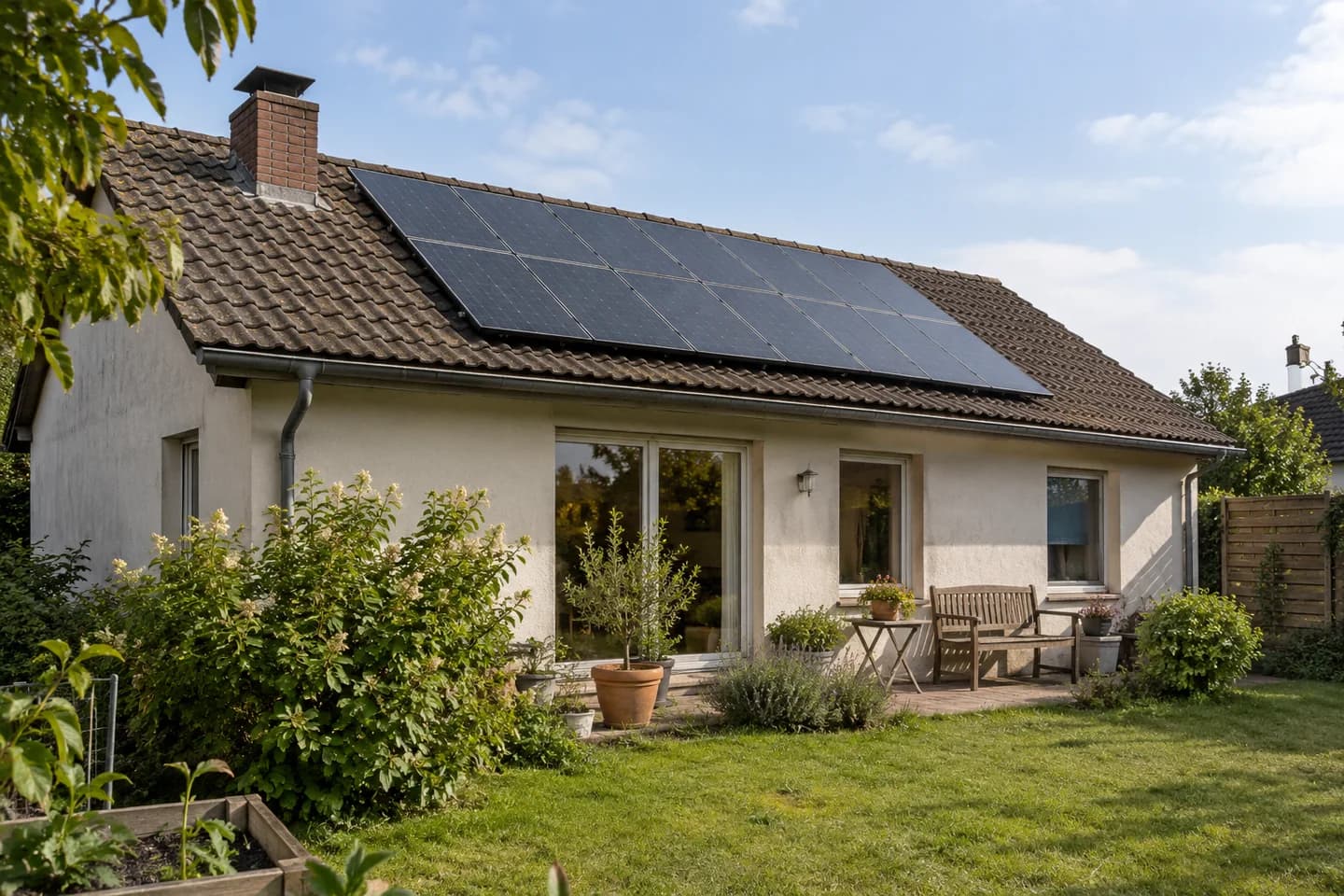
To use solar electricity on site and export the surplus, you need panels, a suitable grid-connected inverter, mounting and electrical installation equipment, and accepted metering for the connection. A battery is optional. The local network's export conditions and the electricity agreement determine what can be sent out and how it is settled.
This guide is for project owners, installers and distributors buying equipment for homes and small commercial premises. Rongkai coordinates supply quotations for panels, inverters, mounting and other system equipment, with model documents and packing details. Local installation, utility meter work and connection acceptance are arranged separately. A useful quotation makes that split clear and lists the accessories needed for the proposed equipment.
Where the electricity goes on a sunny afternoon
Self-consumption means using solar electricity at the property while it is being generated. In a typical grid-connected installation, the site's loads use some or all of that output. When solar falls short, the grid supplies the difference. When generation exceeds demand, the remaining power can go to the grid if export is allowed.
Here is an illustrative example, with no battery and no export restriction. The inverter is delivering 5 kW to the site, which is using 2 kW. About 3 kW is available to export. The 5 kW is actual output at that moment, not the rating printed on the panels.
If those levels stayed unchanged for one hour, the site would use 2 kWh of solar electricity and export 3 kWh. Real output and demand keep changing. Use those separate self-use and export figures when assessing the project, rather than treating every generated kWh as having the same value.
At night, a system without storage buys electricity from the grid. Sending out electricity at noon does not physically store it for the evening. Whether an export earns money or offsets a bill is a separate question about your electricity agreement.
The equipment package and the work arranged on site
A standard grid-tied solar inverter can serve a daytime self-consumption and surplus-export system. You do not need to choose a hybrid inverter just to send spare solar to the grid. A compatible hybrid model can also do this, with battery features available for a storage plan.
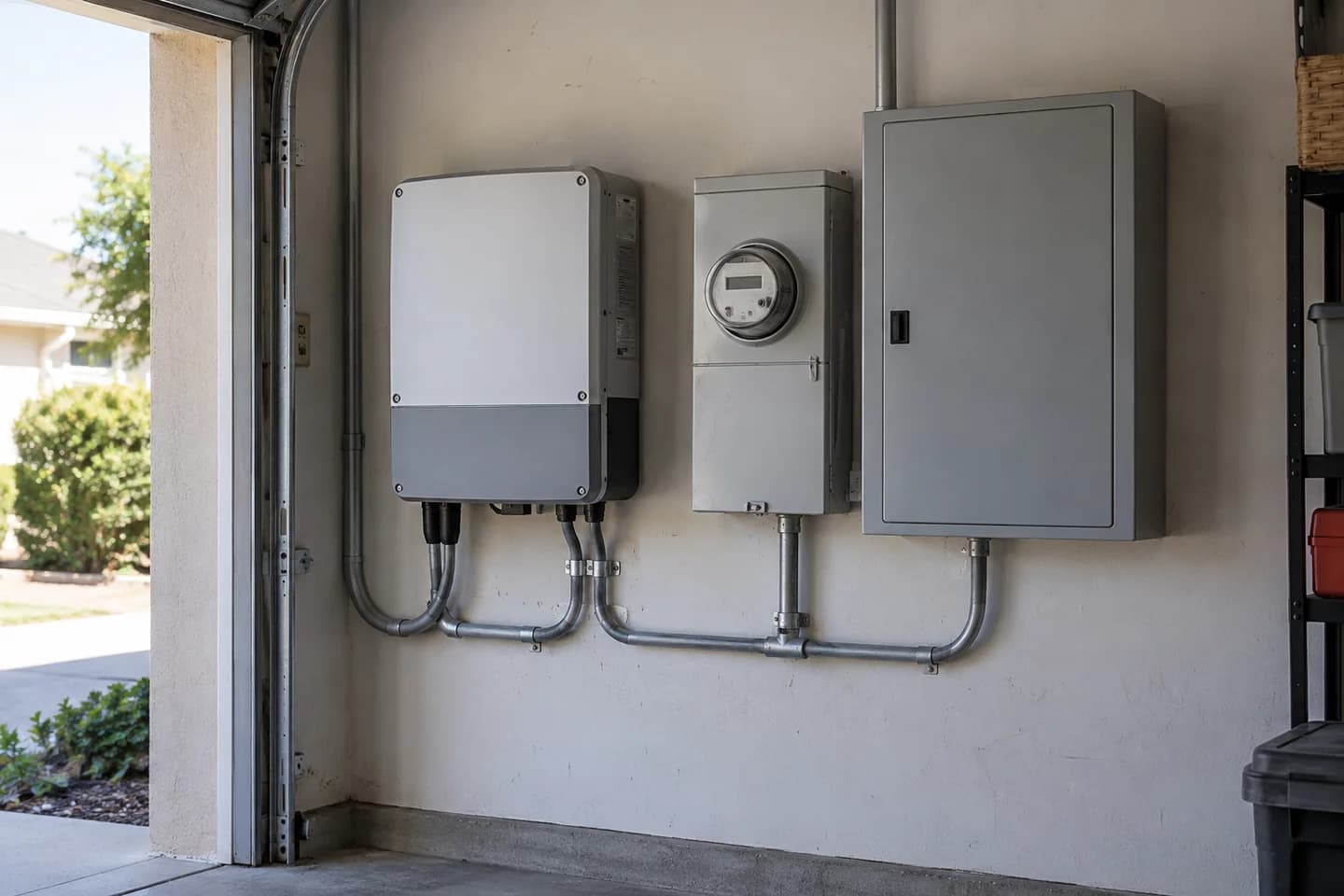
Use the equipment list to agree a supply scope with the seller and a site-work scope with the installer. In particular, distinguish a system-monitoring meter included with an inverter from a utility meter change arranged locally.
- Item
- Solar panels
- What it does
- Generate electricity from sunlight
- Supply and site responsibilities
- Equipment supply: list the exact model, quantity, panel rating and packing
- Item
- Grid-connected solar inverter
- What it does
- Converts panel electricity into power the site can use, while operating with the grid
- Supply and site responsibilities
- Equipment supply: select the model against the site's electrical and connection requirements
- Item
- Mounting and electrical installation equipment
- What it does
- Secure the panels, carry power and provide the specified isolation, protection and earthing
- Supply and site responsibilities
- Supply package: itemize parts against the installer's design and identify anything sourced locally
- Item
- Utility/export metering
- What it does
- Records grid purchases and exports for the applicable billing arrangement
- Supply and site responsibilities
- Local work: the electricity company and installer confirm the accepted meter and arrange any changes
- Item
- System monitoring and export control
- What it does
- Measures power flow and, where required, helps keep export within the agreed limit
- Supply and site responsibilities
- Equipment supply where needed: name the compatible meter or sensor, controls and communication accessories; configuration is site work
- Item
- Battery and storage equipment
- What it does
- Stores electricity for later use; backup needs its own equipment and design
- Supply and site responsibilities
- Optional supply: list supported battery models and accessories; storage is not required just to export surplus
| Item | What it does | Supply and site responsibilities |
|---|---|---|
| Solar panels | Generate electricity from sunlight | Equipment supply: list the exact model, quantity, panel rating and packing |
| Grid-connected solar inverter | Converts panel electricity into power the site can use, while operating with the grid | Equipment supply: select the model against the site's electrical and connection requirements |
| Mounting and electrical installation equipment | Secure the panels, carry power and provide the specified isolation, protection and earthing | Supply package: itemize parts against the installer's design and identify anything sourced locally |
| Utility/export metering | Records grid purchases and exports for the applicable billing arrangement | Local work: the electricity company and installer confirm the accepted meter and arrange any changes |
| System monitoring and export control | Measures power flow and, where required, helps keep export within the agreed limit | Equipment supply where needed: name the compatible meter or sensor, controls and communication accessories; configuration is site work |
| Battery and storage equipment | Stores electricity for later use; backup needs its own equipment and design | Optional supply: list supported battery models and accessories; storage is not required just to export surplus |
Some functions are integrated rather than separate boxes. Utility meter changes and connection work should not be assumed included in an equipment shipment.
Check which meter the quote includes
Two devices may both be called smart meters. One provides readings for the electricity bill. The other measures power flow and sends data to the inverter or monitoring platform. Identify which one is in the equipment offer.
A system-meter line should name the model, the inverter it works with and any required current sensors or communication accessories. CT means a current sensor. Not every self-consumption system needs an extra CT-based controller; the monitoring and export-control requirements determine the package.
Fronius, for example, describes its Smart Meter as measuring power in both directions for consumption monitoring and dynamic feed-in management. Its system-control role does not automatically make it the accepted billing meter. Any change to the utility meter should be identified as separate local work.
If the network sets an export limit, give that requirement to the equipment supplier. The offer should identify the measurement and control combination used to meet it, with the manufacturer's supporting documents. The installer then configures and checks that arrangement on site. Zero export is a different operating requirement from surplus export, but the system may still be grid connected.
Get the connection and permitted export conditions from the network, and the payment or credit terms from the electricity supplier. Some arrangements credit exports against purchases; others pay for exports separately. Net metering describes a billing arrangement, not an equipment kit. The inverter app's export figures alone do not establish a payment entitlement.
Only add a battery if you have a use for it
A battery lets you keep some daytime electricity for later. It may be worth comparing if much of your use is after sunset, export is restricted, or you want a properly designed backup supply. Those are additional goals; you can use daytime solar and export permitted surplus without storage.
Look at when the site uses electricity before choosing a battery. A large daytime load may leave little solar to charge it. If there is regular surplus, compare the value of exporting it with storing it, allowing for storage losses and the complete battery installation cost.
If storage is a later plan, ask which inverter and battery models can work together and what will need adding or replacing. A battery-ready label should be backed by a model list and an equipment scope.
Power cuts need a separate answer. Ordinary grid-tied solar normally stops when the grid fails, even in sunshine. Adding a battery does not automatically provide backup to every load. If refrigeration, lighting or business equipment must stay on, list those loads and ask what the backup output can supply and which switching equipment is needed. The Department of Energy's solar resilience guidance explains the shutdown behavior of ordinary grid-dependent solar.
Turn the site requirements into an equipment quote
For a project purchase, send the site brief or the installer's equipment list. Include planned solar capacity, daytime demand, available area, supply details and any known export limit. For distributor orders, also state quantities and whether you need a mixed package of panels, inverters and accessories.
Rongkai can use that brief to coordinate a model-specific equipment quotation and document review. For an export-limited project, for example, the offer should identify the proposed inverter, matching measurement device and communication accessories. Include the manufacturer evidence for that combination rather than leaving the control package as an unnamed extra.
For repeat or multi-product purchases, keep model codes, included accessories, packing quantities and delivery terms together. A lower equipment price may omit the meter, communication parts or mounting package included in another offer. List batteries as a separate option if storage is not yet decided, and have local installation and utility work priced separately.
- Exact panel and inverter model codes, quantities, mounting and other installation parts included in the supply package.
- Named system meter or sensors, communication accessories and manufacturer confirmation of the proposed combination.
- Current datasheets and the model-specific documents requested by the project or local reviewer.
- Packing, delivery terms, quoted lead time and warranty scope, with any substitutions agreed before order release.
- A separate scope for site installation, utility meter changes, connection acceptance and commissioning.
Related Articles
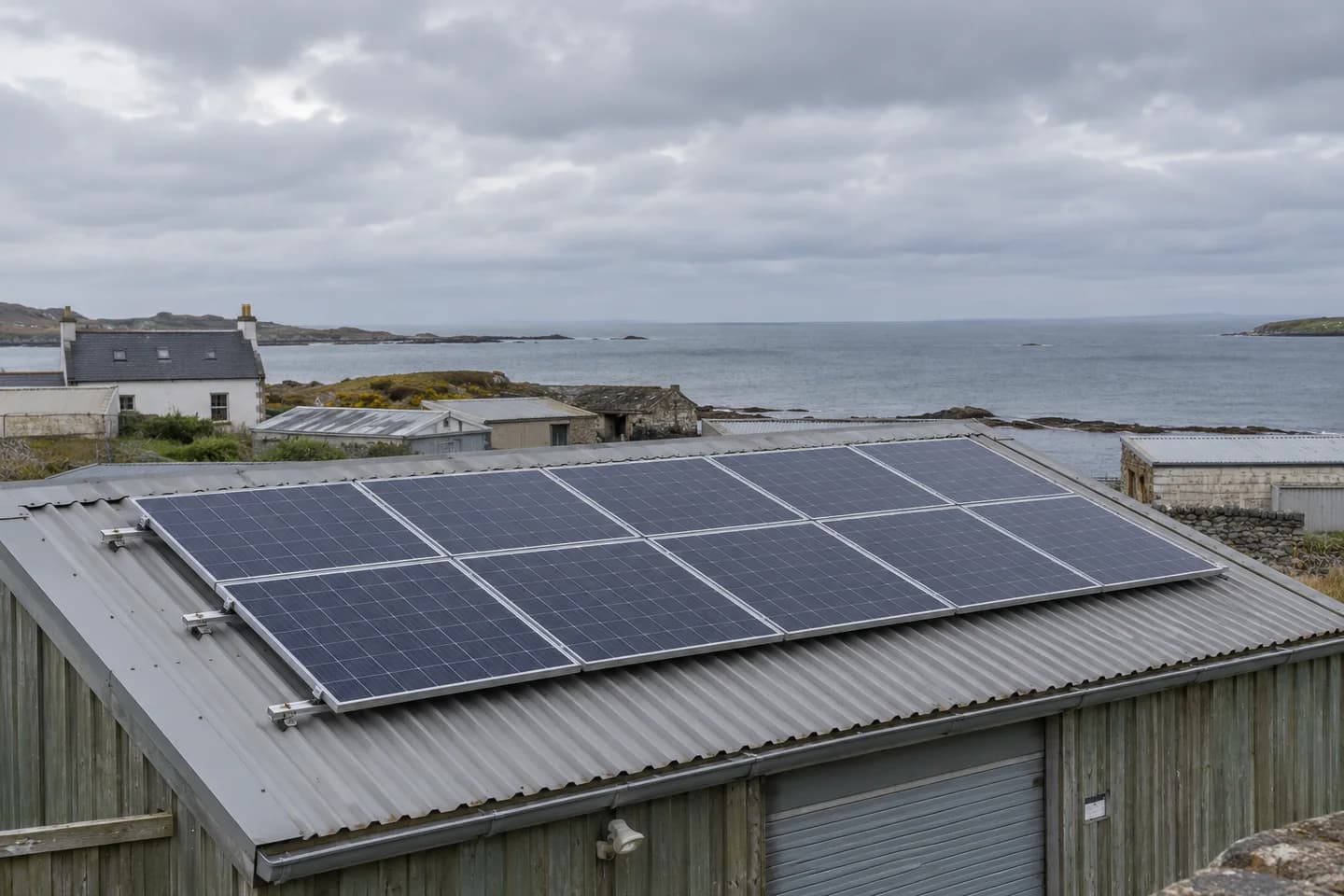
How do solar panels perform in clouds, heat, salt air and dust?
A panel's watt rating cannot describe every site. Learn what changes in cloudy, hot, coastal and dusty locations, and which details belong in a supply quote.
Read Article→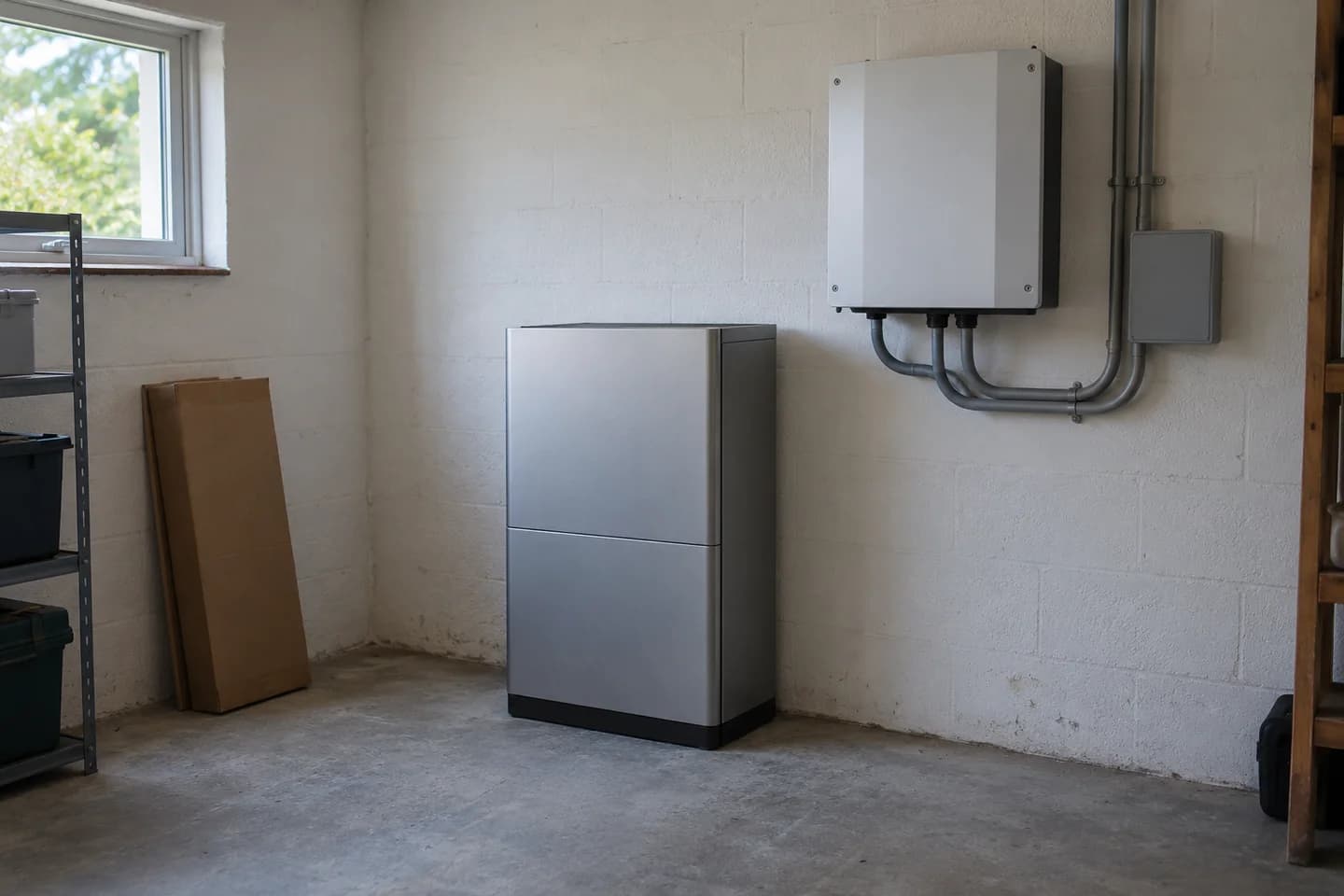
How to compare solar battery specifications before buying
Two batteries with the same kWh label can do different jobs. Here is how to read the numbers, check the missing details and compare like-for-like quotes.
Read Article→
Can an ice factory run on solar and add batteries later?
Use solar to cover part of the daytime load, then add storage for the outages you need to cover. First, check what happens when the grid goes off.
Read Article→