
Can an ice factory run on solar and add batteries later?
Use solar to cover part of the daytime load, then add storage for the outages you need to cover. First, check what happens when the grid goes off.
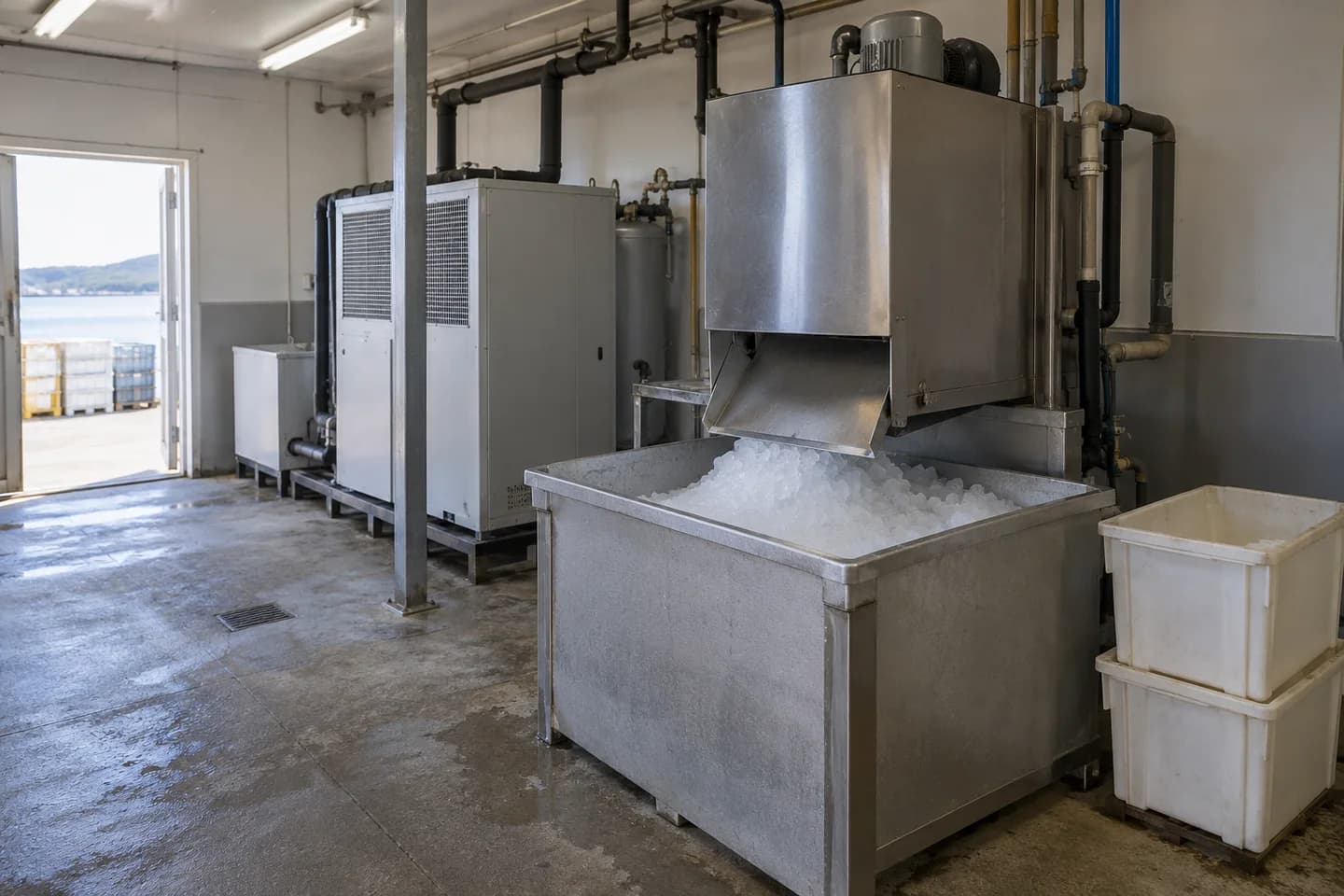
An ice factory can start with solar panels and add batteries later, using the grid to cover gaps in daytime generation and supply electricity at night. But if the grid goes off, ordinary grid-tied solar stops too. The first purchase can reduce grid electricity use; it does not automatically keep production running during a power cut.
A recent inquiry came from an owner buying a new ice plant for round-the-clock production. He wanted the panels and a three-phase inverter first, then batteries for outages. He also offered to connect us with the engineers handling the machinery. The conversation did not include running measurements or a test report, so the next step was to get the machine's power requirements before choosing the solar equipment.
Get the ice machine's running figures first
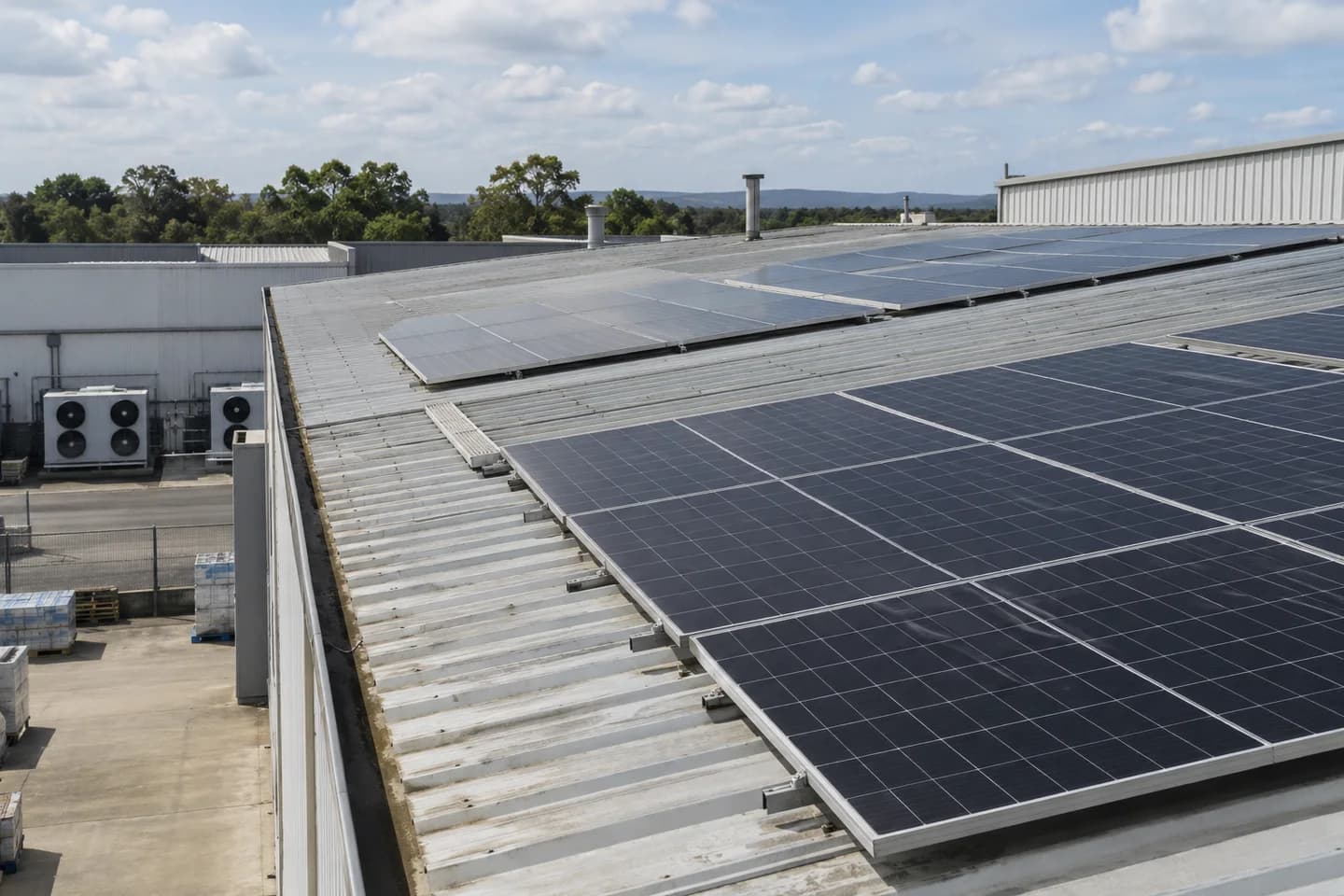
Ask the manufacturer how much power the whole plant draws while making ice and what it needs when the compressors start. Include water pumps, fans, ice handling and refrigerated storage if they are part of the installation. A tonnes-per-day rating tells you how much ice the plant can make, not how much electricity it consumes.
Check what each power figure covers. It might refer to one motor, all connected equipment or a maximum operating condition. Compressors and pumps may start and stop during a production cycle, so adding up labels does not establish the plant's average demand.
For new machinery, request the manufacturer's running figures and any test report for the equipment being supplied. Ask which water and cooling conditions those figures assume. FAO's ice-plant guidance warns that energy figures without stated operating conditions are only a general guide. For a factory already running, have a technician obtain power and energy records covering full production cycles.
The units help here. Kilowatts (kW) describe power while the equipment runs. Kilowatt-hours (kWh) describe electricity used over time, as on an electricity bill. Running at a steady 50 kW for one hour uses 50 kWh. Working for 24 hours does not, by itself, tell you either number.
Give the solar designer the machine's three-phase voltage, frequency and starting requirements as well. Enough inverter kilowatts on paper will not help if the unit cannot start the compressors.
What happens if the grid goes off at noon?
With the grid on, the panels can supply some or all of the factory's daytime demand. The grid fills the gap in the early morning, when clouds pass and as sunlight falls in the afternoon. Without batteries or another backup source, the factory depends on the grid at night.
A bright eight-hour day does not mean a 50 kW array delivers 50 kW for eight hours. Output changes with the time of day, clouds, temperature, shading and losses. Ask for an hourly generation estimate alongside the factory's work schedule, including months with poorer sunlight.
PVWatts can estimate hourly generation from weather and system inputs. Use it to see when solar is likely to fall short. It does not test whether an inverter can start the machinery or guarantee the output on a particular day.
During a grid outage, an ordinary grid-tied inverter shuts down, even at midday. The US Department of Energy explains this safety behavior in its solar resilience guidance. If daytime production must continue through a power cut, say so before the equipment is selected.
Running from solar alone during an outage needs equipment designed to maintain a stable supply as sunshine and machine demand change. A hybrid label does not prove that an inverter can do this without a battery. Ask the manufacturer to confirm the exact model and operating arrangement.
If there is a diesel generator, include its details in the design review. Solar and a generator can work together in a properly controlled system, as Victron's guidance illustrates. Do not simply connect an ordinary solar inverter to the generator: the equipment and controls must be compatible and prevent unwanted power flowing back into it.
Will a 100 kWh battery keep the ice factory running overnight?
For this example only, assume the plant draws a steady 50 kW. A nominal 100 kWh battery gives a simple two-hour calculation: 100 kWh divided by 50 kW. That assumes all the labelled energy reaches the machines. Usable capacity, the charge available at the start, reserve settings and conversion losses will normally shorten battery-only runtime.
For a closer estimate, divide the energy actually available to the machines by their average running load. A lower load lasts longer. Check the battery's power output and the inverter's starting capability too; enough stored energy does not guarantee that the compressors will start.
At the same assumed 50 kW load, covering a short power cut and covering the whole night involve very different amounts of electricity:
- Time to cover
- 2 hours
- Electricity used at a steady 50 kW
- 100 kWh: 50 kW × 2 hours
- Time to cover
- 16 hours
- Electricity used at a steady 50 kW
- 800 kWh: 50 kW × 16 hours
- Time to cover
- 24 hours
- Electricity used at a steady 50 kW
- 1,200 kWh: 50 kW × 24 hours
| Time to cover | Electricity used at a steady 50 kW |
|---|---|
| 2 hours | 100 kWh: 50 kW × 2 hours |
| 16 hours | 800 kWh: 50 kW × 16 hours |
| 24 hours | 1,200 kWh: 50 kW × 24 hours |
Illustrative energy use, with no solar, grid or generator contribution. These are not recommended battery sizes: allow for losses and reserve, and check that the equipment can start and run the selected machines.
Plan the battery stage before buying the first inverter
Tell the supplier what the future battery must keep running and for how long. You might need full ice production during an outage, or only selected storage and control equipment. Ask the machinery manufacturer what happens to a batch if production stops and what the restart needs.
Then ask which equipment you keep when batteries are added, which items you buy and whether anything must be replaced. Some designs start with a compatible hybrid inverter. Others keep the solar inverter and add a separate battery inverter. Get the later-stage model list in writing.
For a hybrid option, the manufacturer should confirm that the offered model can work without a battery in the proposed first stage. The later plan needs compatible battery voltage, communication and power limits, plus any extra switching and control equipment for three-phase backup. A quote saying battery-ready should identify those items.
Check when the battery will charge. If the factory uses nearly all the daytime solar, there may be little left to store. More panels or an agreed grid or generator charging arrangement may be needed.
Once the factory is running with solar, record generation, grid purchases, machine demand and outages. Use those records to refine the battery size before ordering it. Have the installer allow suitable space, protection from site conditions and service access for the future storage equipment.
Get the machinery and solar suppliers looking at the same information
Start with the machine's technical documents and your work schedule. If a power figure is missing, put it on the question list for the machinery supplier rather than guessing. Let the machinery engineers and solar designer review the same documents before the equipment order is agreed.
Ask for separate lists of equipment and work for the first stage and the later battery stage. Check whether transport, installation and commissioning are included. A panels-and-inverter offer and a complete installed system are different purchases.
Base the savings estimate on solar electricity the factory can use and the cost of the electricity it replaces. For diesel generation, ask for a fuel estimate using the generator's operating data, not a fixed fuel saving for every solar kWh.
- Machine model, production target, running and starting figures, three-phase voltage and frequency.
- Work schedule, available test or running records, and space for panels.
- Grid availability, usual outage duration and generator details, if one is used.
- Equipment to keep running during outages, how long it needs power, and whether production can tolerate an interruption.
Two questions about adding storage
Can I add batteries without replacing the solar inverter?
Possibly. A compatible hybrid inverter may accept them later, or a separate battery-inverter system may keep the original solar inverter. Ask the supplier to list what stays and what changes for your intended backup operation before you buy the first stage.
Does a factory working 24 hours need batteries for the whole night?
Not if the grid or generator normally supplies the overnight load. Batteries can be sized for the outages and equipment you want to cover. Running the whole factory overnight on batteries alone needs enough energy for that full period, plus allowances for losses and reserve.
Related Articles
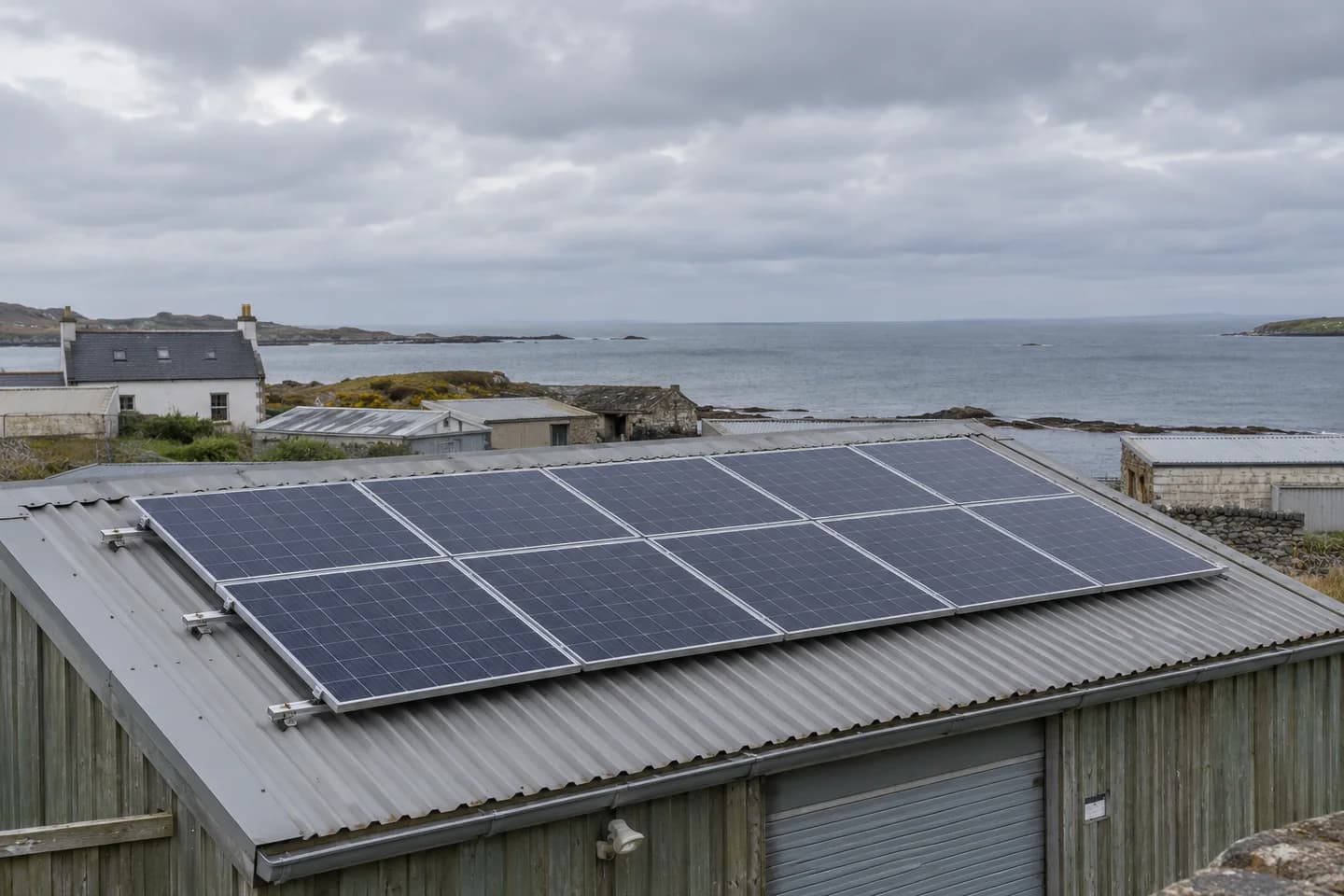
How do solar panels perform in clouds, heat, salt air and dust?
A panel's watt rating cannot describe every site. Learn what changes in cloudy, hot, coastal and dusty locations, and which details belong in a supply quote.
Read Article→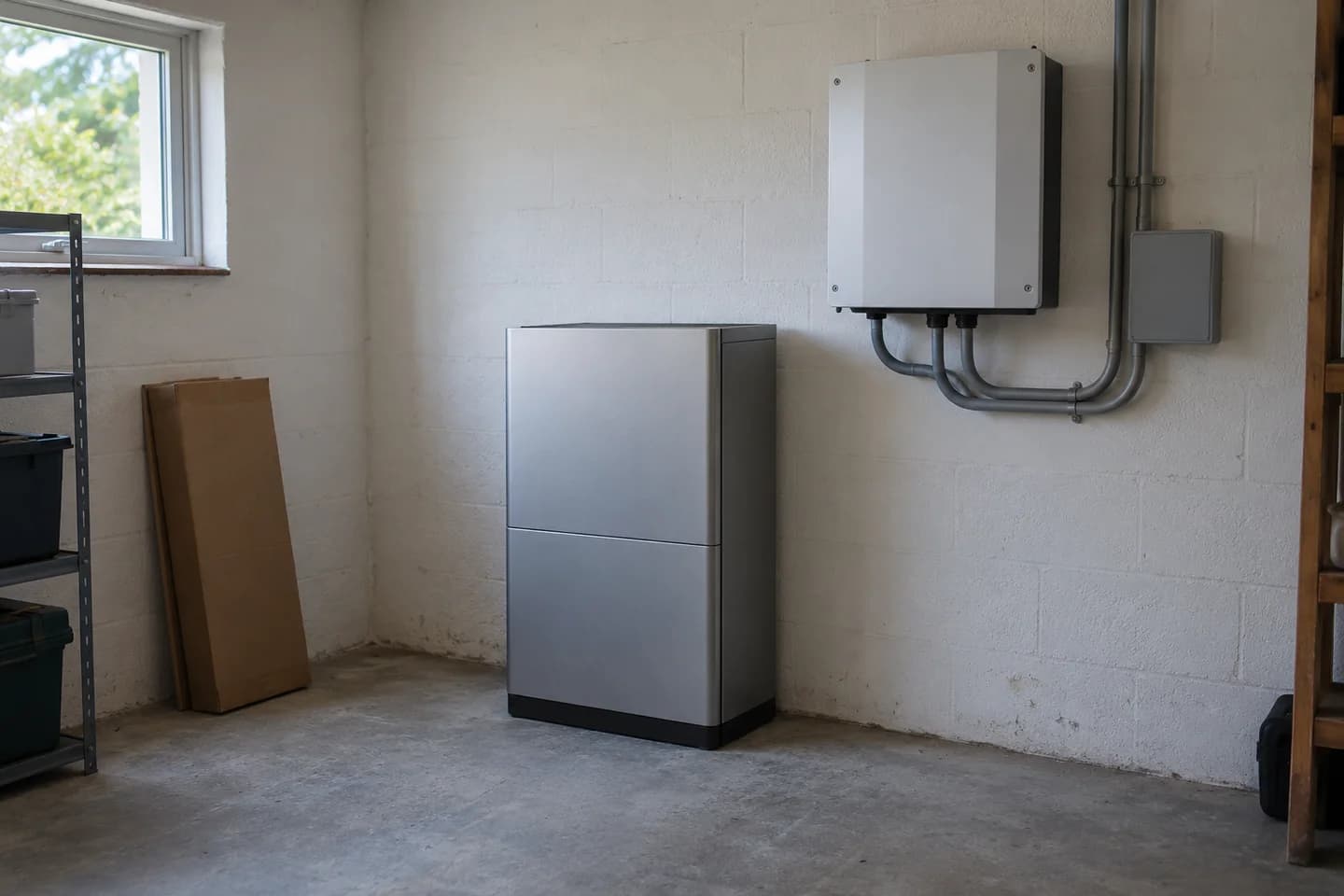
How to compare solar battery specifications before buying
Two batteries with the same kWh label can do different jobs. Here is how to read the numbers, check the missing details and compare like-for-like quotes.
Read Article→
Solar self-consumption and grid export: what equipment do you need?
For project buyers, installers and distributors: what to source as an equipment package, what to arrange locally, and what a useful supply quote should include.
Read Article→