
Can solar run a mini split, refrigerator and washer/dryer?
Yes, these appliances can be included in a solar plan. The useful answer starts with their labels, operating hours and the loads that may run together.
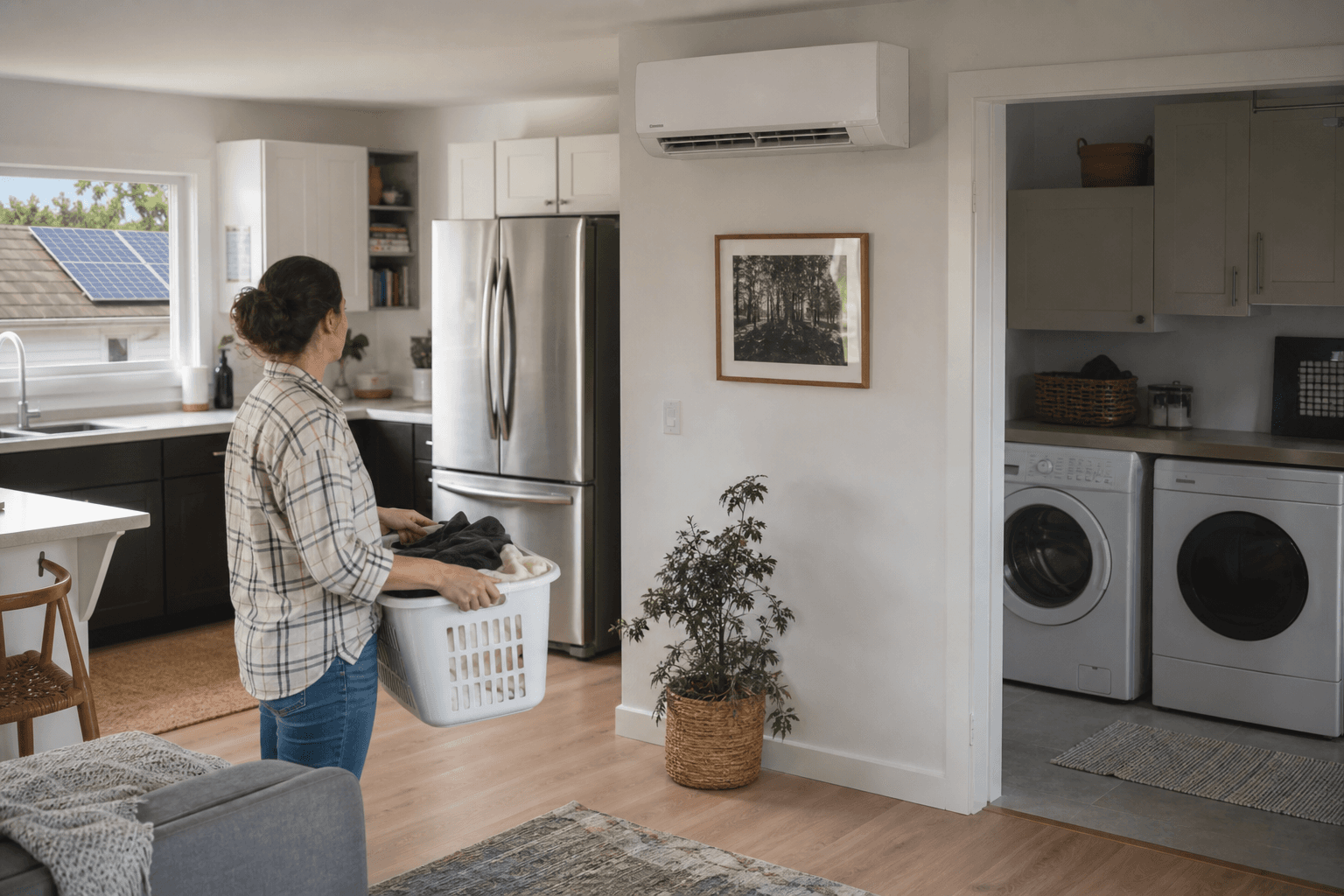
A solar and battery system can run a mini split, refrigerator and washer/dryer. That short answer is true, but it is too loose to buy equipment from. The same appliance list might fit one home comfortably and overwhelm another system because the models, weather, laundry routine and night-time use are different.
Each appliance also creates a different kind of demand. A mini split may run for hours and change its power as the room cools. A refrigerator cycles all day. A washer changes between filling, tumbling, heating and spinning. A dryer may be fairly modest or become the largest load in the house, depending on how it makes heat.
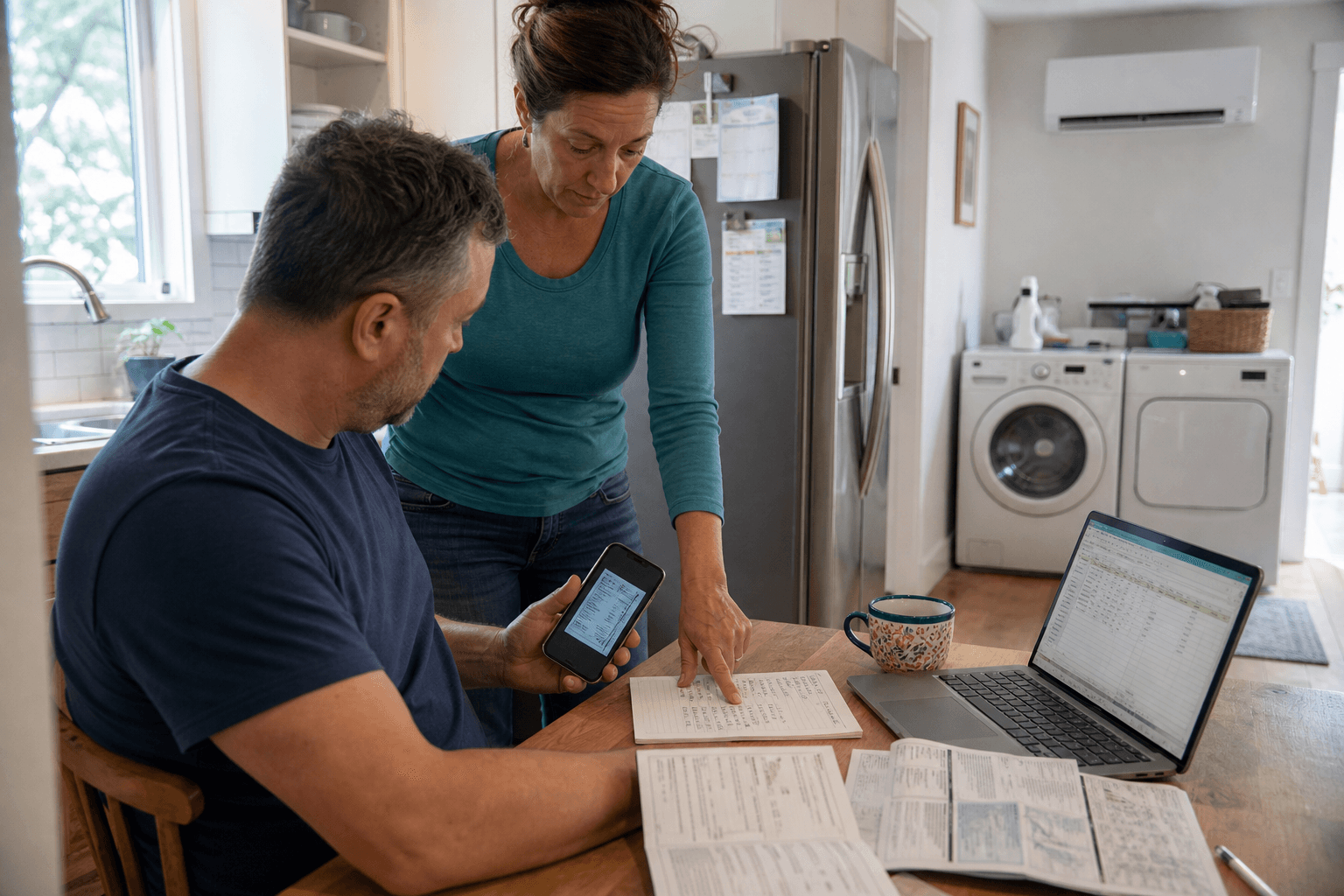
You do not need to be an electrician to prepare a useful first estimate. You need clear appliance labels, a realistic daily routine and an honest answer about what must keep running during an outage. This guide shows how to collect that information before an installer or supplier checks the final equipment. The photographs are illustrative editorial scenes, not customer project records.
First decide what you mean by ‘run on solar’
People use the phrase ‘solar-powered home’ for several different setups. In a grid-connected home without a battery, the panels may cover part of the daytime load while the grid quietly supplies any shortfall. The appliances do not have to live within the solar output every minute.
A solar-and-battery backup system has a different job. It may run the whole home when the grid is healthy, then keep only selected circuits alive during an outage. A fully off-grid home has the hardest job because the system must cover the loads, survive low-sun periods and still find enough energy to recharge.
This distinction changes the answer for laundry and air conditioning. Running a dryer at noon with grid support is very different from asking a battery to run the dryer and mini split together at midnight.
- Type of setup
- Grid-connected solar
- What happens when solar is short
- The grid can supply the missing power when the system is allowed to use it.
- The first question to answer
- How much daytime energy can the panels reasonably offset?
- Type of setup
- Solar with battery backup
- What happens when solar is short
- The battery and backup inverter carry the selected loads during an outage.
- The first question to answer
- Which appliances really need backup, and for how long?
- Type of setup
- Fully off-grid
- What happens when solar is short
- There is no grid safety net; the operating schedule and recharge plan become part of daily life.
- The first question to answer
- Can the system cover both the difficult load period and the following recharge period?
| Type of setup | What happens when solar is short | The first question to answer |
|---|---|---|
| Grid-connected solar | The grid can supply the missing power when the system is allowed to use it. | How much daytime energy can the panels reasonably offset? |
| Solar with battery backup | The battery and backup inverter carry the selected loads during an outage. | Which appliances really need backup, and for how long? |
| Fully off-grid | There is no grid safety net; the operating schedule and recharge plan become part of daily life. | Can the system cover both the difficult load period and the following recharge period? |
Start with four appliance labels, not four appliance names
‘One refrigerator’ is not a load value. Neither is ‘18,000 BTU mini split’ or ‘washer/dryer combo.’ Those descriptions tell you what the appliance does. They do not tell you exactly what it asks from the electrical system.
Take a clear photograph of each model label. For the mini split, the useful label is often on the outdoor unit. For a refrigerator, the model label may be inside the food compartment or near the front frame. Keep the energy label or current product sheet as well. For laundry equipment, record whether the dryer uses electric resistance heat, a heat pump or gas. A combo machine still needs its full model code because the wash and dry parts can behave very differently.
If a label shows volts and amps but no watts, keep both values for the installer or load calculator. Do not invent a wattage from the appliance category. A current manual or manufacturer sheet is better than a number copied from a different model online.
- Appliance
- Mini split
- What changes the result
- Room size, insulation, weather, temperature setting, heating or cooling mode and compressor control.
- What to collect
- Exact indoor and outdoor model codes, voltage, rated input, maximum input or current, and expected hours.
- Appliance
- Refrigerator
- What changes the result
- Room temperature, door opening, compressor cycling, age and the exact refrigerator size and design.
- What to collect
- Model code, nameplate, energy label or model-specific annual energy figure, plus any available starting data.
- Appliance
- Washer
- What changes the result
- Cycle, water-heating method, spin speed, load size and number of washes.
- What to collect
- Model code, voltage, input rating and model-specific energy per cycle when available.
- Appliance
- Dryer
- What changes the result
- Electric-resistance, heat-pump or gas heating; cycle choice; moisture level and load size.
- What to collect
- Dryer type, model code, voltage, maximum input and model-specific energy per cycle.
| Appliance | What changes the result | What to collect |
|---|---|---|
| Mini split | Room size, insulation, weather, temperature setting, heating or cooling mode and compressor control. | Exact indoor and outdoor model codes, voltage, rated input, maximum input or current, and expected hours. |
| Refrigerator | Room temperature, door opening, compressor cycling, age and the exact refrigerator size and design. | Model code, nameplate, energy label or model-specific annual energy figure, plus any available starting data. |
| Washer | Cycle, water-heating method, spin speed, load size and number of washes. | Model code, voltage, input rating and model-specific energy per cycle when available. |
| Dryer | Electric-resistance, heat-pump or gas heating; cycle choice; moisture level and load size. | Dryer type, model code, voltage, maximum input and model-specific energy per cycle. |
An 18,000 BTU mini split is not an 18,000-watt appliance
BTU describes cooling or heating capacity. It tells you how much heat the unit is designed to move. It is not the electrical power that should be typed into an inverter calculation. Look for rated electrical input, maximum input or current on the exact model documentation.
The room matters as much as the label. A mini split in a shaded, insulated bedroom may settle into a gentle operating pattern after the room reaches temperature. The same unit in a sun-exposed space with open doors may work much harder. ENERGY STAR recommends proper heating and cooling load sizing because an oversized or undersized unit can both perform poorly. Solar equipment cannot correct a badly matched air conditioner.
Compressor starting also needs a model-level answer. Some older fixed-speed equipment can create a sharp start. Many inverter-driven mini splits bring the compressor up more gradually, but the words ‘inverter mini split’ do not prove a specific starting demand. Use the manufacturer's electrical data or a suitable measurement instead of applying one universal surge multiplier.
Finally, write down when cooling is needed. Daytime operation can use live solar production when it is available. Evening and overnight cooling move much more of the job onto the battery. Six hours of cooling is not one fixed energy number because the unit does not necessarily draw the same power for all six hours.
The refrigerator is steady work; the dryer is the wildcard
A refrigerator often looks small beside an air conditioner, yet it stays in the plan all day and all night. Its compressor turns on and off, so a single running-watt figure does not describe a full day. Use the exact model's energy information as a starting point, then consider a warmer room, frequent door opening and outage conditions. The refrigerator is usually one of the first loads people choose to protect, which also means its energy cannot simply be moved to a sunny hour.
The washer is a shorter job. Its demand changes during the cycle, and water heating can matter more than the drum motor. ENERGY STAR notes that water heating accounts for a large share of washer energy, which is why the selected temperature and the home's hot-water source belong in the conversation. A cold wash and a hot sanitary cycle should not be treated as the same load.
Treat drying as a separate appliance even when one cabinet washes and dries. A traditional electric dryer makes heat with electric resistance and may place a large, sustained demand on the inverter. A heat-pump dryer reuses heat in a closed loop and can use substantially less energy, according to ENERGY STAR. A gas dryer uses another fuel for heat but still needs electricity for controls and drum operation.
This is why ‘washer/dryer combo’ is not enough information. The exact drying technology can change both the peak-power question and the energy used for one load of laundry.
Five numbers turn the appliance list into a system question
The solar panels, inverter and battery do three related jobs. Panels collect energy when sunlight is available. The inverter supplies the kind of AC power the household appliances use. The battery carries energy from one time to another and supports loads when solar or the grid is unavailable.
A large battery can run a modest load for longer, but it cannot repair an inverter that is too small for the appliances running together. A large inverter can supply more power, but it does not create extra hours from a small battery. The battery also has its own power limit, so its kWh label is only part of the check.
Panel size comes after the load schedule. Local weather, shade, roof direction, season and system losses change solar production. NREL's PVWatts can estimate grid-connected PV production for a location, while the appliance list shows the energy the household wants to use. One result does not replace the other.
- Number
- Running power
- Plain-language meaning
- What the appliances need while they are on together.
- What it helps check
- Continuous inverter and battery power.
- Number
- Starting or short peak
- Plain-language meaning
- The brief extra demand when a compressor or motor starts, if the exact appliance creates one.
- What it helps check
- Short-duration inverter, battery and appliance-start behaviour.
- Number
- Daily energy
- Plain-language meaning
- How much electricity the planned routine uses over a day.
- What it helps check
- The broad solar-generation and daily energy balance.
- Number
- Night energy
- Plain-language meaning
- The part of the routine that happens after useful solar hours.
- What it helps check
- How much work may fall on the battery or grid.
- Number
- Backup energy
- Plain-language meaning
- What the must-run appliances need for the chosen outage period.
- What it helps check
- Usable battery capacity and the backup operating plan.
| Number | Plain-language meaning | What it helps check |
|---|---|---|
| Running power | What the appliances need while they are on together. | Continuous inverter and battery power. |
| Starting or short peak | The brief extra demand when a compressor or motor starts, if the exact appliance creates one. | Short-duration inverter, battery and appliance-start behaviour. |
| Daily energy | How much electricity the planned routine uses over a day. | The broad solar-generation and daily energy balance. |
| Night energy | The part of the routine that happens after useful solar hours. | How much work may fall on the battery or grid. |
| Backup energy | What the must-run appliances need for the chosen outage period. | Usable battery capacity and the backup operating plan. |
These are planning inputs. The final equipment check still includes losses, reserve, temperature, voltage, phase, product limits and local electrical design.
A better daily schedule can be easier than a much bigger system
Picture a sunny Saturday afternoon. The mini split is already maintaining the room temperature. The refrigerator cycles in the background. The washer runs first, then the dryer starts after the wash finishes. Those two laundry loads do not need to overlap. Available solar may also supply part of the live demand.
Now move the same laundry job to late evening. The mini split is cooling a bedroom, the refrigerator is running, and the battery must also carry the dryer. The appliance list has not changed, but the battery energy and simultaneous power have.
This is load scheduling in ordinary life. It does not mean someone must watch a power meter all day. A household can choose simple rules: wash and dry during good solar hours, avoid starting the dryer while another large appliance is on, and keep non-essential laundry outside the outage plan. If those rules are unacceptable, the proposed system should be sized for the wider routine rather than assuming the family will change later.
- 1
Keep the refrigerator on its real schedule
It cycles throughout the day and is commonly treated as an essential outage load.
- 2
Place laundry in the solar window
Run the washer and dryer one after the other during useful daylight when the household can do so.
- 3
Write down the night cooling hours
Night-time mini-split use belongs in the battery calculation, not the midday solar estimate.
- 4
Create a shorter outage list
Keep the loads that protect food, comfort, communication or health; leave optional laundry out unless it is genuinely required.
A teaching example: the same daily total can create a smaller night-time job
The figures below are invented to show the method. They are not typical appliance values, a model recommendation or a promise about runtime. Replace every row with the label, current product data or a suitable measurement for the equipment being considered.
In this made-up day, the four appliances use 9.4kWh on the load side. That total helps with the daily energy conversation, but it does not mean the battery must be 9.4kWh. The washer and dryer are scheduled during daylight. Only three of the mini split's six assumed operating hours fall after useful solar, and this simplified example assigns half of the refrigerator's daily energy to the same night period. The night load is therefore about 3.7kWh: 3.0kWh for cooling plus 0.7kWh for refrigeration.
If one wash-and-dry cycle is moved into that night period, another 2.0kWh is added and the load-side total becomes about 5.7kWh. The inverter question also changes because the dryer may overlap with the mini split and refrigerator. Conversion losses, battery reserve, temperature, ageing and exact product limits still have to be added later.
This example shows why daily kWh, battery kWh and inverter kW should not be collapsed into one number. Scheduling can reduce the night-time energy requirement, while the exact simultaneous appliance inputs still decide the power requirement.
- Made-up teaching input
- Mini split: assumed 1.0kW average while operating
- Simple energy calculation
- 1.0kW × 6 hours = 6.0kWh
- When it is used
- Three hours in daylight and three hours after useful solar.
- Made-up teaching input
- Refrigerator: assumed model-specific daily figure
- Simple energy calculation
- 1.4kWh for the day
- When it is used
- Cycles through the full day; 0.7kWh is assigned to the simplified night period.
- Made-up teaching input
- Washer: one assumed cycle
- Simple energy calculation
- 0.5kWh for the cycle
- When it is used
- Scheduled in daylight before the dryer starts.
- Made-up teaching input
- Heat-pump dryer: one assumed cycle
- Simple energy calculation
- 1.5kWh for the cycle
- When it is used
- Scheduled in daylight after the washer finishes.
| Made-up teaching input | Simple energy calculation | When it is used |
|---|---|---|
| Mini split: assumed 1.0kW average while operating | 1.0kW × 6 hours = 6.0kWh | Three hours in daylight and three hours after useful solar. |
| Refrigerator: assumed model-specific daily figure | 1.4kWh for the day | Cycles through the full day; 0.7kWh is assigned to the simplified night period. |
| Washer: one assumed cycle | 0.5kWh for the cycle | Scheduled in daylight before the dryer starts. |
| Heat-pump dryer: one assumed cycle | 1.5kWh for the cycle | Scheduled in daylight after the washer finishes. |
Made-up teaching result: 9.4kWh for the full day, about 3.7kWh assigned to the simplified night period, or about 5.7kWh at night if the example laundry cycle is moved there. These are load-side figures, not battery sizes.
Use the load calculator as a first check
Open the Solar Load Calculator and add the exact appliances one by one. The guided presets are useful for building the list, but replace the suggested values with model-specific data whenever you have it. For the mini split and refrigerator, include starting information only when the manual, manufacturer or suitable measurement supports it.
Enter the hours and days that match your routine. Mark appliances as simultaneous only when they can realistically run together. If the washer always finishes before the dryer begins, the normal calculation should show that. If the dryer can run while the mini split and refrigerator are on, include that overlap.
Then make a second, smaller backup list. Many homes keep refrigeration, cooling for one room, lights, Wi-Fi and a few outlets. Laundry can stay on the normal-use list without being promised during an outage. The calculator will show daily energy, running power, an estimated starting peak, night use and the selected critical-load requirement.
Use the result to ask better questions. It is not an automatic product recommendation. The final review should match the exact inverter, battery, solar input, voltage, phase and operating mode, with the site installation checked by the responsible qualified local professional.
- Photograph the full model label for the mini split outdoor unit, refrigerator, washer and dryer.
- Record the mini split's expected daytime and night-time hours in the difficult season.
- Identify the dryer as electric-resistance, heat-pump or gas rather than writing only ‘dryer.’
- List which appliances may genuinely run together and which can be scheduled one after another.
- Create a separate outage list instead of assuming every normal household load requires backup.
- Compare the result with the exact inverter output, battery usable energy and power, and location-based solar production.
Should the washer and dryer stay on grid power?
For a backup system, leaving laundry outside the backed-up circuits is often a practical choice. Clean clothes can usually wait until the grid returns, while refrigeration and cooling may be more urgent. This keeps the outage target smaller without preventing the household from using solar for laundry during normal daytime operation.
For a fully off-grid home, the decision is different. Laundry has to fit somewhere in the energy budget. Daytime scheduling, cold-water washing and an efficient drying route can make that easier. The exact dryer still matters more than the category name.
There is no universal rule that a dryer must remain on grid or that every heat-pump dryer will fit. The right answer comes from the model data, the household routine and the system's verified power and energy limits.
Can an 18,000 BTU mini split run on solar?
Yes, a suitable solar, inverter and battery setup can run one, but 18,000 BTU describes heating or cooling capacity rather than electrical demand. Check the exact unit's voltage, rated and maximum electrical input, operating hours, room load and night-time requirement before sizing the system.
How many solar panels do I need for a mini split and refrigerator?
There is no dependable panel count without the appliance energy, location, season, shade, panel rating and system losses. Build the daily load first, then use location-based production data and the proposed panel model to review the array.
Can a solar inverter run a washer and dryer?
It can when the exact washer, dryer and other simultaneous loads fit the inverter and battery limits. Check the dryer technology carefully because electric-resistance, heat-pump and gas dryers create very different electrical demands.
Does a mini split always need a soft starter?
No universal answer applies. Many variable-speed mini splits start differently from older fixed-speed compressors. Follow the exact manufacturer requirements and let the responsible installer confirm whether any approved accessory is needed; do not add one based only on a general surge rule.
Related Articles
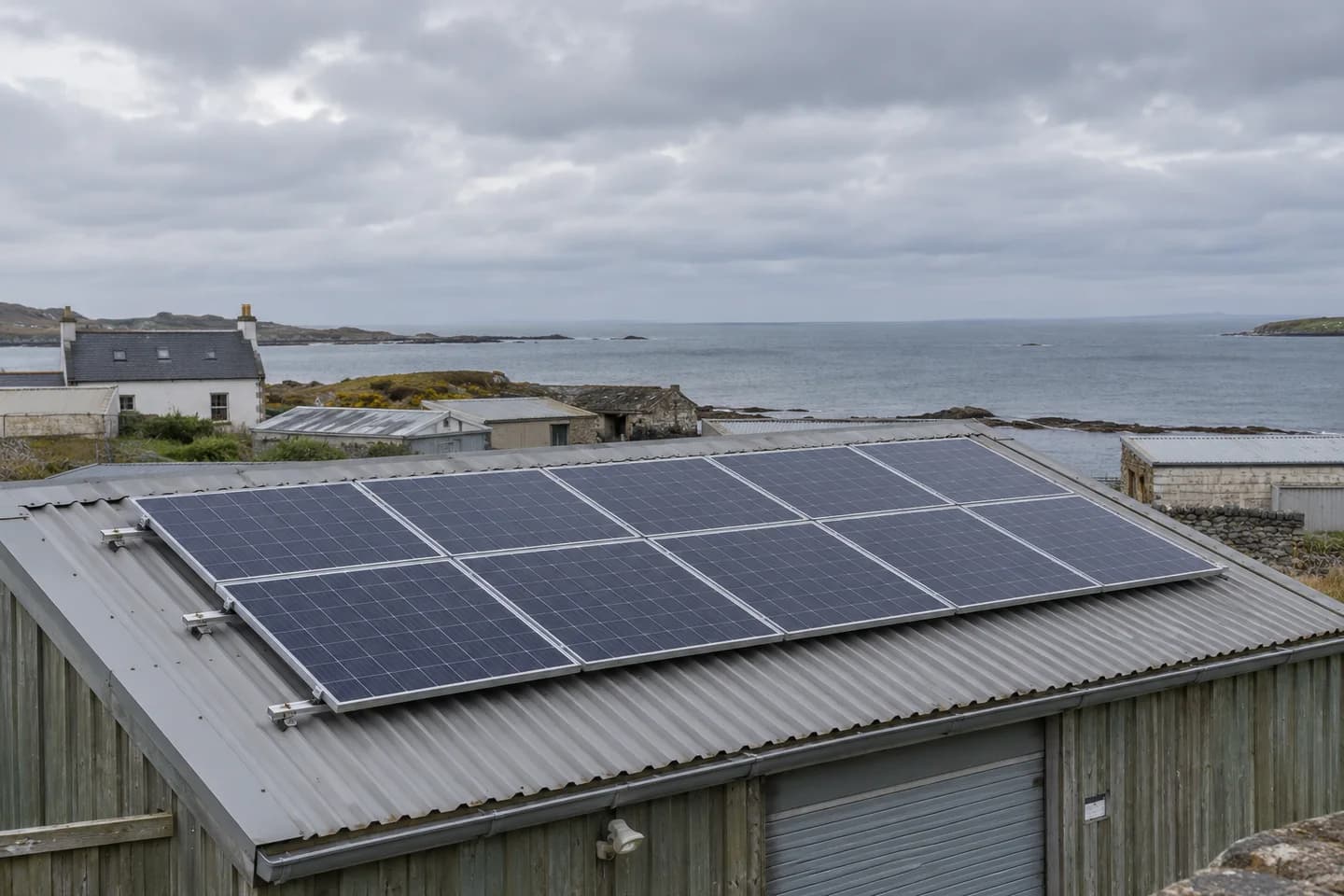
How do solar panels perform in clouds, heat, salt air and dust?
A panel's watt rating cannot describe every site. Learn what changes in cloudy, hot, coastal and dusty locations, and which details belong in a supply quote.
Read Article→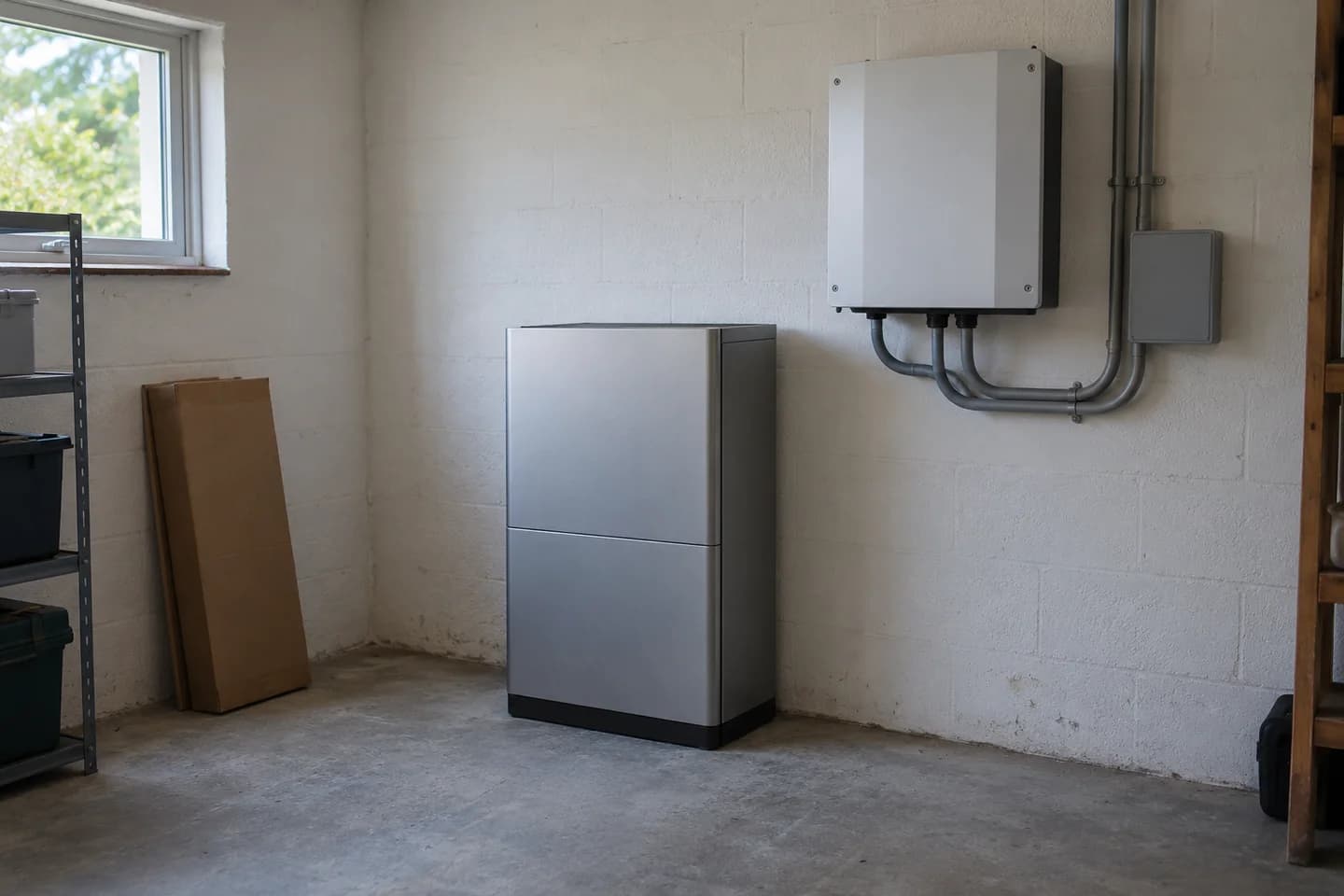
How to compare solar battery specifications before buying
Two batteries with the same kWh label can do different jobs. Here is how to read the numbers, check the missing details and compare like-for-like quotes.
Read Article→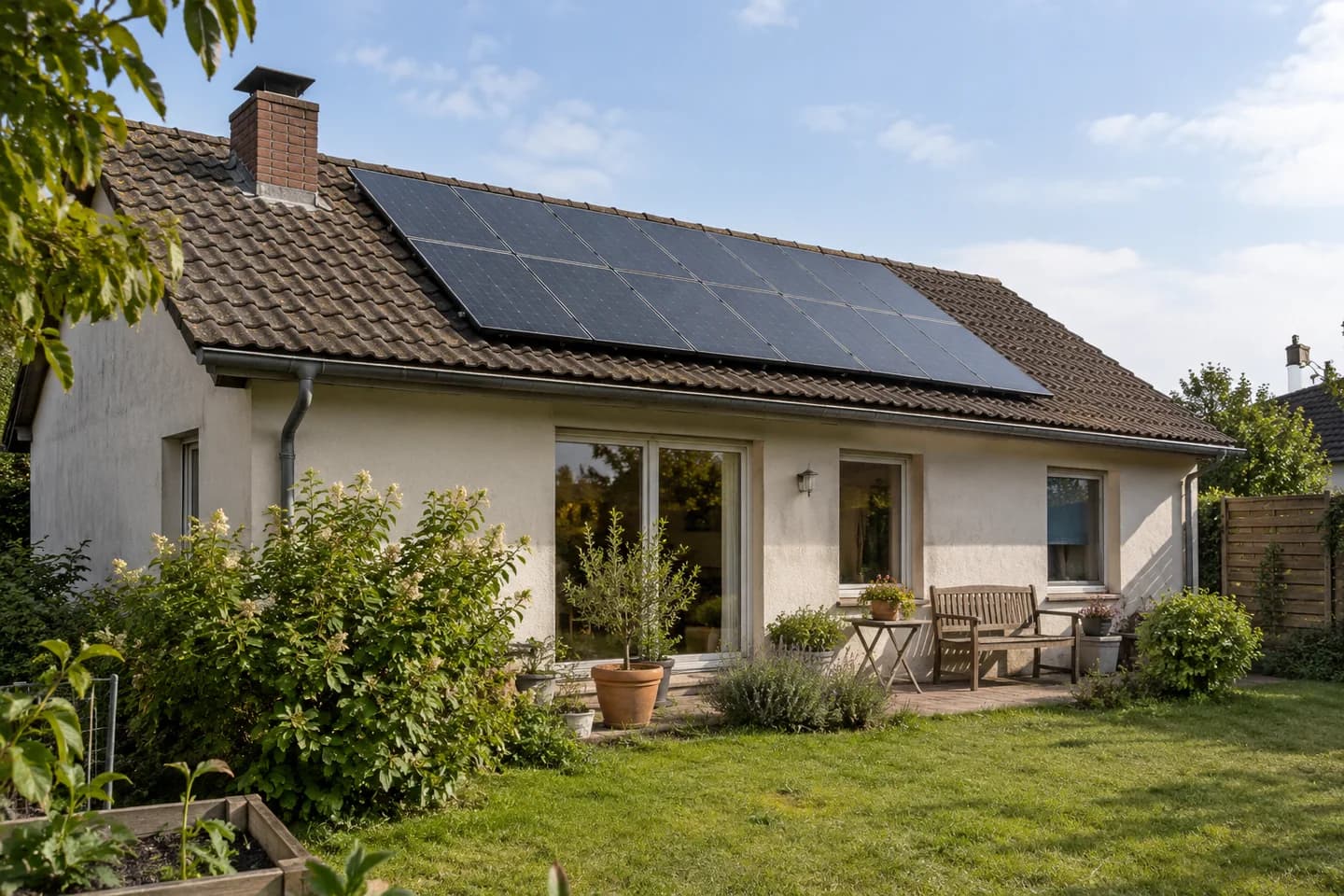
Solar self-consumption and grid export: what equipment do you need?
For project buyers, installers and distributors: what to source as an equipment package, what to arrange locally, and what a useful supply quote should include.
Read Article→