Growatt low-voltage residential hybrid review
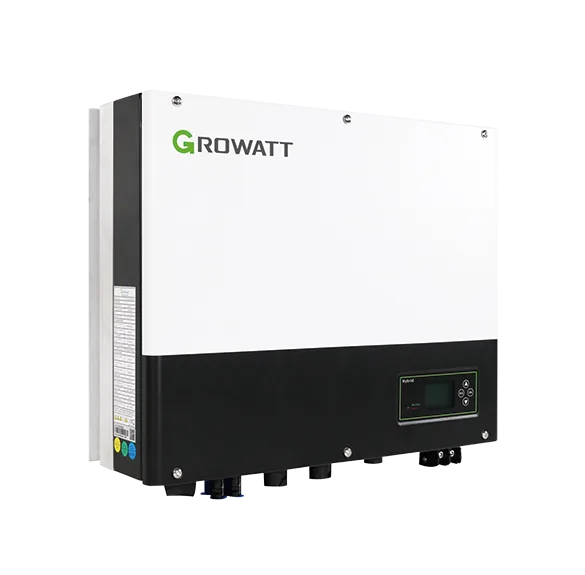
Growatt SPH 3000-6000TL BL-UP Single-Phase Hybrid Inverter Family
The current SPH BL-UP datasheet covers six single-phase hybrid members from 3 to 6 kW. It lists two PV MPPT trackers, a 42-59 V lithium or lead-acid battery interface, member-dependent 66-85 A charge/discharge current and a backup output capped at 4 kW for the 4.6-6 kW members. The stated transfer time is under 10 ms, but load continuity, battery compatibility and backup performance remain conditional on the exact battery, firmware, load and installation design.
Current source identity: official Growatt SPH 3000-6000TL BL-UP April 2026 datasheet and the official product/download route. Region certificates and manuals have different dates and model coverage.
Downloads
Current document status
Before quotation, obtain the exact 3000/3600/4000/4600/5000/6000TL BL-UP member, current manual, approved battery/BMS and firmware record, destination certificate and grid profile, backup wiring and load limits, meter/CT and dry-contact design, monitoring hardware, accessories and warranty.
Current BL-UP family evidence
Match PV, battery and backup values to the selected member
The 3-6 kW family label hides meaningful differences in current and backup output.
Six AC members
The table lists 3, 3.68, 4, 4.6, 5 and 6 kW maximum AC output, with single-phase 230 V nominal output and member-dependent rated current.
Dual-MPPT PV input
All columns show 550 V maximum DC, 120-550 V MPPT operation, two trackers, one string per tracker and 13.5 A maximum operating current per tracker.
Low-voltage battery interface
The table states 42-59 V and 66/75/85 A limits by member. Lithium-or-lead-acid wording does not approve an arbitrary battery or charge profile.
Backup is not equal across the family
The table shows 3 or 3.68 kW on smaller members and 4 kW maximum from the 4 kW member upward, even where grid-connected output reaches 6 kW.
Residential hybrid RFQ inputs
Six checks before designing an SPH BL-UP system
The PV array, battery, backup panel and grid interface must share one validated design.
Exact inverter and grid
State the full BL-UP member, country, service voltage/frequency, utility, export rule and required grid-code, safety and EMC certificate coverage.
PV array and oversizing
Provide module/string Voc, Vmp, Isc and Imp at site temperatures and confirm the selected column's recommended PV power, voltage and current limits; do not treat a 2.0 DC/AC headline as automatic approval.
Battery and BMS
Provide exact battery model, series/parallel arrangement, usable kWh, voltage/current, BMS protocol, firmware, approved-list evidence, settings and warranty acceptance.
Backup load study
List continuous and startup W/VA, power factor, motors, transfer tolerance, autonomy and circuit priority; check the 4 kW family ceiling and battery-limited charging/discharging power.
Metering and smart loads
Define meter/CT, export control, dry-contact load, time-of-use/VPP requirements, wiring, communications, control ownership and behavior during communications loss.
Documents and commissioning
Request current manual, wiring diagrams, battery list, certificates, protection/settings file, accessories, firmware, commissioning checklist, warranty and substitution control.
Battery and backup boundaries
Hybrid capability does not guarantee arbitrary batteries or uninterrupted loads
Performance depends on the selected member, battery, firmware, operating mode and load profile.
Under 10 ms is a condition
The datasheet's switch-time value is not a universal zero-interruption guarantee. Confirm supported loads, mode, battery SOC/power, overload, restart and transfer test conditions.
Battery type is not compatibility
Lithium and lead-acid labels do not replace BMS/protocol, voltage/current, firmware, settings, protection, cable and warranty verification.
6 kW grid output can still mean 4 kW backup
Do not size the critical-load panel from grid-connected power. Use the backup row and check battery and startup limits for the exact member.
Certificates vary by destination
Require the ordered full model on the current certificate schedule and confirm local grid settings, protection and commissioning evidence.
Continue the residential ESS review
Connect the SPH inverter to a verified battery and backup design
Use the system and compatibility guides to close equipment and responsibility boundaries.
Residential solar and backup solution
Coordinate PV, battery, backup circuits, protection, controls, installation and local approval.
Review backup scope →Battery-inverter compatibility checks
Verify model, voltage, current, BMS protocol, firmware, listing and warranty for the exact pair.
Review battery evidence →Growatt SPH BL-UP FAQ
Questions to close before ordering the hybrid system
The exact member, battery and backup loads should be documented together.
Does the 6 kW member provide 6 kW backup output?
No. The current table caps backup output at 4 kW for the 4.6, 5 and 6 kW members.
Can any 48 V lithium or lead-acid battery be used?
No. Confirm voltage/current, BMS or charging profile, firmware, approved compatibility, protection, settings and warranty.
Does under 10 ms guarantee every load stays online?
No. Verify the load's transfer tolerance, startup demand, operating mode, battery power/SOC and the applicable test conditions.
What should the SPH RFQ include?
Include full member, PV strings, exact battery/BMS, backup loads, meter/CT and dry contact, grid certificate, firmware, accessories and commissioning files.
Build a model-specific SPH BL-UP RFQ
Send the selected member, PV design, approved battery and firmware, critical loads, grid/export requirements, controls, documents and quantity.
Start with the product, application or project information you have. We can help identify the remaining configuration, document or delivery questions before a final quotation.
Verify the SPH System