Growatt off-grid inverter procurement review
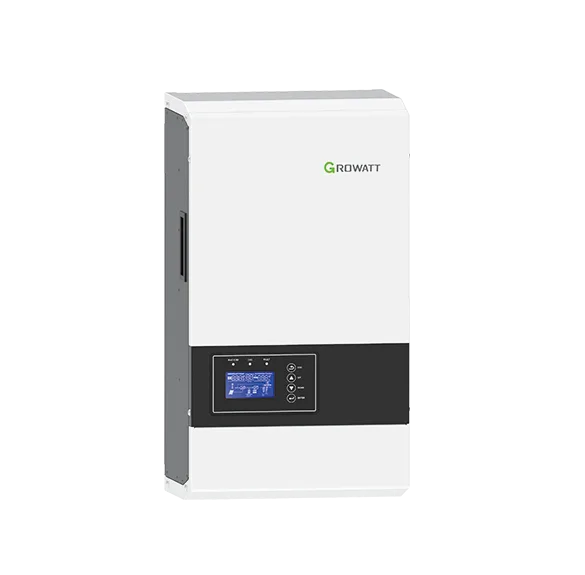
Growatt SPF 3000-6000T HVM-G2 Off-Grid Inverters
The current Growatt catalogue identifies the SPF 3000-6000T HVM-G2 off-grid inverter family. Its public record presents surge capability, up-to-95% efficiency positioning, multi-source operation, parallel expansion, remote monitoring and BLVD load management. The record provides feature text and six linked files but no embedded member-level table. Select the exact model, battery and operating architecture before using any family feature in a design or quotation.
Current catalogue boundary: The record provides feature text and six linked files but no embedded member-level table. BLVD and parallel features require the exact load-priority logic, battery/SOC configuration, member limits, parallel hardware, firmware and commissioning design.
Downloads
Current document status
Before quotation, request the current exact-model datasheet and manual, battery compatibility matrix, PV and AC input schedule, backup/load table, parallel and generator rules, protection and earthing diagram, firmware, destination documents, warranty, packing and included accessories.
Current product-record evidence
Keep the off-grid inverter, battery and operating-mode boundaries separate
The catalogue supports initial product-role research; the exact system schedule must close the technical design.
Displayed family
the SPF 3000-6000T HVM-G2 off-grid inverter family
Published feature set
surge capability, up-to-95% efficiency positioning, multi-source operation, parallel expansion, remote monitoring and BLVD load management
System architecture
BLVD and parallel features require the exact load-priority logic, battery/SOC configuration, member limits, parallel hardware, firmware and commissioning design.
Current evidence limit
The record provides feature text and six linked files but no embedded member-level table.
off-grid inverter RFQ inputs
Six checks before fixing the inverter and connected-system BOM
Load duty, PV, battery, AC sources, controls and documents must map to one exact model and firmware.
Exact member and operating mode
State full model/suffix, quantity, destination and whether the duty is self-consumption, backup, off-grid, peak shaving, AC coupling or another released mode.
Load and backup duty
Provide phase, continuous and surge loads, motor starts, priority circuits, operating hours, outage duration, reserve SOC, transfer requirement and acceptable load shedding.
PV and battery design
Provide module/string schedule, battery model/modules, voltage and current windows, usable-energy target, BMS protocol, firmware and written compatibility evidence.
Grid and generator interface
Define utility and generator voltage/frequency, neutral/earthing, breaker and transfer arrangement, generator start/control, export rule and simultaneous-source restrictions.
Parallel, monitoring and controls
Confirm released parallel quantity and hardware, phase rules, meters/CTs, logger, EMS or smart-load route, communications, firmware and failure behavior.
Documents and order control
Request the exact datasheet/manual, compatibility and certificate schedules, SLD, protection settings, warranty, included accessories, packing, lead time and substitution rules.
System, performance and evidence boundaries
A catalogue feature does not prove a complete or universally compatible system
Exact ratings, connected equipment, firmware, operating conditions and destination requirements remain controlling.
Published range is not one model
The record provides feature text and six linked files but no embedded member-level table.
Architecture needs confirmation
BLVD and parallel features require the exact load-priority logic, battery/SOC configuration, member limits, parallel hardware, firmware and commissioning design.
Peak, transition and expansion claims are conditional
Verify the exact load type, duration, SOC, temperature, source availability, transfer/parallel hardware, firmware and test boundary before treating a headline as guaranteed performance.
Battery and generator support is not universal
A chemistry or generator label does not establish voltage/current, protocol, charging profile, start logic, grounding, warranty or approval for every connected device.
Continue the off-grid inverter review
Connect the inverter family to the operating scenario and controlled BOM
Use the solution and compatibility guides to define the system before requesting price and delivery terms.
Off-grid solar and microgrid solution
Coordinate loads, PV, battery, grid/generator, protection, controls, site work and commissioning responsibilities.
Review system scope →Battery-inverter compatibility checks
Verify voltage, current, protocol, firmware, approved combinations, protection and warranty for the exact pairing.
Review pairing checks →Growatt SPF 3000-6000T HVM-G2 Off-Grid Inverters FAQ
Questions to close before technical approval and quotation
Use the exact model, operating mode and connected equipment in every answer.
What does the current catalogue confirm?
It identifies the SPF 3000-6000T HVM-G2 off-grid inverter family and presents surge capability, up-to-95% efficiency positioning, multi-source operation, parallel expansion, remote monitoring and BLVD load management.
Are all ratings and modes proven for every member?
No. The record provides feature text and six linked files but no embedded member-level table.
Can any battery or generator be connected?
No. BLVD and parallel features require the exact load-priority logic, battery/SOC configuration, member limits, parallel hardware, firmware and commissioning design. Require exact voltage/current, protocol, firmware, protection and warranty approval.
What should the RFQ include?
Include exact model, operating mode, load/backup duty, PV and battery schedule, grid/generator interface, parallel/control requirements, destination documents, accessories and quantity.
Prepare an exact Growatt SPF 3000-6000T HVM-G2 Off-Grid Inverters RFQ
Send the model, operating mode, loads, PV/battery design, AC sources, controls, destination, files, accessories and quantity.
Start with the product, application or project information you have. We can help identify the remaining configuration, document or delivery questions before a final quotation.
Verify the Inverter System