
Should a beginner buy a solar kit or choose each part separately?
The word kit can hide a lot. This plain-English guide helps beginners compare what is in the box, what is missing and when separate parts make more sense.
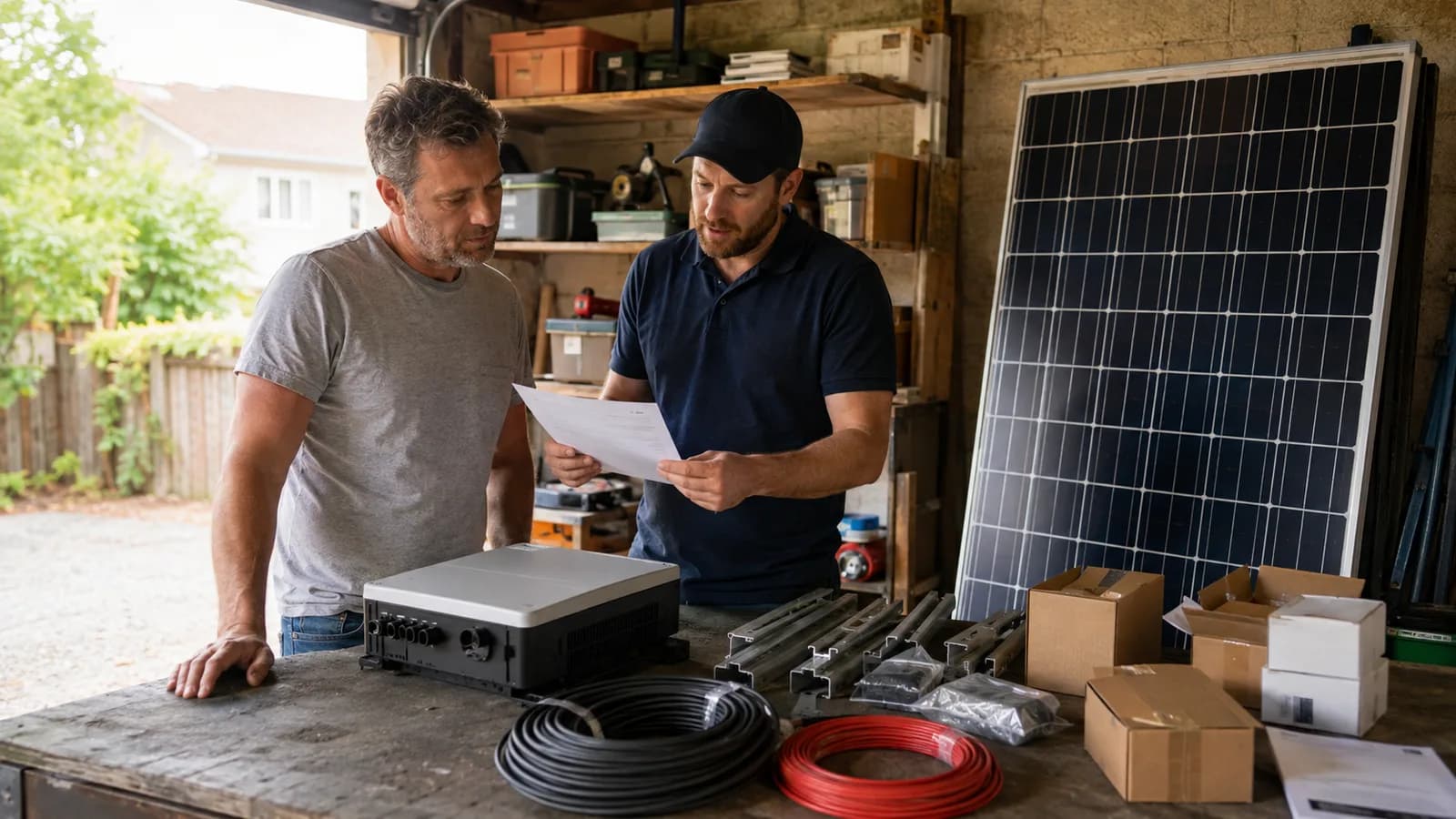
Search for a beginner solar system and almost every package looks complete. One box is called a solar kit. Another is sold as an off-grid kit. A third promises plug-and-play power. The photographs may show panels, a battery and an inverter together, even when some of those items are not included.
That makes a solar kit vs separate components comparison harder than it first appears. A kit can save time when its purpose is clear and the supplied parts have been matched. Buying the parts separately gives you more choice and may make future changes easier. Neither route is automatically cheaper or safer.
A better question is, “Which option includes everything needed for the job I actually want to do?” This guide explains how to answer that without turning the discussion into an electrical lesson. It does not provide wiring instructions. Final mounting, electrical work and any required approval should be handled by the responsible qualified people for the project.
Start with the job, not the kit
A person who wants to run a light in a shed is not shopping for the same system as someone who wants a refrigerator running during an outage. Both products might still be described as solar kits.
Write down the result you expect before looking at equipment. Do you want to reduce a small daytime load, power a separate building, keep a few appliances available during a blackout, or add solar and battery backup to a home? This one decision removes many unsuitable packages straight away.
The difference matters because a panel-only kit cannot store energy. A small off-grid kit is not automatically suitable for household circuits. A grid-connected microinverter normally does not provide backup when the grid fails. A battery package may store plenty of energy but still be unable to start or run the appliances you selected. Product names do not settle any of those questions. The written operating description and exact model information do.
- What you want to do
- Offset a small daytime load
- A possible starting route
- A supported small grid-connected or plug-in solar package
- Do not assume
- That it stores energy or works during an outage
- What you want to do
- Power lights and small tools in a separate shed
- A possible starting route
- A small off-grid kit sized from the actual loads
- Do not assume
- That a starter kit can run every tool at once
- What you want to do
- Keep a refrigerator, lights and internet running
- A possible starting route
- A battery and inverter system designed for backup
- Do not assume
- That a battery automatically creates household backup
- What you want to do
- Add wider home solar and backup
- A possible starting route
- A documented system package based on the home and loads
- Do not assume
- That one package size fits every home
| What you want to do | A possible starting route | Do not assume |
|---|---|---|
| Offset a small daytime load | A supported small grid-connected or plug-in solar package | That it stores energy or works during an outage |
| Power lights and small tools in a separate shed | A small off-grid kit sized from the actual loads | That a starter kit can run every tool at once |
| Keep a refrigerator, lights and internet running | A battery and inverter system designed for backup | That a battery automatically creates household backup |
| Add wider home solar and backup | A documented system package based on the home and loads | That one package size fits every home |
A local rule may affect where and how a system can be connected. Check that separately after the intended use is clear.
The word ‘kit’ does not tell you what is in the box
There is no single package shared by every product sold as a solar kit. Some contain two panels, a microinverter and an output cable. Some combine panels with a charge controller for charging a battery that the buyer already owns. Others include an inverter and battery but leave the mounting and installation materials to somebody else.
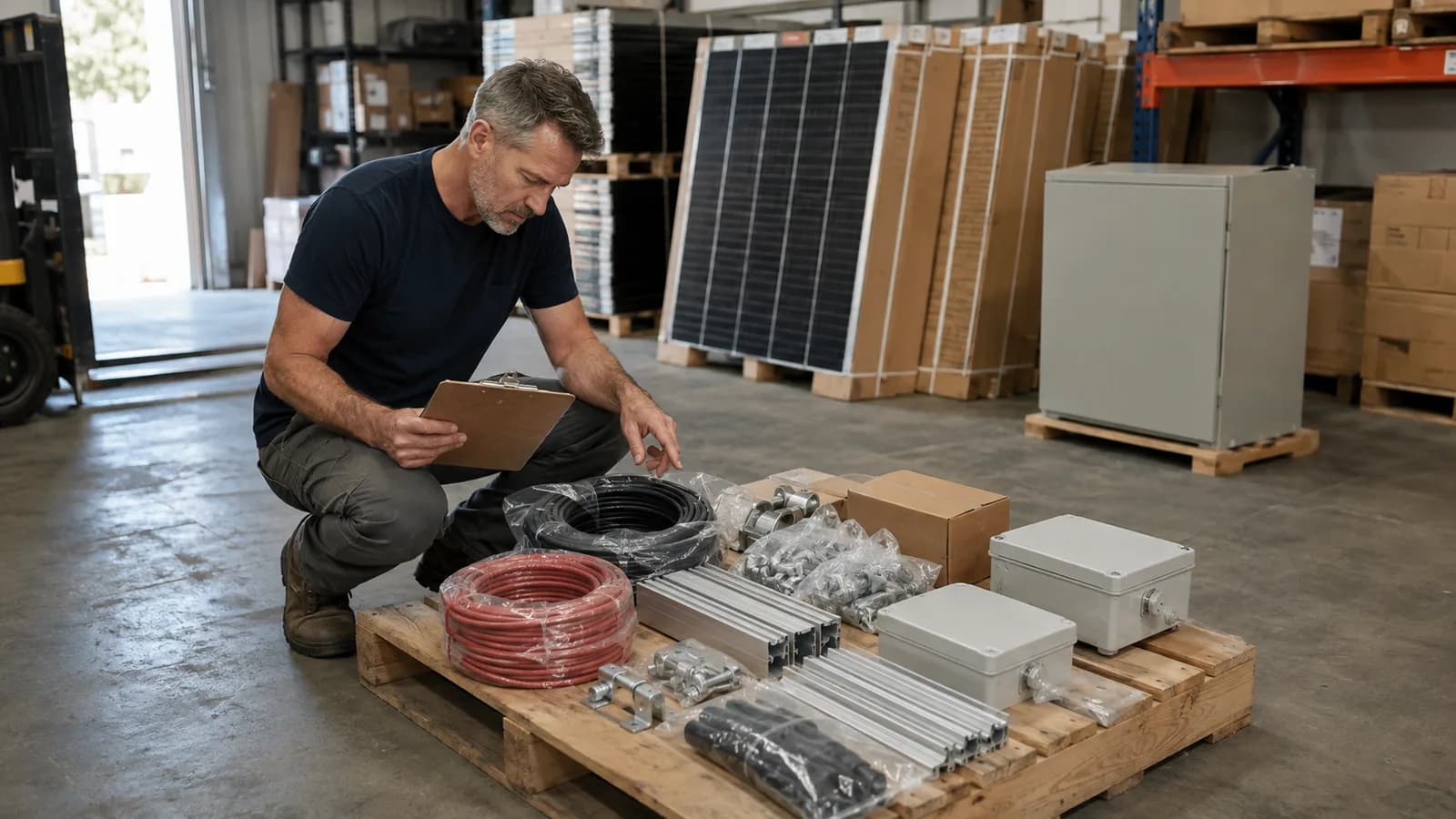
This is why the product photograph should never replace the packing list. Look for an item-by-item list with model codes and quantities. If a battery is pictured, check whether it is included, optional or shown only to explain how the product family can expand. The same applies to mounting frames, monitoring devices and cables.
“Complete” also needs a boundary. A package may be complete as an equipment supply while leaving roof-specific mounting, switchboard work, conduit, site labour or approvals outside the seller's scope. That can be a perfectly reasonable offer if the exclusions are visible. Problems start when two different scopes are compared as if they contain the same work.
- Common package description
- Small panel and microinverter kit
- Often included
- Panels, microinverter, named connection cable and monitoring app
- Often separate or optional
- Battery, site-specific mounting and wider electrical work
- Common package description
- Off-grid starter kit
- Often included
- Panels, charge controller, basic cable set and sometimes an inverter
- Often separate or optional
- Battery, enclosure, protection, longer cables and load-side equipment
- Common package description
- Solar and battery kit
- Often included
- Matched inverter, battery and a stated amount of solar input
- Often separate or optional
- Mounting, final protection design, backup-circuit work and installation
- Common package description
- Home equipment package
- Often included
- Major equipment with a proposed bill of materials
- Often separate or optional
- Site survey, structural work, permits, utility work and commissioning
| Common package description | Often included | Often separate or optional |
|---|---|---|
| Small panel and microinverter kit | Panels, microinverter, named connection cable and monitoring app | Battery, site-specific mounting and wider electrical work |
| Off-grid starter kit | Panels, charge controller, basic cable set and sometimes an inverter | Battery, enclosure, protection, longer cables and load-side equipment |
| Solar and battery kit | Matched inverter, battery and a stated amount of solar input | Mounting, final protection design, backup-circuit work and installation |
| Home equipment package | Major equipment with a proposed bill of materials | Site survey, structural work, permits, utility work and commissioning |
The missing parts are often the boring ones
Panels and batteries get most of the attention because they are easy to recognize. A working system also needs a safe way to hold the panels, move power between the named products, isolate equipment when needed, protect the intended circuits and keep the equipment within its allowed environment.
The exact items change with the system. Mounting hardware for a tiled roof is different from a ground frame. Cable length depends on the site. Battery accessories can be model-specific. Protection is part of the electrical design, so a generic list cannot choose it for every job. The buyer does not need to design these items alone, but they should know whether the offer includes them and who is responsible for defining them.
A short online description may leave out mounting rails, clamps, roof attachments, fuses, breakers, disconnects, battery links, communication cables, enclosures, monitoring hardware or delivery. Tools and consumables can be missing too. None of this proves that the package is poor. It means the headline price is only one part of the project cost.
Check the small print around warranty and support as well. If one seller provides the panels, another supplies the battery and a third supplies the inverter, find out who will help when the products do not communicate or one company changes its firmware. Separate warranties can be useful, but they do not create one person responsible for the complete system.
Solar kit vs separate components: the practical trade-offs
A good kit does some of the early matching work for the buyer. It can reduce the number of orders and give support staff a known group of products to discuss. The compromise is that the panel count, battery size, cable lengths or expansion choices may not suit every project.
Buying separate parts gives the buyer control over each item. It may be easier to source bulky panels or mounting hardware nearby while ordering the inverter and battery elsewhere. The work shifts to the buyer or designer: every voltage range, current limit, battery communication route, connector, accessory and warranty boundary must be checked using the exact models.
Price follows the same pattern. A kit can cost more because matching, packaging and support are bundled into it. Separate parts can look cheaper until several deliveries, missing hardware and additional design time are added. The fair comparison is a finished scope with the same function, not two shopping carts with different contents.
- Decision point
- Getting started
- Ready-made kit
- Usually easier when the kit has one clear purpose
- Parts bought separately
- More decisions must be made before ordering
- Decision point
- Compatibility
- Ready-made kit
- Some matching may already be documented; verify the exact list
- Parts bought separately
- Every connection and model pairing needs its own check
- Decision point
- Choice
- Ready-made kit
- Limited to the seller's package and options
- Parts bought separately
- More control over panels, inverter, battery and accessories
- Decision point
- Future expansion
- Ready-made kit
- Simple only when the product family supports the planned change
- Parts bought separately
- Can be flexible, but spare capacity and compatibility still matter
- Decision point
- Support
- Ready-made kit
- Fewer contacts if one seller supports the complete package
- Parts bought separately
- Responsibility may be split across several sellers and brands
- Decision point
- Total cost
- Ready-made kit
- Easy to see only when inclusions and exclusions are listed
- Parts bought separately
- Needs freight, hardware, design and missing items added back in
| Decision point | Ready-made kit | Parts bought separately |
|---|---|---|
| Getting started | Usually easier when the kit has one clear purpose | More decisions must be made before ordering |
| Compatibility | Some matching may already be documented; verify the exact list | Every connection and model pairing needs its own check |
| Choice | Limited to the seller's package and options | More control over panels, inverter, battery and accessories |
| Future expansion | Simple only when the product family supports the planned change | Can be flexible, but spare capacity and compatibility still matter |
| Support | Fewer contacts if one seller supports the complete package | Responsibility may be split across several sellers and brands |
| Total cost | Easy to see only when inclusions and exclusions are listed | Needs freight, hardware, design and missing items added back in |
When a solar kit is the simpler choice
A kit is often a sensible starting point for a small, clearly defined job. Examples include charging a modest battery for a shed, covering a known daytime load with a supported small system, or buying a documented inverter-and-battery family where the exact models are intended to work together.
What makes a kit useful is the evidence behind its parts list. The seller should be able to say what the package is meant to power, which items are included, which battery or panel range is supported and what the buyer must still arrange. Current manuals and a clear support route matter more than a long list of free accessories.
Be cautious when a package is sold for several very different uses without explaining its limits. A system advertised for camping, household bill reduction and whole-home backup may be using the same headline wattage to describe three different jobs. Ask for one plain answer: what can this exact package do as supplied?
When choosing separate parts makes more sense
Separate components suit projects that do not fit a standard box. The buyer may need a particular battery capacity, more solar input, a different mounting route, equipment that can be serviced locally or room to expand later. It can also make sense to buy large, fragile panels close to the site while sourcing smaller electronics through another channel.
Flexibility comes with homework. The fact that a panel and an inverter both use the word solar does not make them a match. The same is true for a battery and inverter that share a nominal voltage. Their working ranges, power limits, controls, communication, software and required accessories still need model-level confirmation.
Do not buy the major boxes first and plan the small parts afterwards. Start with a simple equipment schedule. Put the exact model, quantity, purpose and supplier beside every major item. Leave a visible line for mounting, protection, cable route, monitoring, installation and delivery. An unfinished line is easier to fix before payment than after several boxes arrive.
Can solar panels, an inverter and a battery from different brands work together?
Sometimes, but the category names and nominal voltage are not enough. Check the exact models, working ranges, power limits, communication method, required accessories and written manufacturer support before ordering.
Use one checklist before comparing prices
A beginner does not need a finished engineering drawing to ask for a useful offer. A one-page brief is enough to expose most differences between a real package and an incomplete shopping list.
Give each seller the same intended use and load information. Ask them to return an itemized package, not just a total wattage. If something depends on the site or final installer, it should be marked as an exclusion or an open item. This makes a solar kit and a separate-component proposal much easier to compare.
The final electrical design, mounting details, protection, installation and local acceptance remain with the appropriately qualified parties. The purpose of the checklist is to stop avoidable purchasing mistakes before that work begins.
- Intended use: daytime bill reduction, a separate off-grid load, selected backup appliances or a wider home system.
- Appliances to be powered, how long they run and which ones may operate together.
- Exact model codes and quantities for panels, inverter, battery, controller and monitoring equipment.
- A written list of included mounting, cables, model-specific accessories and packaging.
- Clear exclusions for protection design, installation, site work, approvals, delivery and commissioning.
- Warranty and support responsibility when products come from different sellers or brands.
Does a solar kit normally include a battery?
Not necessarily. Some kits are panel-only, while others include a controller or inverter but treat the battery as an option. Use the written packing list and model quantities rather than the product photograph.
Is buying solar components separately always cheaper?
No. Individual product prices may be lower, but freight, mounting, protection equipment, missing accessories, design time and divided support can change the total. Compare two packages that perform the same job and include the same scope.
Related Articles
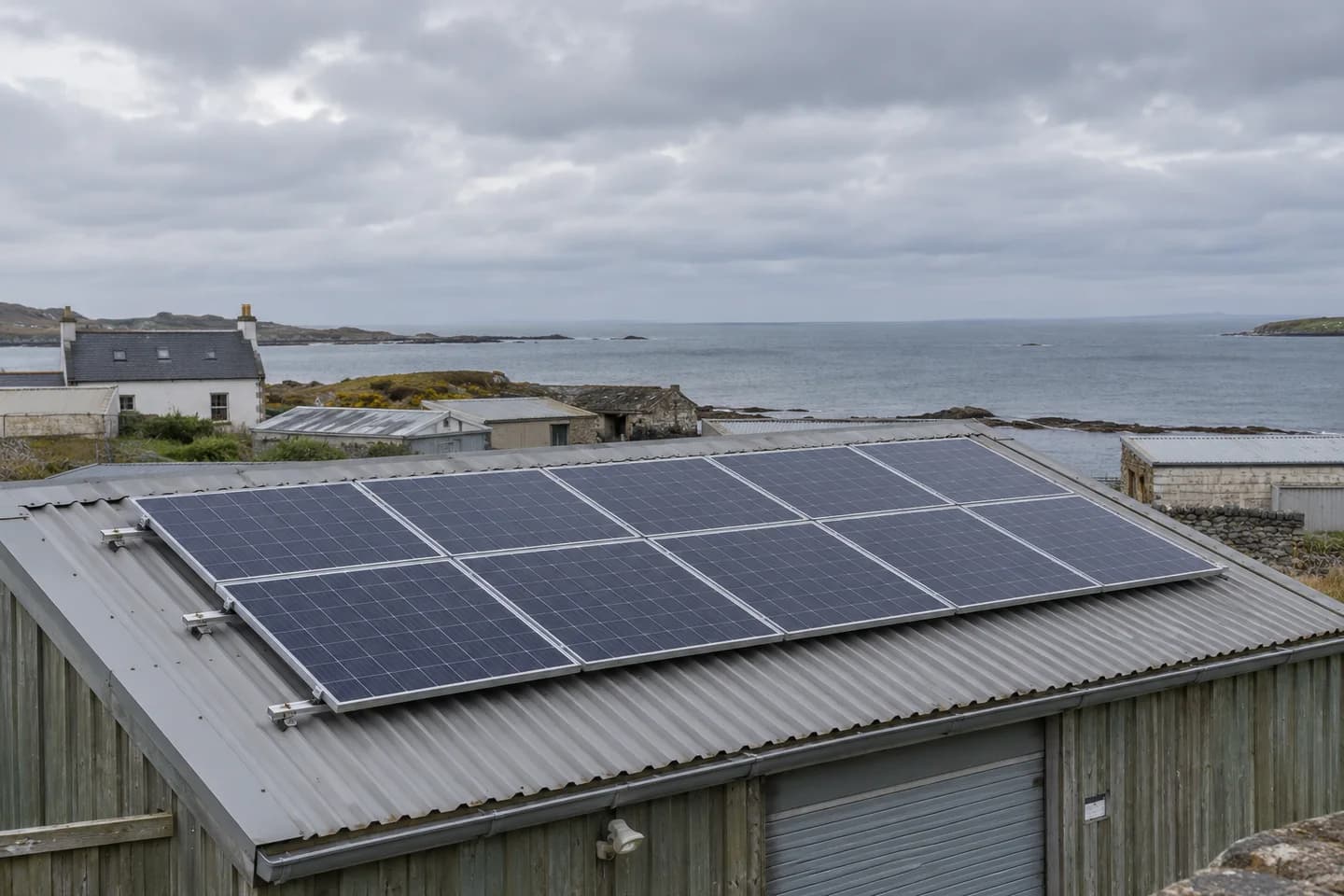
How do solar panels perform in clouds, heat, salt air and dust?
A panel's watt rating cannot describe every site. Learn what changes in cloudy, hot, coastal and dusty locations, and which details belong in a supply quote.
Read Article→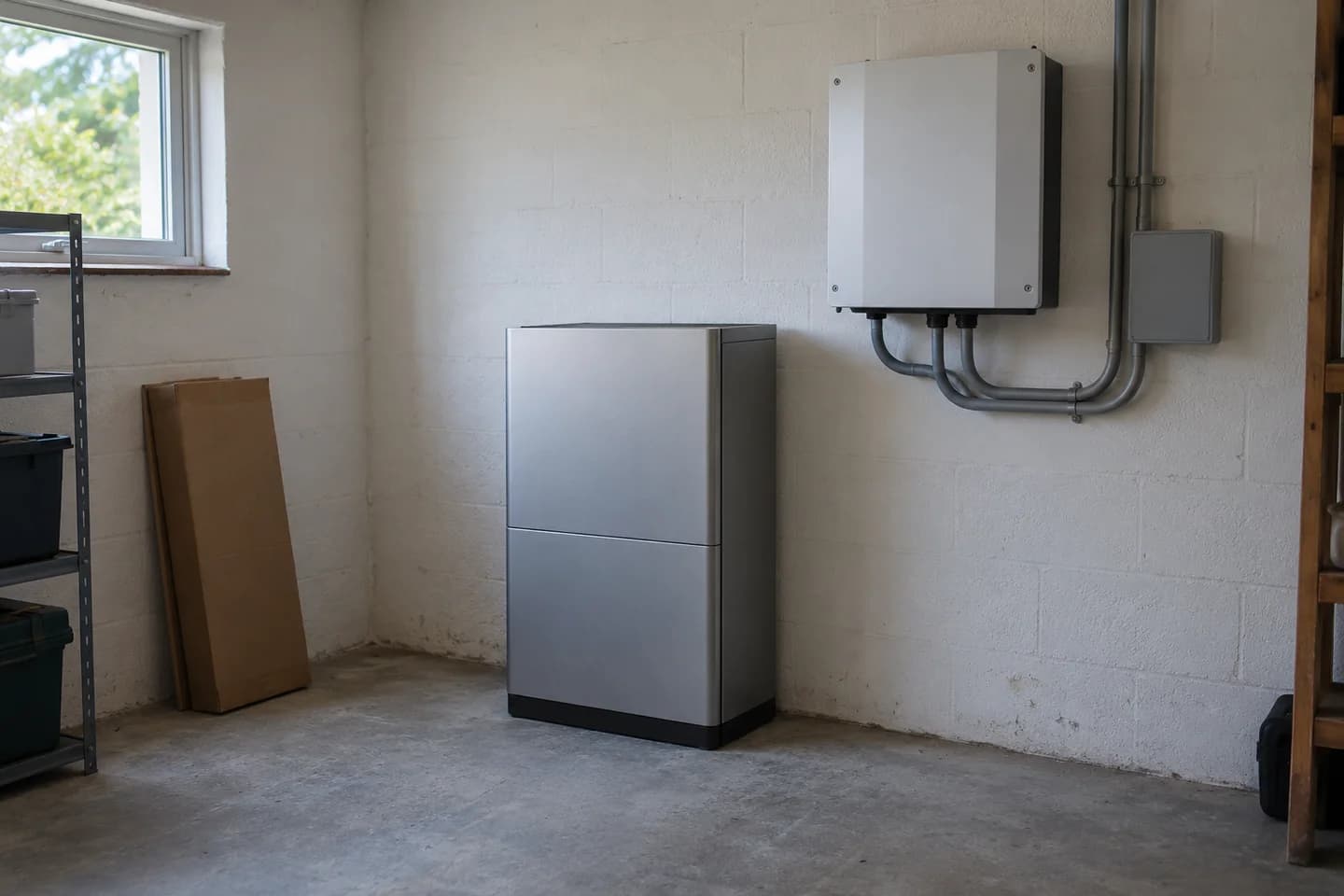
How to compare solar battery specifications before buying
Two batteries with the same kWh label can do different jobs. Here is how to read the numbers, check the missing details and compare like-for-like quotes.
Read Article→
Solar self-consumption and grid export: what equipment do you need?
For project buyers, installers and distributors: what to source as an equipment package, what to arrange locally, and what a useful supply quote should include.
Read Article→