
Can solar and battery backup last through a multi-day power outage?
A long outage is less about buying a battery with a big day-count claim and more about balancing essential loads, daily solar recharge and a sensible fallback plan.
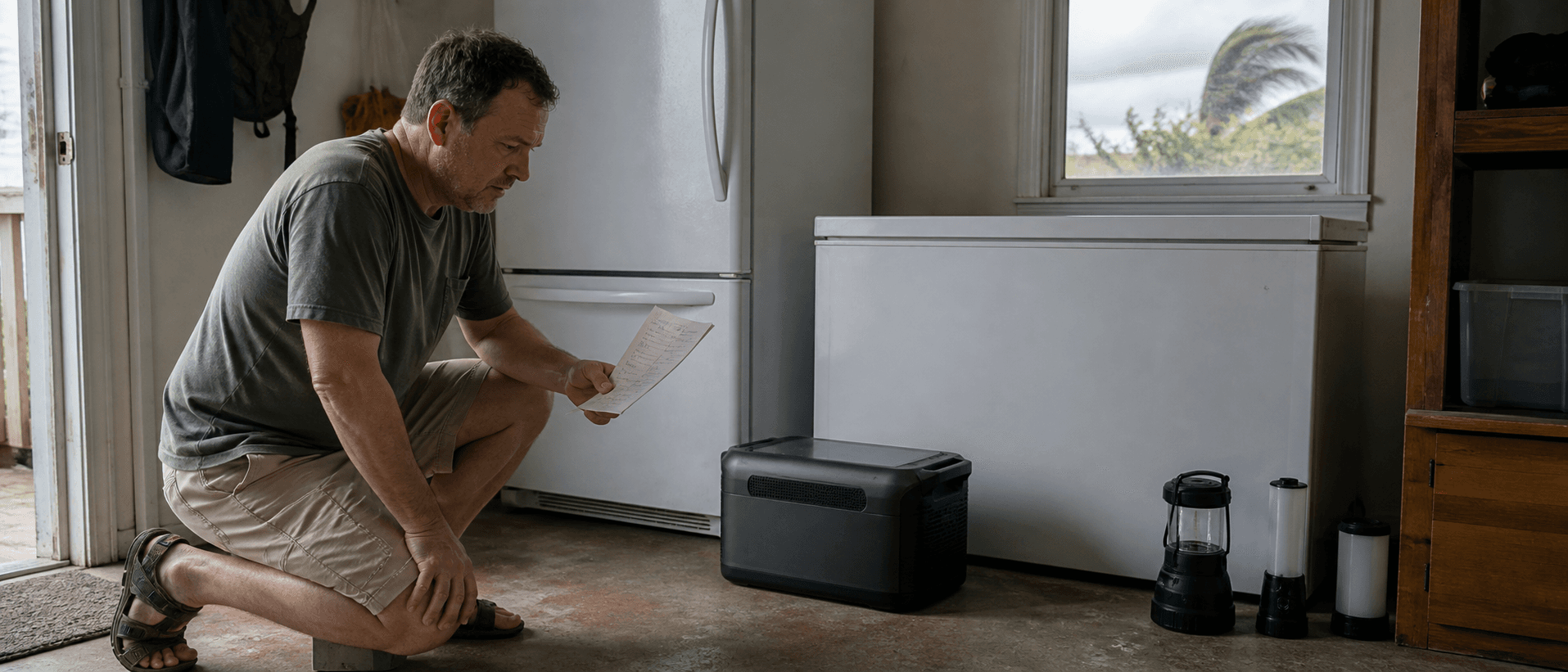
A battery can carry a refrigerator and a few lights through one evening. A multi-day power outage is a different job. By the third cloudy morning, the question is no longer how large the battery looked on the shopping page. It is whether the home is using less energy than the system can put back.
Solar and battery backup can last for days when the loads are kept realistic and the battery receives enough energy from the panels each day. It can also run short quickly if a well pump, freezer, cooking appliance and air conditioner all join the backup list without a plan. Sunny weather helps. It should not be the only plan.
This guide is for households trying to keep food cold, water available, a few lights on and phones or internet working. It explains what to measure, how to think about cloudy weather and where an existing generator can still help. It does not provide instructions for connecting equipment to a home panel. Transfer equipment, wiring, protection and final installation need the exact product manuals and a qualified local professional. The photographs are illustrative editorial scenes rather than customer project records.
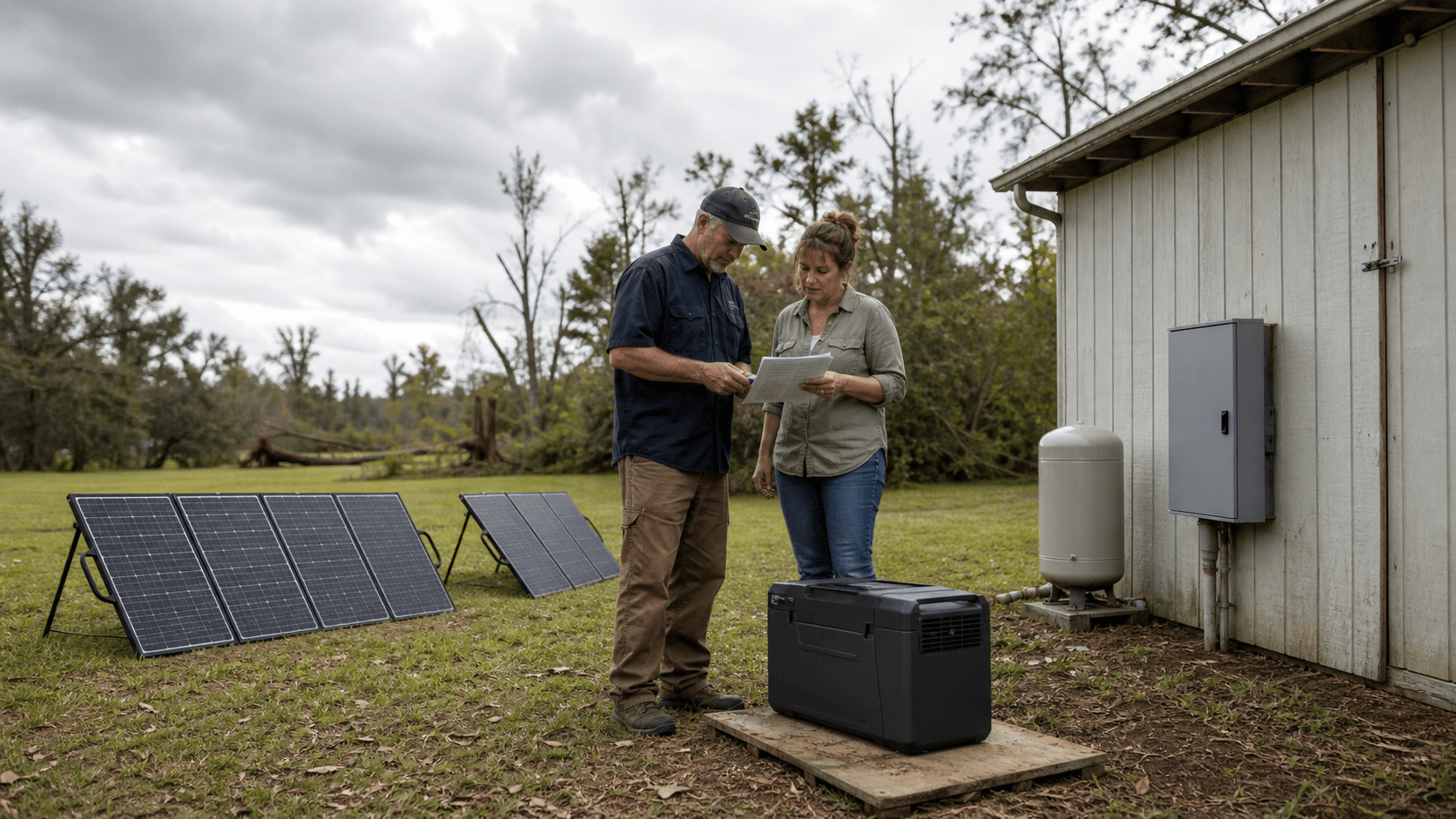
Stop asking the battery to last a fixed number of days
Think of the battery as a water tank. The appliances drain it. Solar fills it when daylight is useful. A generator or the grid can provide another refill when available. The tank may be modest and still support a long outage if it is topped up most days. A much larger tank can still empty if the loads drain it faster than the available sources can refill it.
This is why a claim such as "three days of backup" needs context. Three days of what? A refrigerator and Wi-Fi are a different job from whole-home air conditioning. The answer also changes with outdoor temperature, how often appliance doors open, water use and the amount of sun that reaches the panels.
Use three numbers. First, find the highest power the essential appliances may ask for at the same time, including a realistic motor or compressor start. Second, estimate how much energy those appliances use over 24 hours. Third, estimate how much energy the solar array can put back during a difficult day. Do not fold these into one wattage number.
- Number
- Power, in watts or kilowatts
- Plain-language meaning
- How much the loads ask for at one moment.
- Why it matters
- Shows whether the inverter and battery can start and run the selected appliances.
- Number
- Energy, in watt-hours or kilowatt-hours
- Plain-language meaning
- How much electricity the loads use over time.
- Why it matters
- Shows how much of the battery is likely to be used between recharges.
- Number
- Daily recharge
- Plain-language meaning
- What solar or another source can put back during the day.
- Why it matters
- Shows whether the battery is recovering, holding steady or losing ground each day.
| Number | Plain-language meaning | Why it matters |
|---|---|---|
| Power, in watts or kilowatts | How much the loads ask for at one moment. | Shows whether the inverter and battery can start and run the selected appliances. |
| Energy, in watt-hours or kilowatt-hours | How much electricity the loads use over time. | Shows how much of the battery is likely to be used between recharges. |
| Daily recharge | What solar or another source can put back during the day. | Shows whether the battery is recovering, holding steady or losing ground each day. |
Make the essential-load list short enough to believe
Start with what protects food, water, communication, health and basic safety. For many homes that means a refrigerator, chest freezer, well pump, a few lights, Wi-Fi equipment and phone charging. Medical equipment or temperature-sensitive medicine belongs at the top when relevant.
Write a second list for loads that can wait. Laundry, electric water heating, an oven, workshop tools and whole-home cooling can change the system size quickly. Some households will keep one small room comfortable instead of promising to cool the whole building. Others will run a larger appliance only during good solar hours or while the generator is already on. Those are normal outage choices, not a system failure.
Appliance names are not enough. Record the exact model label. For a refrigerator and freezer, use a 24-hour measurement when a suitable meter and connection method are available, or use the model's current energy information as a starting point. A single running-watt reading misses the way a compressor switches on and off. Measure or review the home in normal conditions before a storm rather than learning the load while the battery is already low.
- 1
Keep food and water safe
Put refrigeration, the water source and any health-related equipment on the first list.
- 2
Add basic communication
Include a few lights, phone charging and the equipment needed for available internet or radio.
- 3
Move comfort loads to a second list
Decide which larger appliances can wait, run briefly or be used only during a strong recharge period.
- 4
Record one real day
Collect model labels, operating hours and a 24-hour energy record where it can be obtained safely.
A well pump can change the answer
A refrigerator may use energy throughout the day, but a well pump can create the harder power question. It may run for only a short time and still need a strong burst when the motor starts. A battery system that has enough stored energy can trip if its inverter cannot handle that start.
Find the pump and motor model rather than sizing from the circuit breaker alone. Record the required voltage, running information and available starting data. Many North American well pumps use 240V, while some shallow-well pumps can be supplied in other configurations. The exact model and its approved setup decide the answer. A portable power station with only 120V output cannot run a 240V pump just because its total wattage looks large.
If the pump can operate at more than one voltage, do not treat changing it as an outage-day shortcut. Have the pump contractor or electrician confirm the motor, controls, wiring and protection. Also check the pressure tank and normal pump cycle. Frequent short cycling can create more starts and use more energy than the household expects.
Water use can often be planned. Filling the pressure tank or approved water storage while solar production is good, or while a generator is already running, may keep the pump from cycling through the night. The final arrangement still needs to follow the equipment instructions and local plumbing and electrical requirements.
Can a portable power station run a well pump?
Some can, but the exact pump voltage, running demand and motor-start requirement must fit the power station's battery-mode output. Confirm whether 120V and 240V loads are supported at the same time and use only an approved connection method. The pump breaker size alone does not provide the answer.
Panel watts do not tell you tomorrow morning's battery level
A solar panel's watt rating describes power under defined test conditions. It is not the energy the panel promises to produce every day. Clouds, season, location, shade, panel angle, temperature and system losses all change the result.
There is another limit inside a portable power station or hybrid inverter. The solar input accepts a stated voltage range, maximum current and maximum power. A group of panels has to fit all of those limits in the proposed arrangement. Staying under the advertised watt limit does not automatically make the voltage and current suitable. Use the exact panel and power-station manuals, and have the proposed array checked before connecting it.
During an outage, the panels may be doing two jobs at once: running live loads and charging the battery. If the refrigerator, freezer and pump use most of the available solar energy, little may remain for the evening. Look at the net change in battery level over the daylight period, not only the highest solar-power number seen around noon.
NREL's PVWatts can estimate the production of a grid-connected PV array for a location and month. It is useful for comparing possible array sizes and the difficult season. It does not know the exact storm clouds, portable-panel placement, battery reserve or household load, so keep the assumptions visible.
- Check
- Panel group
- What to record
- Exact models, quantities, rated power, voltage and current.
- Common mistake
- Adding the panel watts and ignoring the electrical arrangement.
- Check
- Solar input
- What to record
- Permitted voltage range, maximum current and maximum PV power for the exact power station or inverter.
- Common mistake
- Assuming any panels below the watt limit can be connected.
- Check
- Useful daily recharge
- What to record
- Energy added after the loads running during daylight have taken their share.
- Common mistake
- Treating the best noon reading as a full-day result.
| Check | What to record | Common mistake |
|---|---|---|
| Panel group | Exact models, quantities, rated power, voltage and current. | Adding the panel watts and ignoring the electrical arrangement. |
| Solar input | Permitted voltage range, maximum current and maximum PV power for the exact power station or inverter. | Assuming any panels below the watt limit can be connected. |
| Useful daily recharge | Energy added after the loads running during daylight have taken their share. | Treating the best noon reading as a full-day result. |
Cloudy weather needs a rule, not a promise
Solar panels can still produce in cloudy weather, but there is no honest universal percentage for a stormy week. A bright overcast day and dark rain bands are not the same. Trees and debris can add shade. Portable panels may also have to stay packed away during unsafe wind or flooding.
Prepare for a run of weak days by deciding what happens when the battery fails to recover. Choose a reserve level that protects the loads that matter most. Set a practical point for dropping the second-list appliances. Decide when another source will recharge the battery. These are household operating rules, so they should be easy enough to follow when everyone is tired and the weather is poor.
Hawaiian Electric's basic solar-and-battery examples show the direction of energy flow clearly: on a cloudy day, solar may serve the home and charge the battery, yet there may be little or no excess energy. In a real outage, watch the battery trend. Ending each day lower than the day before means the plan is running a deficit.
Do not size the battery by multiplying one day's consumption by the full outage length unless the project truly expects no recharge at all. That approach can produce a very large and expensive result. A more useful comparison shows the daily essential load, expected solar in a difficult period, chosen reserve and the backup charging option.
- What the battery is doing
- Finishing the day higher
- What it means
- Solar supplied the live loads and still added useful energy.
- A sensible response
- Keep the reserve and avoid adding unnecessary loads just because one day was good.
- What the battery is doing
- Finishing near the same level
- What it means
- The daily load and recharge are roughly balanced for that day.
- A sensible response
- Continue watching the weather and keep large optional loads controlled.
- What the battery is doing
- Finishing lower each day
- What it means
- The system is losing energy over time.
- A sensible response
- Reduce optional use and follow the planned generator or other approved recharge rule before the reserve is exhausted.
| What the battery is doing | What it means | A sensible response |
|---|---|---|
| Finishing the day higher | Solar supplied the live loads and still added useful energy. | Keep the reserve and avoid adding unnecessary loads just because one day was good. |
| Finishing near the same level | The daily load and recharge are roughly balanced for that day. | Continue watching the weather and keep large optional loads controlled. |
| Finishing lower each day | The system is losing energy over time. | Reduce optional use and follow the planned generator or other approved recharge rule before the reserve is exhausted. |
The generator can become a refill station instead of an all-day roommate
A household that already owns a generator does not have to choose between fuel and batteries. The battery can carry quiet, steady loads overnight. Solar can do what the weather allows during the day. The generator can run when the battery needs a deliberate refill or when a larger load is scheduled.
This can be easier than running a large generator around the clock for a refrigerator that cycles and a pump that runs briefly. It may also reduce engine hours and the time spent listening to it. The actual fuel use depends on the generator, charger, load, weather and operating schedule, so do not rely on a fixed savings claim.
Check how the battery equipment accepts generator power. Record the allowed AC input, maximum charging rate and whether loads can stay supplied while the battery charges. A small generator may work well with a controlled charging load; another may struggle with voltage or frequency when the charger starts. The exact inverter-charger manual and generator documentation decide the settings and limits.
Keep generator safety separate from the energy calculation. The U.S. Consumer Product Safety Commission warns that portable generators can produce deadly carbon monoxide. They belong outdoors, away from doors, windows and vents, with the home connection handled through approved equipment. A battery does not make an unsafe generator location acceptable.
- Choose the battery level or weather condition that triggers a generator recharge.
- List the loads that may run while charging and schedule the pump or another larger load deliberately where practical.
- Confirm the generator's continuous rating and the battery system's permitted AC input and charging limits.
- Plan fuel storage, generator access and safe outdoor operation before the storm, not during it.
- Leave source switching, transfer equipment, grounding, protection and commissioning to the responsible qualified installer.
Portable power station or fixed home backup?
A portable power station can be a practical first step when the backup list is short and the appliances can use its approved outlets. It is packaged, movable and usually easy to monitor. Its voltage options, solar input, battery expansion and connection methods are defined by the manufacturer. Check those limits before buying extra panels or batteries.
A fixed home battery and inverter system makes more sense when the water pump, several circuits or automatic backup are part of the goal. It can be designed around the home's actual service and future solar array, but it brings site work, transfer equipment, protection, permits and commissioning.
For a long outage, either system may still use a generator as the low-sun fallback. Compare the complete operating plan rather than treating "portable" as a small version of a fixed home system or "whole home" as proof that every appliance can run without limits.
- Route
- Portable power station
- Often suits
- A refrigerator, freezer, lights, communications and other loads that fit the approved outlets.
- Check before buying
- Output voltage, motor starting, simultaneous outlets, usable battery energy, PV input and expansion rules.
- Route
- Fixed home backup
- Often suits
- Selected household circuits, automatic transfer, larger pumps or a wider solar-and-battery plan.
- Check before buying
- Load schedule, backup circuits, inverter and battery limits, site work, approval and commissioning.
- Route
- Battery, solar and generator
- Often suits
- Long outages where quiet daily operation and a low-sun fallback are both useful.
- Check before buying
- Charging compatibility, operating rules, fuel plan, transfer method and safe generator placement.
| Route | Often suits | Check before buying |
|---|---|---|
| Portable power station | A refrigerator, freezer, lights, communications and other loads that fit the approved outlets. | Output voltage, motor starting, simultaneous outlets, usable battery energy, PV input and expansion rules. |
| Fixed home backup | Selected household circuits, automatic transfer, larger pumps or a wider solar-and-battery plan. | Load schedule, backup circuits, inverter and battery limits, site work, approval and commissioning. |
| Battery, solar and generator | Long outages where quiet daily operation and a low-sun fallback are both useful. | Charging compatibility, operating rules, fuel plan, transfer method and safe generator placement. |
Build one page that the whole household can use
A useful outage plan fits on one sheet. Put the essential appliances at the top with their model codes and measured or documented energy information. Add the loads that may start together. Record the battery's usable energy, output limits and reserve. Then write down what the solar input can accept and what triggers the generator recharge.
Keep the language simple: "pump water while the generator is charging," "no laundry below this reserve" or "check battery level at sunset." The exact rule depends on the installed system, but it should not require someone to interpret an engineering drawing in the dark.
Before storm season, review the plan with the household and the responsible installer. If an outage-mode test is appropriate, use the installed and manufacturer-approved method. Do not test a homemade panel connection. The point is to find missing labels, unrealistic loads and confusing controls while the grid is available.
- Exact refrigerator, freezer, pump, battery, inverter or power-station model codes.
- A 24-hour essential-load estimate and the loads that may realistically start together.
- Pump voltage and starting information confirmed from the exact equipment or a suitable professional measurement.
- Solar-panel models and the exact PV input voltage, current and power limits.
- Battery reserve, low-sun response and generator recharge trigger written in everyday language.
- The qualified local party responsible for home connection, transfer equipment, protection and final approval.
Common questions about long-outage backup
Can solar panels charge a battery during a power outage?
Yes, when the system is specifically designed to operate safely away from the grid and to keep the solar and battery controls active. A normal grid-tied solar system may shut down during an outage. Confirm the exact inverter, isolation or transfer equipment and backup operating mode.
How long will a solar battery run a refrigerator and freezer?
Runtime depends on the appliances' actual daily energy use, room temperature, door opening, battery usable energy, inverter losses and the other connected loads. A 24-hour measurement or current model-specific energy data is more useful than a generic refrigerator wattage.
How much solar is needed to recharge a portable power station?
Start with the daily energy the essential loads use, then estimate location- and season-based solar production. The proposed panels must also remain within the exact power station's PV input voltage, current and power limits. Panel wattage alone cannot confirm the arrangement or daily recharge.
Will solar battery backup work through a week of cloudy weather?
It may keep working if the loads are low enough and the available solar still replaces most of the daily use. Dark weather can create a daily deficit, so a long-outage plan should include a reserve, a reduced-load mode and an approved fallback charging source rather than assuming a fixed cloudy-day output.
Related Articles
How do solar panels perform in clouds, heat, salt air and dust?
A panel's watt rating cannot describe every site. Learn what changes in cloudy, hot, coastal and dusty locations, and which details belong in a supply quote.
Read Article→
How to compare solar battery specifications before buying
Two batteries with the same kWh label can do different jobs. Here is how to read the numbers, check the missing details and compare like-for-like quotes.
Read Article→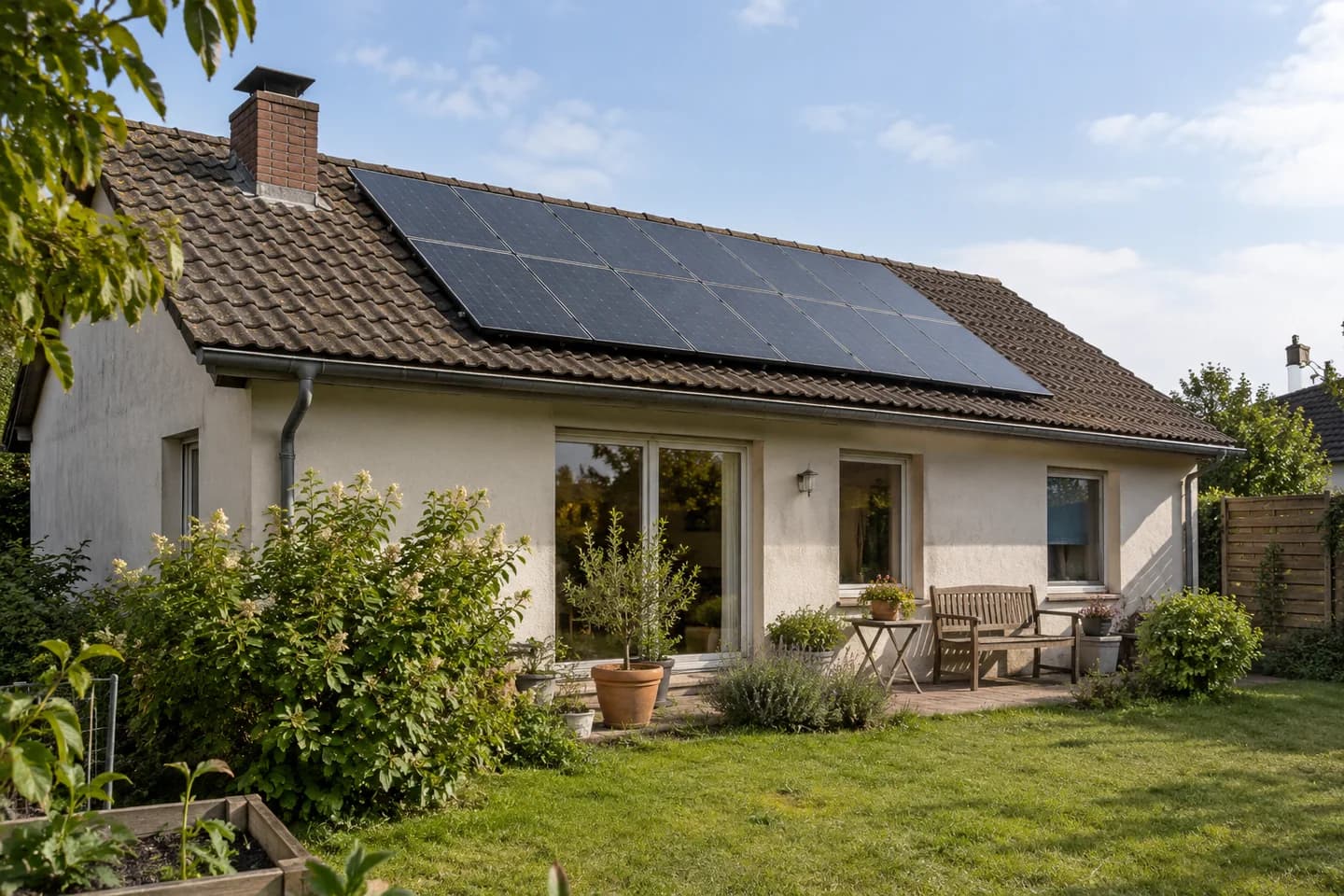
Solar self-consumption and grid export: what equipment do you need?
For project buyers, installers and distributors: what to source as an equipment package, what to arrange locally, and what a useful supply quote should include.
Read Article→